Good Friday

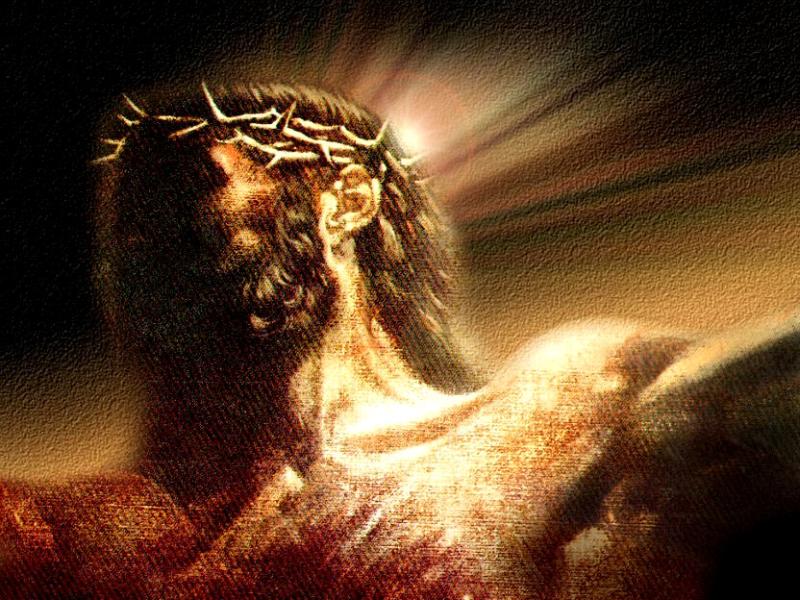
Now from the sixth hour there was darkness over all the land until the ninth hour. And about the ninth hour Jesus cried out with a loud voice, saying, “Eli, Eli, lema sabachthani?” that is, “My God, my God, why have you forsaken me?” And some of the bystanders, hearing it, said, “This man is calling Elijah.” And one of them at once ran and took a sponge, filled it with sour wine, and put it on a reed and gave it to him to drink. But the others said, “Wait, let us see whether Elijah will come to save him.” And Jesus cried out again with a loud voice and yielded up his spirit.

–Matthew 27:45-50

Questions from Christian Students, Part 12

Sarah was recently invited, along with two other scientists, to take part in a panel discussion for a group of mostly Christian students. After the main discussion, students were invited to submit questions via text message; there was very little time to address them, so only a few were answered. The questions were quite good, so over the next few weeks, Surak and Sarah will answer most of them here. All of the questions are listed in the Intro to this series. See also: Part 1Part 2Part 3Part 4Part 5Part 6Part 7Part 8Part 9Part 10; Part 11

What would you say to someone who can’t believe in Christianity because of its exclusive claims, that no one enters the gates of Heaven without first meeting Jesus?

All of the questions up until now have been related to science—a subject in which I have a lot of training and experience as well as some status and ability—or to my own personal experiences. This last question is not one I can answer as a scientist—my expertise in astrophysics does not translate to any degree of authority in matters of theology. I can only attempt to answer this as a Christian layperson who struggles with such questions as much as anyone else. So, as one person to another, I offer the following thoughts.

One thing I am certain of is that Christianity can only be believed in because of its exclusive claims. Irrespective of whether the claims of Christianity are true, it is not possible for Christianity to be true and at the same time for other religions to be true. Christianity makes exclusive claims similar to the way that any theory in science makes exclusive claims; if a particular scientific theory is true, then other theories that seek to explain the same phenomenon in a different way cannot also be true. It is therefore unreasonable to reject Christianity solely because of its exclusive claims.

There is another way in which non-believers often get caught up in Christianity’s exclusiveness—they think it’s unfair that only Christians go to heaven. Unless you take the extreme Calvinist position of predestination, Christianity is certainly not exclusive in the sense that only an elect few are chosen and if you’re not among them, you’re out of luck no matter how good you are. I believe something far different; I think that anyone can choose to accept the gift of salvation that God has offered through Jesus Christ for the following reasons.

  1. In John 14:6, Jesus tells us that He is the way, the truth, and the life, and that no one comes to the Father except through Him.
  2. In the Gospels we are told that Jesus opened a door that had previously been shut because of our sinful nature. (That’s why the Gospels are called the “Good News.”)
  3. We also know that God gave us free will—we are not pets or playthings—and because God loves us as spiritual beings and has truly endowed us with the freedom to choose, he does not force anyone to go through the door who does not want to.

This still sounds terribly unfair to people who have failed, despite their best efforts, to believe in Christianity, to those who have been turned off by negative experiences with organized religion, and even more so to people who have never heard of Christ. I was for some time rather troubled by this, because I don’t like the idea of anyone going to hell. I have no profound understanding in this matter, so all I can do is share with you my personal resolution of this problem.

There are passages in the New Testament that have given comfort to me and at least one person I know who does what I can only describe as the Lord’s work, but is experiencing great difficulty in accepting Jesus. In Mark 9:38-41, we are told the following story:

John said to him, “Teacher, we saw someone casting out demons in your name, and we tried to stop him, because he was not following us.” But Jesus said, “Do not stop him, for no one who does a mighty work in my name will be able soon afterward to speak evil of me. For the one who is not against us is for us. For truly, I say to you, whoever gives you a cup of water to drink because you belong to Christ will by no means lose his reward.”

So, the disciple John tells Jesus that a man is performing miracles in Jesus’ name (i.e. with the authority of Jesus), though he is not part of their group. The disciples tried to stop him, because he was not a follower of Jesus as they were. But Jesus told them to leave the man alone, because he was still doing the work of the Lord. Moreover, Jesus claimed that any person who furthers the cause of believers, though he may not be Christian himself, will not lose his reward. Matthew Henry’s commentary on this passage explains, “If sinners are brought to repent, to believe in the Saviour, and to live sober, righteous, and godly lives, we then see that the Lord works by the preacher.”

Consider also 1 Timothy 4:10: “For to this end we toil and strive, because we have our hope set on the living God, who is the Savior of all people, especially of those who believe.” [emphasis added]

C. S. Lewis explored the meaning and helped develop our understanding of this passage in his Narnia book, The Last Battle. In this story, there is a soldier named Emeth (Hebrew for “faithful” or “truth”) who is a good man that has been deceived since boyhood into worshipping a pagan god (Tash) and hating the name of the true God of Narnia (Aslan). However, upon meeting Aslan, the goodness within Emeth causes him to immediately realize that Tash is false and Aslan is God. Aslan assures Emeth that every good thing he did in the name of Tash was actually done in service to Aslan. As Lewis explained,

I think that every prayer which is sincerely made even to a false god, or to a very imperfectly conceived true God, is accepted by the true God and that Christ saves many who do not think they know him. For He is (dimly) present in the good side of the inferior teachers they follow. In the parable of the Sheep and Goats [Matthew 25:34-40] those who are saved do not seem to know that they have served Christ.

Even though I know this is not the view of all Christians, I agree with Lewis. I believe that it was Jesus—and only Jesus—who opened a door for all mankind; I also believe that a knowledge of and faith in Jesus makes it easier to find and get through the door. But, in my humble opinion, the door is open to all people who yearn for goodness, truth, spiritual love, meaning, purpose, and salvation—in other words, to all people who yearn for God whether or not they recognize it as such.

Canis Major

Ground-based image of Orion, Canis Minor and Canis major [Credit: Akira Fujii]

Ground-based image of Orion, Canis Minor and Canis Major [Credit: Akira Fujii]


The great Overdog
That heavenly beast
With a star in one eye
Gives a leap in the east.

He dances upright
All the way to the west
And never once drops
On his forefeet to rest.

I’m a poor underdog,
But to-night I will bark
With the great Overdog
That romps through the dark.

–Robert Frost

Particle physics for the non-physicist

If you want to know what’s going on in particle physics / cosmology, check out Professor Matt Strassler’s blog, Of Particular Significance. Strassler is a theoretical particle physicist at Rutgers University, and seems enthusiastic about explaining his field of expertise to the public in a way that even those with no physics background can understand. He recommends that laypeople start here. In addition to getting the basics of particle physics and the real scoop on topics like the search for the Higgs boson, readers will get a sense for how the media (and a few complicit scientists) sometimes present a distorted view of what’s going on in science. If you see something about physics in the news—for example, the latest results from the Planck mission—be sure to check out what Professor Strassler might have to say about it.

The universe is a little older than previously thought

Scientists using data from the ESA Planck mission have measured the age of the universe to be a little older — about 100 million years older — than previously thought. The official age, based on measurements of the cosmic microwave background, is now 13.8 billion years. Also, the proportions of matter and dark energy have changed a little, with slightly more matter (‘normal’ matter + dark matter) and slightly less dark energy than previously measured.

Related posts:

Voyager 1 is on a “magnetic highway”

Popular media reports that the Voyager 1 probe has left the solar system are premature, according to NASA. Back in December, NASA reported that Voyager 1, which was launched in 1977, had entered a region known as a “magnetic highway” that is a boundary between the solar system and interstellar space. The magnetic highway is a region where the magnetic field lines of the Sun meet the magnetic field lines of interstellar space, permitting charged particles to stream into and out of the solar system. Voyager scientists expect the spacecraft to cross this highway and enter interstellar space soon, but have seen no evidence for this crossing yet.

Update: xkcd comments on Voyager 1’s latest journey out of the solar system:

So far Voyager 1 has ‘left the Solar System’ by passing through the termination shock three times, the heliopause twice, and once each through the heliosheath, heliosphere, heliodrome, auroral discontinuity, Heaviside layer, trans-Neptunian panic zone, magnetogap, US Census Bureau Solar System statistical boundary, Kuiper gauntlet, Oort void, and crystal sphere holding the fixed stars.

Questions from Christian Students, Part 9

Sarah was recently invited, along with two other scientists, to take part in a panel discussion for a group of mostly Christian students. After the main discussion, students were invited to submit questions via text message; there was very little time to address them, so only a few were answered. The questions were quite good, so over the next few weeks, Surak and Sarah will answer most of them here. All of the questions are listed in the Intro to this series. See also: Part 1Part 2Part 3Part 4Part 5Part 6Part 7; Part 8

Since becoming a Christian and living in an environment where your faith is tested every day, have you experienced doubt? If so, what has brought you through those doubts?

I have never had my faith tested in my work environment. Science is fully compatible with the Christian faith; in fact, modern science is not possible outside of the Christian framework (as will be discussed in future posts).

However, my faith has been tested numerous times by the increasingly secular humanist culture in America. Mostly that takes the form of concern over the state of the country and the world, material concerns, and worrying about the mortality of my loved ones and myself. What brings me through those doubts every time is: 1) remembering that ours is a fallen world, and realizing how fruitless it is to worry about things none of us can possibly change; and 2) trusting in God’s promises, that Christ will return, and the paradise we all long for will come. 

How hard is it to work in the field of academia in an anti-Christian environment from a faith perspective?

I can only speak from my own experience. It’s not difficult at all for me to conduct scientific research in my current environment. I’m not in a tenure-track position, so I don’t know how difficult it might be from the perspective of Christian faculty trying to gain tenure, e.g. if compromises have to be made. Personally, I find the academic environment—in the STEM part of campus, anyway—pleasant and comfortable, and have so far been able to ignore the anti-Christian sentiment that generally pervades most university campuses.

How do you recommend Christian students react to professors who are intolerant of their Christian faith?

It depends on how this intolerance manifests. If a professor merely expresses his/her own personal negative opinion of the Christian faith in the classroom, you could decide whether you want to use this as an opportunity to initiate a class discussion or just let it pass if you think it won’t interfere with your ability to succeed in the class. However, if a professor is actively discriminating against you on the basis of your faith, this is the time for formal action. If you are concerned that you are being harassed and/or punished by your professor (e.g. through grade reductions) because of your faith, then you should immediately take your concerns to the Office of the Student Ombuds.

Questions from Christian Students, Part 7

Sarah was recently invited, along with two other scientists, to take part in a panel discussion for a group of mostly Christian students. After the main discussion, students were invited to submit questions via text message; there was very little time to address them, so only a few were answered. The questions were quite good, so over the next few weeks, Surak and Sarah will answer most of them here. All of the questions are listed in the Intro to this series. See also: Part 1Part 2Part 3Part 4Part 5; Part 6

What was the most difficult specific objection to faith (particularly Christianity) that you had to get past? / What was the biggest stumbling block to faith that you had to overcome? / For new believers, how do you get past the line of ‘the Bible is just a story’ into faith? I’ve accepted that there is a God, but I’m struggling with accepting Jesus.

As a scientist, I know that the opening book of the Bible is confirmed by science: the Genesis account of creation makes at least 26 statements that are testable by modern science. These statements are not only consistent with our current scientific understanding, but, amazingly, in the correct order. This could not be the result of some lucky guesses. The most reasonable explanation is that it is not ‘just a story,’ but was divinely inspired. Many other stories of the Bible are likewise confirmed by archeology and historical accounts.

But what about the claims about Jesus in the Gospels? I sympathize with new believers who are struggling to accept Jesus, because I’ve been there. I initially had great difficulty believing the Gospels are true, that Jesus really was the Son of God, and that he was sent to Earth to pay for our sins and reconcile us with God. But I was able to reason my way to accepting the truth of the Gospels.

There were two main things that led me to accept Jesus and become Christian. The first was the observation that everything I value in this world is a product, either directly or indirectly, of the Christian faith: science, prosperity, and freedom. History demonstrates that without Christianity there would be no individual rights to protect people against abuses of power, no modern science to raise humankind out of ignorance, and no free market economy (Weber called it rational capitalism) to free billions from abject poverty. Other things, such as widespread literacy, the end of the worldwide slave-trade, and the sense of optimism that invigorates much of humanity, is the result of Christianity as well. As I observe events around the world and throughout history, it is obvious to me that the Christian faith generally acts as a brake against humanity’s worst tendencies and as the inspiration for people to consistently rise above their base nature. As a scientist, I had to acknowledge that there must be something real about the beliefs and faith that motivate people to behave in these extraordinarily good and productive ways.

This doesn’t prove the central claims of Christianity, but it should nonetheless give us great confidence in their truth. It is somewhat the same way that we know the fundamental assumptions of high school geometry are true. (I know that sounds weird, but stay with me.) Euclidean geometry is based on ten basic ideas (five postulates and five common notions) that can never be proven to be true—we just accept them to make the mathematics work. But, we don’t accept them blindly or in the face of evidence to the contrary. We are confident of their truth, because whatever we try to do in plane geometry based on those postulates works out in useful ways. Likewise, we can observe that whatever people try to do in this world based on the principles of the Christian faith tends to work out more often than not in wonderful ways.

The second thing that led me to believe was that the Christian faith is the only faith/philosophy that explains evil. If you accept that there is evil in the world, the Christian explanation is not only the only one that makes sense, it’s the only one that offers hope of eventually overcoming evil.

I finally realized it came down to accepting Christ or accepting that nothing matters. I chose the former, partly on the basis of reason and partly on hope. I’ll admit, the day I was baptized I felt like a bit of a fraud, because I wasn’t feeling it deep down inside. My intellect had come to terms with the commitment, but my heart hadn’t. So, I accepted Jesus on faith. Contrary to what atheists claim, it wasn’t the sort of faith that insists you proceed in the absence of knowledge or in spite of evidence to the contrary. Rather, it was the sort of faith C. S. Lewis described when he said we hold onto a belief we have accepted through reason in spite of our transitory emotions.

Now, some years after my conversion, I no longer feel like a fraud. I have fully embraced my identity in Christ, and my faith has been internalized to the point that it has given me a degree of peace in my life and guidance through all the confusion. I know my faith is real, because it has sustained me through some very difficult times.