Wrapping up a research project, trying to publish a journal article, and creating an astronomy homeschool curriculum are keeping me real busy. Alas, not much time to devote to the blog. Also, I’m thinking of changing things around, i.e. what kind of stuff I’m posting. Less news, more … something else. Not sure yet. I’m planning to resume posting sometime this summer. Hope to see you then!
The scale of the universe
Wanna know what happens every time you add or subtract a zero to the scale of stuff? Well, then, check out this interactive Flash animation that shows the scale of the universe, from the shortest measurable length to the largest observable structures in the universe.
As nifty as that is, I still think the classic, Powers of Ten, holds up very well even after 35 years.
A Star Wars legend passes away
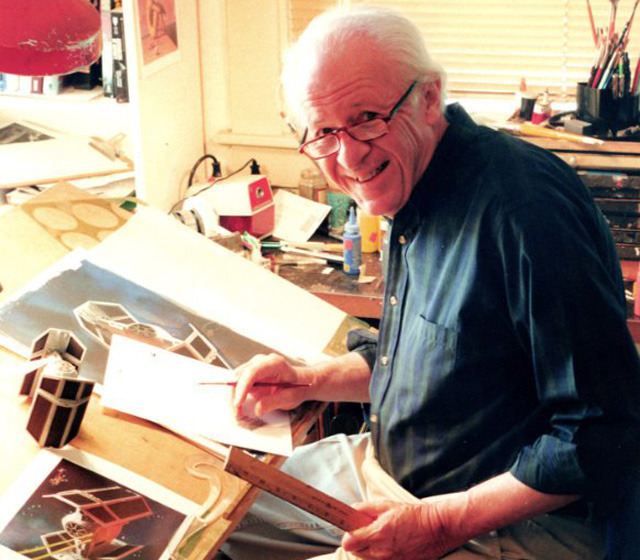
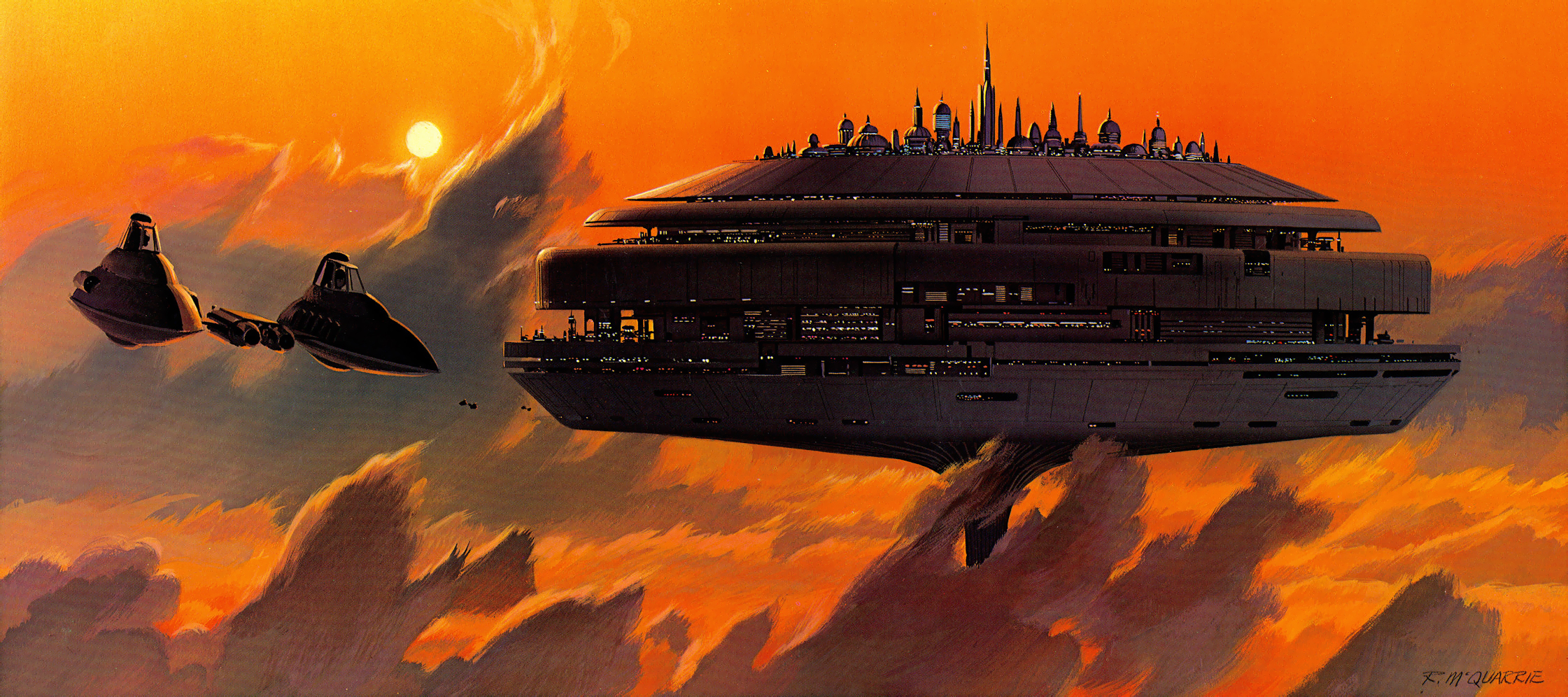
Legendary graphic artist, Ralph McQuarrie, passed away on Saturday at the age of 82. McQuarrie is best known for the artistic visions he created for the Star Wars movies — from the iconic design for Darth Vader’s helmet to the sweeping vistas of Cloud City, he was responsible for much of the look and feel of the Star Wars universe.
I was introduced to that universe as a very young child, when my parents took me and my brother to see Star Wars during the summer of 1977. But it wasn’t until I saw its stunning sequel, The Empire Strikes Back, that this fictional universe had any significant impact on me. By the summer of 1980 I was old enough to cogitate on the visions before me, and I remember being completely blown away by Empire, particularly the scenes that took place on Cloud City. I saw the movie many times that summer, and I simply could not get those visions out of my head. Not that I wanted to.
It was years later, when I became a collector of Star Wars memorabilia, that I came across several prints of McQuarrie’s concept paintings and realized from whose imagination those stunning visions emerged. So complete were McQuarrie’s concepts for the Star Wars universe, that George Lucas and the other directors didn’t merely use them as guides, but recreated them on the screen with astonishing faithfulness.
The adventures of three young people in a galaxy far, far away had almost nothing to do with astronomy or space science, but I was so swept away by what I had seen that for the first time in my life it got me thinking about outer space in a meaningful way. It was a very short journey from the fictional Star Wars universe to the real universe, and it eventually led to a career as a professional astrophysicist. In a way, I owe my passion for outer space to McQuarrie and his astonishing vision. May the Force be with him.
Exploring the limits of the Heisenberg uncertainty principle
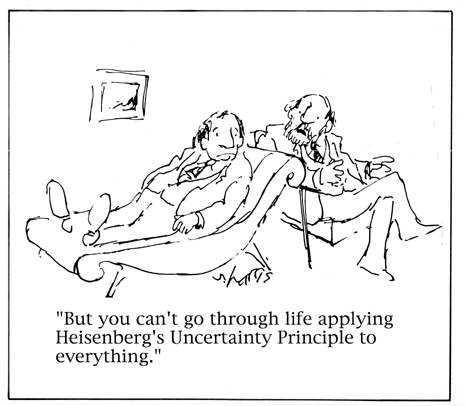
It is one of the more obscure ideas in physics, frequently misunderstood by students and experts alike, so researchers are trying to refine their understanding of the Heisenberg uncertainty principle.
Are you wondering what the heck the HUP actually means? I’ve had requests for a detailed layman’s explanation, so I’ll start working on something. Meanwhile, this MinutePhysics video pretty much explains it in a minute.
“All the evidence we have says that the universe had a beginning”
So says Tufts University physicist, Alexander Vilenkin, who made this statement at a meeting in January in honor of Stephen Hawking’s 70th birthday. (I’m a little late getting around to this, but it’s worth commenting on.)
To fully appreciate the magnitude of this statement, consider that the prevailing view of cosmology for more than two thousand years was that of an eternal universe. This view began to change in the 1920s, when astronomer Edwin Hubble discovered that the spectra of most galaxies are redshifted, and the further away a galaxy is from the Milky Way, the more its spectrum is redshifted. What this means in plain English is that almost all of the galaxies he observed are rushing away from each other, and those that were further away are rushing away faster. Incredibly, it appeared the universe was not only changing, but expanding. If you imagine running the expansion in reverse, so that galaxies rush toward one another as you go back in time, you end up with a point at which the expansion started — a beginning in time and space.
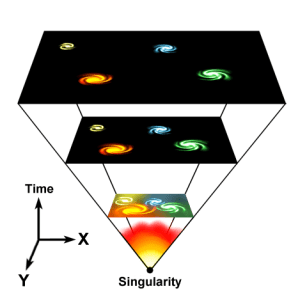
Belgian physicist and priest, Georges Lemaître, anticipated this discovery with what he called the “hypothesis of the primeval atom,” based on his solution to the Einstein field equations. The universe’s beginning was predicted to have been very energetic and violent, and was therefore dubbed as the “big bang.” Four decades later, physicists Arno Penzias and Robert Wilson discovered the predicted afterglow of this big bang, which eventually earned them Nobel prizes. By the late 1980s, sophisticated satellites were mapping the tiny fluctuations in the intensity of the big bang afterglow, which allowed physicists to calculate an age for the universe. By the end of the 20th century, there was near-consensus that the universe had a beginning that occurred some 11-17 billion years ago. (The cosmological model-based number is ~14 billion years.)
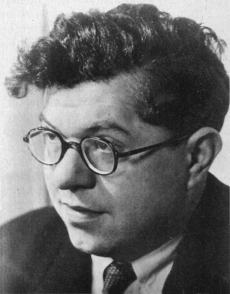
The big bang has had its detractors. It was astrophysicist Fred Hoyle, out of deep skepticism for the idea, who sarcastically applied the term “big bang” to this cosmological model. (Let it not be said that physicists are overly sensitive — the term stuck and has been used in all seriousness ever since.) Hoyle’s collaborator, astrophysicist Geoffrey Burbidge, famously ridiculed physicists who had hopped on the big bang bandwagon as “rushing off to join the First Church of Christ of the Big Bang.” There were two reasons scientists reacted this way. First, some scientists found the idea of a universe with a beginning uncomfortably close to the Genesis account of creation. Second, from the point of view of physics, mathematics, and philosophy, a universe with a beginning is far more messy to deal with than an eternal universe, which requires no explanation. Even still, the evidence for a beginning is now so overwhelming that most physicists have come to accept it, and the big bang has become the prevailing paradigm governing all of physics.
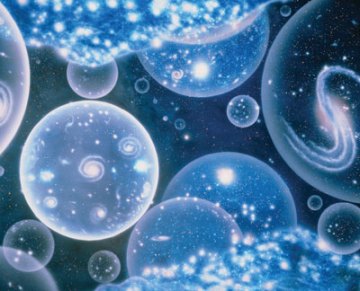
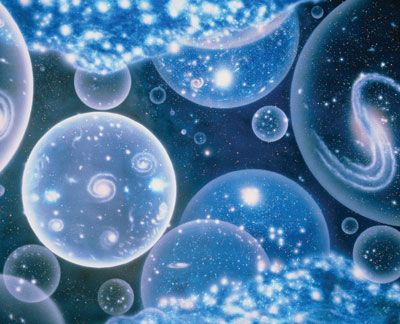
Nevertheless, some physicists had not given up on the idea of an eternal universe, but the focus changed to devising sophisticated models for an eternal universe that fit the observed data — in other words, an eternal universe that incorporated key features of the big bang model. Some of these features are explainable by invoking what’s called inflation, which refers to an early period of exceedingly rapid expansion. This idea was proposed by Alan Guth in the 1980s, and it can also be applied to an eternally inflating universe in which regions of the universe undergo localized inflation, creating “pocket universes.” This inflation continues forever, both in the past and into the future, and so in a sense it represents an eternal universe. Another idea was the cyclical universe, which posited that the universe is eternally expanding and contracting. In this way, the big bang that occurred 14 billion years ago would be just one of an infinite number of big bangs followed by ‘big crunches.’
All of the evidence indicates ours is a universe undergoing perpetual change. To replace Aristotle’s age-old idea of an eternal, unchanging universe, physicists came up with hypothetical eternal universes that were perpetually changing. This was an ingenius approach, but as Vilenkin announced last month, they just don’t work. Guth’s idea turns out to predict eternal inflation in the future, but not in the past. The cyclical model of the universe predicts that with each big bang, the universe becomes more and more chaotic. An eternity of big bangs and big crunches would lead to a universe of maximum disorder with no galaxies, stars, or planets — clearly at odds with what we observe.
As the journal New Scientist reports, physicists can’t avoid a creation event. Vilenkin’s admission exemplifies the reason physics is the king of all the sciences — physicists are generally willing to admit when their cherished ideas don’t work, and they eventually go where the data and logic lead them. Whether this particular realization will pave the way to serious discussion of God and consistency with the Genesis account of creation remains to be seen. Physicists can be a stubborn bunch. As Nobel laureate George P. Thomson observed, “Probably every physicist would believe in a creation if the Bible had not unfortunately said something about it many years ago and made it seem old-fashioned.” Still, some physicists are open to the idea. Gerald Schroeder, who is also an applied theologian, has written profoundly on the subject. His book, The Science of God, is an illuminating discussion of how the Bible and biblical commentary relate to the creation of the universe.
Dawkins hoisted by his own petard
According to Richard Dawkins, Expert on Religion, you cannot be a Christian if you don’t meet the criteria set by an atheist — which includes secular attitudes about certain issues and failure to identify the first book of the New Testament — even if you self-identify as a Christian. Let’s adopt Dawkins’ standard as universal. Since Dawkins, himself, fails to identify the full title of Darwin’s Origin of Species, and in desperation even utters an appeal to God, it is reasonable to conclude that he’s neither an evolutionist nor an atheist.
Of knitting needles and auroras
Check out this video shot on board the International Space Station. It shows a polyethylene knitting needle that has been given a net charge and what happens as water droplets are fired at it. This phenomenon is similar to the process that generates terrestrial auroras, as charged particles from the Sun swirl around the Earth’s magnetic poles and produce radiation.
Evolution of flowering plants
Genetic evidence from studies of flowering plants is showing that their evolution didn’t proceed by random mutation, but proceeded by building on previous genetic structure. It’s like a genetic Lego set:
Though a rose, carnation or tulip each has its own distinguishing feel, look and smell, they all share one common trait: the flower’s petals adorn its perimeter while the reproductive organs sit in the flower’s center.
In fact, just about every flowering plant ever cataloged follows this same pattern. Until recently scientists didn’t understand how this occurred.
…
[Plant biologist Detlef Weigel] “Now, we show that the pattern arose through clever recycling of another pattern that plants had previously used in shoots, for other purposes. This is a big step toward solving the “abominable mystery,” as Darwin put it ” the evolutionary origin of flowers and flowering plants.
A blast from 20 million years in Earth’s past
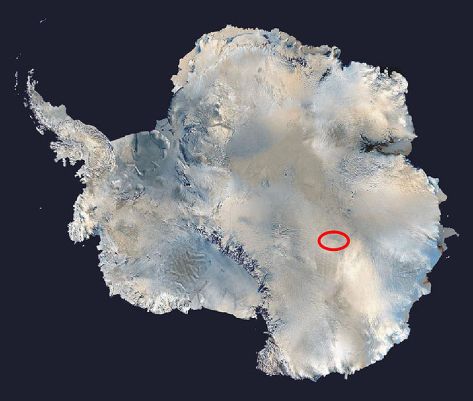
After 20 years of drilling through miles of ice, Russian scientists are on the verge of tapping a subglacial lake in Antarctica that hasn’t seen the light of day in 20 million years.
Just as astrophysicists can get a glimpse of the development of the universe by probing unprocessed, primordial gas clouds, scientists are hoping to understand something about the development of the Earth, and even of moons in the solar system, with the samples they will collect from this ancient lake.
Of atheist temples and the instinct to worship
The Scholar Redeemer comments on a clash of views within the atheist community* and contemplates some logical problems with the idea that religion developed as an evolutionary tic.
* This promises to be every bit as silly and entertaining as the religious infighting in Monty Python’s Life of Brian.