Extremely old “fossil” galaxy discovered

“Fossil” galaxy, Segue 1, is a satellite of the Milky Way and, with just a few hundred stars, it’s so tiny that it’s not clear whether it’s actually a galaxy or just a globular cluster (a tightly-packed grouping of old stars that orbits in the halo of our galaxy). What makes Segue 1 interesting is that, unlike other galaxies, it appears to have stopped changing with time almost immediately after it formed. Galaxies go through periods of intense activity throughout their lifetimes — e.g. bursts of star formation — but not so with Segue 1.

Elements heavier than helium are almost entirely produced inside the cores of stars or during supernovae, and are expelled back into space via red giant winds or supernova explosions, where these elements mix with what’s called the interstellar medium (mostly hydrogen and helium). The next generation of stars forms out of this mixed gas, therefore we expect to find heavier elements in the atmospheres of younger stars, and that’s what astronomers indeed observe. The stars in Segue 1, however, are pristine and comprised almost entirely of hydrogen and helium — its stars contain 300 times less heavy elements than our Sun. It appears that star formation in this tiny galaxy shut off almost as soon as it began. Astronomers refer to it as a “fossil” galaxy, because it’s been preserved just as it was nearly 13 billion years ago, and as such it should give some important insights into the conditions of the early universe.

An X-ray sky

It may look like abstract art, but it’s actually an image of the entire sky in the X-ray part of the spectrum.

The ROSAT All-Sky Survey Map

This image was produced by the ROSAT survey. ROSAT is an X-ray observatory that, like its sister, the Hubble Space Telescope, is in orbit around Earth. The only way to observe celestial X-rays is from extremely high altitudes or in space, since Earth’s atmosphere absorbs them.

The curved blue stripe in the image is the disk of the Milky Way galaxy, and the bright white spots are supernova remnants.

Recommended reading:

NASA releases images of a solar flare

NASA has released images of an M-class flare on the Sun taken by its Solar Dynamics Observatory. Solar flares are bursts of energy released from the surface of the Sun, in which charged particles like electrons and ions, as well as neutral atoms, are expelled. These flares are energetic enough that the particles are able to zip across the approximately 150 million kilometers from the Sun to the Earth in just a couple of days. M-class flares are mid-level in intensity—the highest are X-class—and are not directly harmful to life on the surface of the Earth. These flares can, however, disrupt satellites in Earth orbit.

This particular flare occurred on April 2nd.

Saturday morning astronomy news roundup

The evidence for dark matter mounts: gamma rays (very high energy particles) observed coming from dwarf galaxies suggest the annihilation of dark matter particles that collide with each other. The problem: calculations show that these particles would have to be heavier than previously believed, which is at odds with hints from earthly experiments designed to detect the mysterious particles.

One of Saturn’s moons, Enceladus, appears to have a liquid ocean beneath its frozen crust. Scientists are searching for liquid water on solar system bodies other than the Earth, because life as we know it can’t exist without liquid water.

NASA’s Lunar Atmosphere and Dust Environment Explorer (LADEE) probe is expected to crash into the Moon on April 21. The probe, which has been in orbit around the Moon since October of last year, has been gathering data on the Moon’s extremely thin atmosphere (I bet you didn’t know the Moon has an atmosphere—so does Mercury). Very soon, LADEE will run out of fuel and its orbit will decay, sending it crashing onto the surface of the Moon.

The big, fat ‘El Gordo’ galaxy cluster is bigger than previously thought. New Hubble Space Telescope data, showing how much the giant cluster is warping the space around it, has allowed a more precise calculation of its mass, which now appears to be three million billion times the mass of the Sun (3 x 10¹⁵ solar masses). What makes El Gordo so interesting is not necessarily its large mass—there are other massive clusters in the universe—but that it got so massive so early in the history of the universe. Like all galaxy clusters, the majority if its mass is comprised of dark matter, not the visible stuff you can see.

Where is the scientific evidence for “white privilege”?

A “White Privilege Conference” was held on March 25 to 29 at the Monona Terrace Community and Convention Center in Madison, Wisconsin. This conference has been held for 15 years, it is funded in part by tax dollars, and it is geared toward educating the state’s teachers on how to help destroy white peoples’ undeserved privilege, overcome the oppression of minorities, and work toward a more equitable world. At least some news reporters were denied access, but one found a way in and reported the following.

An individual named Kim Radersma lead a breakout session entitled “Stories from the Front Lines of Education: Confessions of a White, High School English Teacher.” Ms. Radersma is currently working toward her Ph.D. in “critical whiteness studies” (presumably in the Sociology department) at Brock University in Ontario, Canada. During her session she told the participating teachers that white people are like “alcoholics” with their racism. They will never be cured of it but will always be racists at heart.

Describing herself, it is reported she said, “being a white person who does anti-racist work is like being an alcoholic … I will never be recovered by my alcoholism … I am so deeply imbedded with racist thoughts and notions and actions in my body that I have to choose everyday (sic) to do anti-racist work and think in an anti-racist way.”

As a person who is committed to the preservation of human rights and devoted to science, I am deeply disturbed by this. The above accusation appears to be that white people are inherently racist for the same reason they have white skin—racism is part of their DNA. This would make white people racially inferior to all the other ethnic groups around the world who do not suffer from “white privilege.”

This is a scientifically testable hypothesis. So, as an advocate of science, I have to ask Ms Radersma and the organizers of the conference, where is the evidence for this? This question must be answered, because, if this grave assessment of the nature of white people was made without scientific evidence, then it is nothing more than an expression of vile racism against white people. I fear that is the case and that the organizers of the conference knew this charge against white people could not be rationally defended, which is why the conference was closed to public scrutiny.

I challenge the future Dr. Radersma to defend her hypothesis in public. I challenge her to expose her accusations against the white men, women, and children of America to the illuminating and purifying light of scientific examination. If she is not willing to do this, the inevitably conclusion must be that she is a racist fraud and her belief is just one of those foul things that grow in the dark.

Backyard Astronomy: April 2014

Here are some fun astronomical events you can watch from your own backyard. 

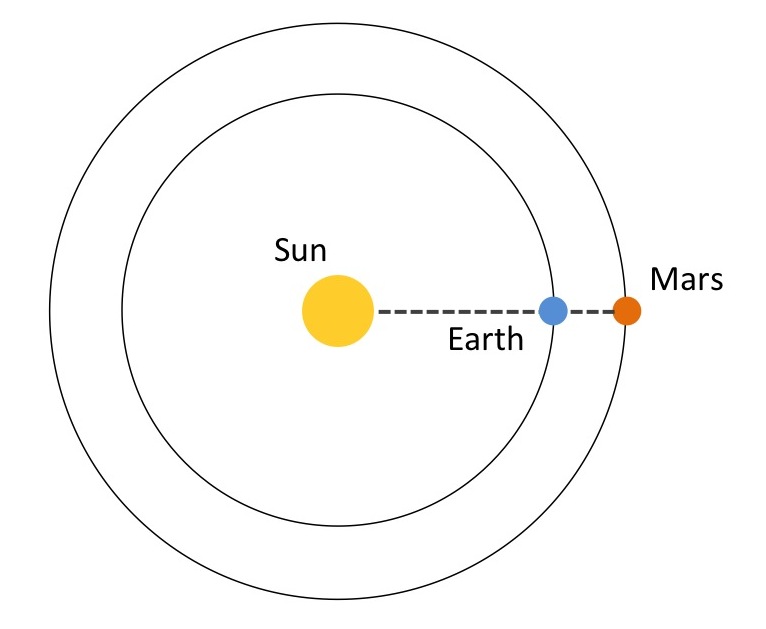
April 8: Mars at opposition. Opposition is when a planet is on the opposite side of the Earth from the Sun (see below). It’s the best time to view a planet through a telescope.

opposition

April 15: Total lunar eclipse. A total lunar eclipse occurs when the Earth moves between the Sun and the Moon (see below). Unlike a solar eclipse, in which the Moon moves between the Sun and the Earth, you don’t need any protective eyewear to watch a lunar eclipse.

lunar_eclipse

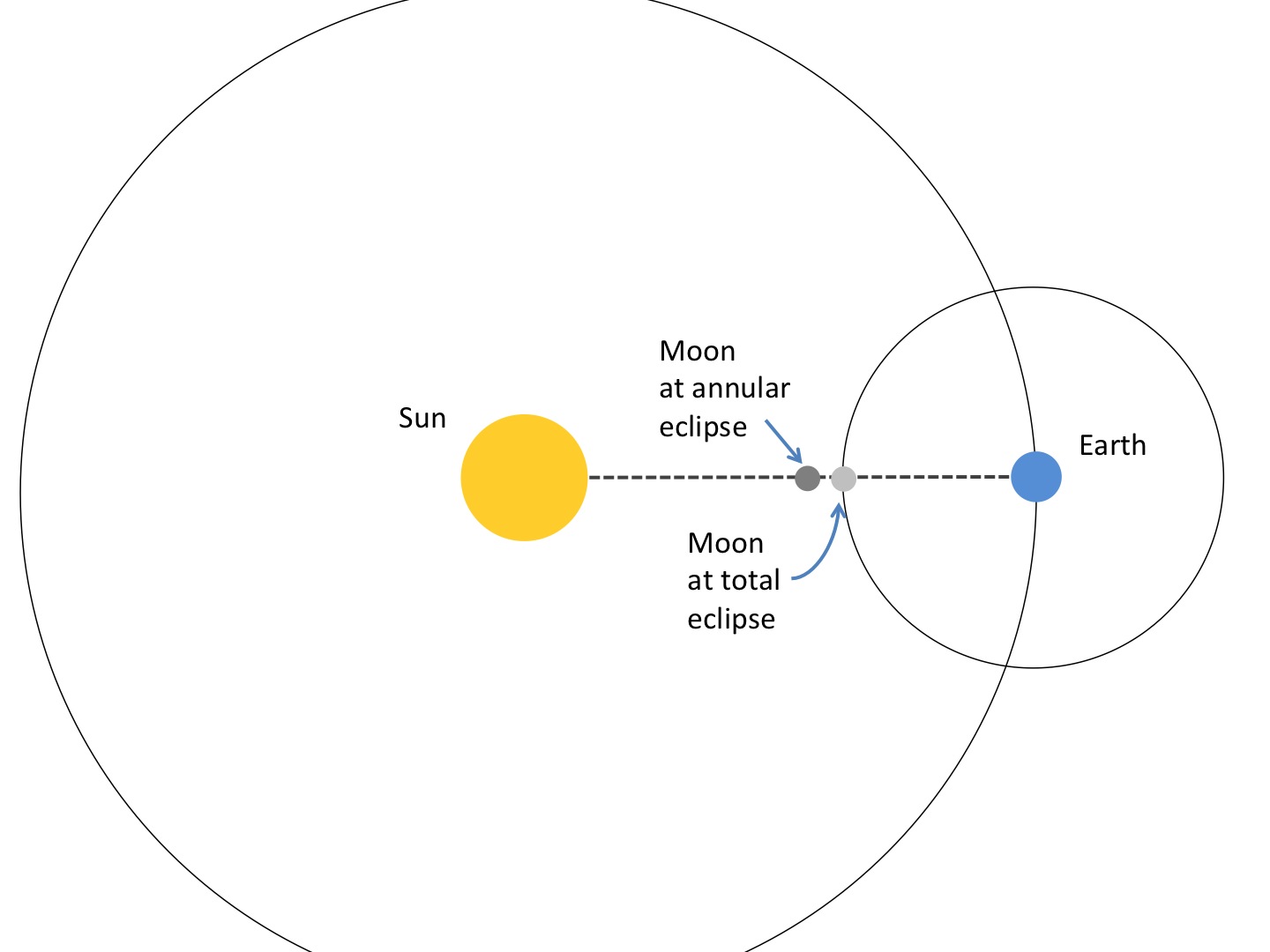
April 28-29: Annular solar eclipse. This is also known as a “ring of fire” eclipse, due to the way the Moon only partially blocks the Sun. During a total solar eclipse, the Moon moves between the Sun and the Earth and is at just the right distance from the Earth to completely block out the Sun. An annular solar eclipse occurs when the Moon moves between the Sun and the Earth, but the Moon is far enough away from the Earth that it appears slightly smaller in the sky than the Sun. Protective eyewear is required to safely view an annular solar eclipse.

annular_eclipse

Giant impact theory of Moon’s formation challenged by new evidence

Scientists are puzzled over the water content of the Moon:

The amount of water present in the moon may have been overestimated by scientists studying the mineral apatite, says a team of researchers led by Jeremy Boyce of the UCLA Department of Earth, Planetary and Space Sciences.

Boyce and his colleagues created a computer model to accurately predict how apatite would have crystallized from cooling bodies of lunar magma early in the moon’s history. Their simulations revealed that the unusually hydrogen-rich apatite crystals observed in many lunar rock samples may not have formed within a water-rich environment, as was originally expected.

The prevailing model for how the Moon formed involves a Mars-sized planet crashing into the Earth, ejecting bits of the Earth into space, and some of these bits coalescing into what is now the Moon. If that’s the case, then the Moon should be similar in composition to the Earth — except that lighter elements, like hydrogen (which is a component of water), are believed to have escaped the Moon’s relatively weak gravity and drifted off into space, leaving the Moon rather dry.

In 2010, scientists took samples from the Moon and found apatite crystals, which contained a lot of hydrogen, suggesting that the Moon wasn’t as dry as previously thought. Now, however, with scientists concerned that the amount of hydrogen in these crystals overestimates the amount of water on the Moon, the “giant impact” theory of how the Moon formed is called into question:

“We had 40 years of believing in a dry moon, and now we have some evidence that the old dry model of the moon wasn’t perfect,” Boyce said. “However, we need to be cautious and look carefully at each piece of evidence before we decide that rocks on the moon are as wet as those on Earth.”

This study shows that scientists still have much to learn about the composition and environment of the early moon.

“We’re knocking out one of the most important pillars of evidence regarding the conditions of the formation and evolution of the moon,” Boyce said. “Next, we plan to determine how badly apatite has distorted our view of the moon and how we can best see past it to get at the moon’s origin.”

This is how science works. New evidence refines — or sometimes completely blows away — a theory/hypothesis. You can never be so wedded to an idea that you overlook important evidence that contradicts your model. It’ll be interesting to see if this latest evidence overturns the giant impact theory, and, if so, what the next favored model will be.

It wasn’t the rats after all

It seems that not only did rats get an undeservedly bad rap for the Black Death, but that the evidence favors a very simple explanation for its deadliness. Researchers have determined that the plague that wiped out 60% of London’s population in the 14th century was pneumonic — meaning spread through the air — rather than bubonic:

On Sunday, London scientists who’d studied 25 skeletons discovered in a new rail line said everything we’d thought about the bubonic plague — what caused it, what kind of disease it was, its strength — was wrong. Most of the ensuing coverage focused on the finding that the disease wasn’t likely spread by rats’ fleas, as has been taught in every high school in the West, but had actually been airborne.

But that discovery overshadowed a bunch of other equally fascinating findings, which provided a glimpse into how Europeans lived during the darkest chapter in human history.

And the article goes on to describe how horribly Europeans lived at that time.

It’s not clear if people are grasping the full meaning of this. The exact same strain of the plague that wiped out millions upon millions of people in a relatively short time surfaced in Madagascar last year and only managed to kill 60 people. What’s the difference between now and then? Most people living in London in the 14th century had horrible lifestyles — they were dirty, malnourished, got into a lot of fights, and were probably working under brutal conditions. When a person’s overall lifestyle is poor, that makes him much more susceptible to deadly disease. It’s the same principle that explains why some people with HIV go on to get devastating diseases like AIDS and some don’t. Adopting a very restrictive and healthy lifestyle is the best protection a person has against not only infectious disease, but against functional disorders like neuroses, cancer, adult-onset diabetes, and so on.

We’ll be writing a lot more about this topic in the future and how it relates to a meta-principle that turns out to vindicate Christian philosophy in a most powerful way.

The Astronomy & Astrophysics curriculum is finished!

Our publisher decided to go ahead and roll out the Astronomy & Astrophysics curriculum for the 2014-15 school year, so we’ve been working hard to get it completed, and now it’s off to the electronic presses. We’ve got a few families who are beta-testing the curriculum, and will hopefully get some helpful feedback. The curriculum will be offered for sale on Amazon.com and Smashwords in the next couple of months, and we’ll make an announcement once it’s available. Meanwhile, we’re working on the Physics I & II curricula, which will be available for the 2015-16 school year.

Now that we’re out of super-work-mode, look for more regular posting to occur here.

Updated update

In spite of the lack of activity here, there’s a lot going on with SixDay. We’re working furiously to complete the Astronomy & Astrophysics curriculum and getting started on the Physics curriculum. We are looking at options to create an online community for those using any of the curricula so that we can interact with instructors and students and provide a platform for them to interact with each other. By this time next year in 2015, we’re hoping for a lot of activity on this site.

The planned roll-out date for the curricula is May 2014 2015.

Update: After a discussion with our publisher’s liaison, we’ve decided to push back all of the curricula to the spring of 2015. Sarah and her husband are expecting a baby in January, and there’s simply too much to be done to roll out the curricula by next spring—we’d rather offer high-quality products a little later than something that’s rushed to meet an arbitrary deadline. The good news is that the physics course will be more substantial, and we are also planning to create an elective course for modern science and the Bible. See here for more information.