Possible baby planet discovered

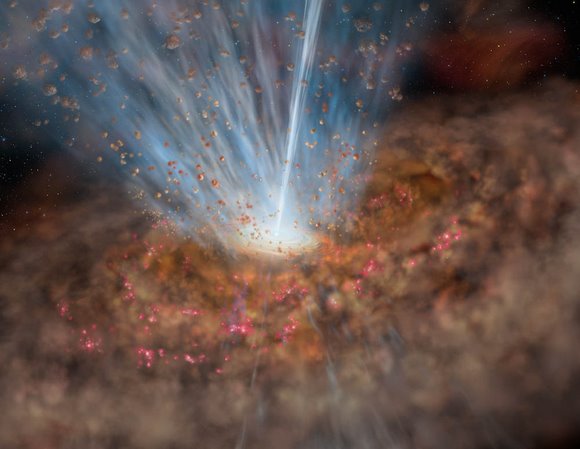
Astronomers may have spotted a baby planet around a star called T Cha, which is estimated to be 7 million years old — still in its diapers, compared to the 4.5-billion-year-old Sun. What makes this an unusual discovery is that it may be the first time astronomers have witnessed an individual planet in the process of forming. The evidence hinges on a suspicious gap in the dusty disk surrounding the newborn star, suggesting that some kind of object has formed and swept out the material in its orbit.

Astronomers have dubbed dusty planet-forming disks “proplyds,” short for “proto-planetary disks.” The Hubblecast video below shows astonishing images of several proplyds observed in the Orion Nebula.
Continue reading

Austin lecture event: The Origins of Humankind

For those of you in the Austin, Texas area, the Christian Faculty Network is coordinating a special event in early March:

The Origins of Humankind: From Mud to Man
Comparing Biblical Writings with the Fossil Record

Presented by Dr. Gerald Schroeder

Tuesday, March 8th, 7:00 – 8:00 PM with Q&A to follow
The University of Texas at Austin, Ernest Cockrell Jr. Hall, Rm. 1.202

Free and open to the public

Gerald Schroeder is an MIT-trained physicist and author of the bestselling book The Science of God. He was on the staff in the physics department at MIT before moving to Israel to join the Weizmann Institute, the Volcani Research Institute, and the Hebrew University. He has consulted for agencies of several national governments and lectured all over the world. He has several scientific publications, and his work has been reported in Time, Newsweek, and Scientific American. His formal training in chemistry, physics, and the Earth and planetary sciences provides the basis for the broad scientific perspective he brings to his books and lectures. For the past twenty five years, Dr. Schroeder has also pursued a study of ancient biblical interpretation. An ability to handle the biblical material in the original languages allows him to tap the subtle depths contained in the original texts.

Continue reading

Separating philosophy from science

** Written by “Surak” **

An article appeared several months ago in the Daily Telegraph with the headline, “Neuroscience, free will and determinism: ‘I’m just a machine.’” It describes how a British neuroscientist, Professor Patrick Haggard, found that magnetic fields can be used to affect a person’s brain and exert some small degree of control of his body without touching it in any way. The magnetic field is created by a device held close to a person’s head; a technique he calls “transcranial magnetic stimulation.” Although the amount of ‘control’ he was able to demonstrate was only the waggling of his index finger and the twitching of a hand, it was a wonderfully original experiment that sparks the imagination with intriguing visions of further research and possible cures.

Unfortunately the article wasn’t about the scientific possibilities. The researcher chose instead to make wildly speculative philosophical statements in the guise of science:

Continue reading

Billions of planets in the Milky Way?

About 50 billion, to be specific. If you take the results from the Kepler Mission and do a bit of math, that’s the implication. Hundreds of millions of those planets are predicted to be in the habitable zone, too.

I’ve seen a moderate amount of hubbub about the theological implications of finding life elsewhere in the universe, especially intelligent life. I’ll likely post on this in the future, but for now I’ll just point out two things: 1) the Bible is mute on the subject; and 2) the great Christian apologist, C. S. Lewis, had no problem with the prospect of intelligent life out there. (He did, however, express concern about humankind’s likely behavior toward any alien life we might encounter. Unfortunately, he’s probably right, but I’ll keep watching Star Trek and hoping for the best anyway.)

Continue reading

New instrument will aid the search for Earth-like planets

Astronomers have known about the existence of planets around other stars since the early 1990s. Since then, over 500 confirmed extra-solar planets (or “exoplanets”) have been discovered. Most of them are gas giants like Jupiter, since these are the easiest to detect. The holy grail, as it were, of exoplanet searches is Earth-like planets in habitable zones around other stars. The habitable zone is the orbital distance from a star that would permit the presence of liquid water and Earth-like life. The Kepler mission, launched into space in 2009, has found more than 1,200 candidates for Earth-sized planets around other stars, with over 50 of these possibly in the habitable zone.

Artist concept of Kepler-10b, the first rocky planet confirmed by the Kepler mission. Credit: NASA

Continue reading