108 minutes that changed the world

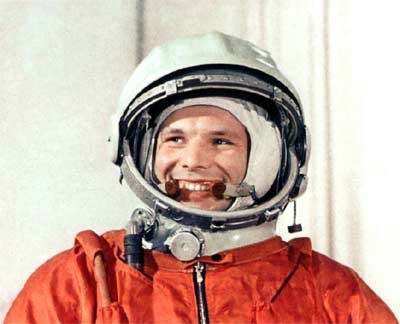
Tomorrow will mark the 50th anniversary of the first man in space. On April 12, 1961 Soviet cosmonaut, Yuri Gagarin, spent 108 minutes in space aboard the Vostok 1 spacecraft. It would be his only space flight. Gagarin continued his career designing spacecraft and training other cosmonauts. He died in 1968 when a jet he was piloting crashed.

Gagarin received many honors for his achievement, but perhaps none so great as being immortalized in musical form by French techno-artiste Jean-Michel Jarre:

Continue reading

Physicists discover new particle?

A proton - anti-proton collision at Fermilab provides evidence for the top quark in 1995 (Credit: LBNL)

Physicists at the Tevatron particle accelerator at Fermilab have discovered a strange new signal emerging from proton – anti-proton collisions that is unlike anything seen before. It could be a new kind of particle — and with it, possibly a new kind of fundamental force — or it could be a statistical blip. While the community is excited about the discovery, many physicists are understandably reserved about it until the result is replicated with the Large Hadron Collider.

Whatever it is, the signal is not consistent with a Higgs boson, the elusive “God particle” posited to explain why certain particles have mass. In fact, nobody seems to know what it could possibly be — music to a theorist’s ears. The last major particle discovery made at Fermilab was in 1995 with the top quark, whose existence (together with the bottom quark) was predicted to exist by physicists in 1973.

Continue reading

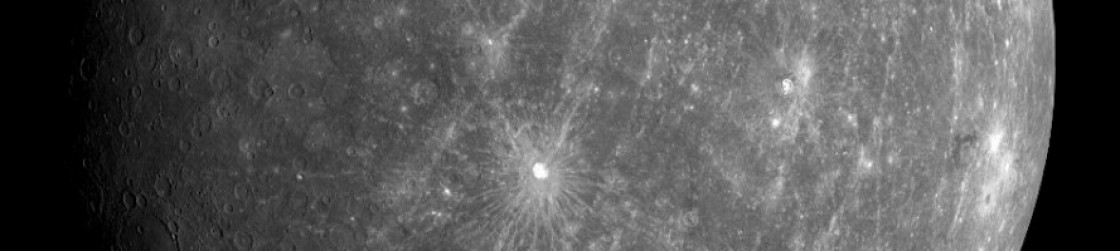
MESSENGER’s first image from orbit

The MESSENGER probe began sending images of Mercury back to Earth yesterday. Here is the historic first image from orbit:

Click on the image to go to the MESSENGER website and download a larger version.

The large feature with rays, near the top of the photo, is an impact crater named Debussy. The crater is about 85 km across, with the rays stretching hundreds of km, covering much of the southern half of the planet. Radio images of the crater and rays indicate that it’s a relatively young crater, though astronomers don’t know how young.

Image of impact crater Debussy taken by MESSENGER during a previous flyby of Mercury

Continue reading

Clean energy turns over a new leaf

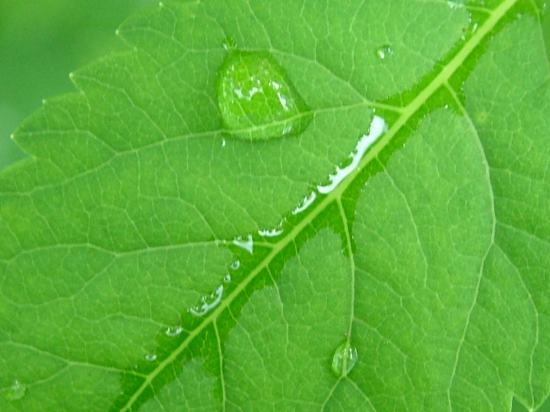
Scientists at MIT have developed an artificial leaf that mimics photosynthesis, only much more efficiently. The leaf breaks water molecules into hydrogen and oxygen parts and stores them in cells for generating electricity. Previous artificial leaves were highly unstable and made of expensive components — the new leaf is a big step forward in that it’s made of cheap and resilient components.

David Nocera, the lead scientist on the project, claims that one artificial leaf in a gallon of water could produce enough electricity to power a household in developing countries for a day. A company in India is already planning to implement this technology on a larger scale with the creation of a small power plant about the size of a refrigerator.

Continue reading

Radiation dose chart

I’m encountering a lot of people who are understandably concerned about radiation leakage from the damaged Fukushima plant in Japan. But very few of them seem to know the extent to which exposure to radiation is a fact of life on Earth. Did you know, for instance, that you’ll be exposed to more radiation by eating a banana than by living within 50 miles of a nuclear power plant for a year?

Randall Munroe, who pens the hilariously geeky webcomic, xkcd, has teamed up with a friend at the Reed Research Reactor to create a visual aid for understanding radiation exposure levels. As Munroe cautions, the situation at Fukushima seems to be changing by the hour, but this should at least help put things in perspective.

Click on the image to enlarge.

Nerve cells link up through tiny tubes

The affinity of nerve cells for exploring tiny tubes could lead to futuristic neuroscience developments:

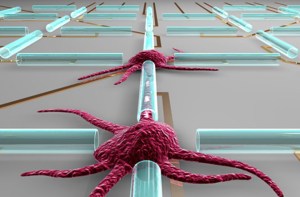
Nerve-cell tendrils readily thread their way through tiny semiconductor tubes, researchers find, forming a crisscrossed network like vines twining toward the sun. The discovery that offshoots from nascent mouse nerve cells explore the specially designed tubes could lead to tricks for studying nervous system diseases or testing the effects of potential drugs. Such a system may even bring researchers closer to brain-computer interfaces that seamlessly integrate artificial limbs or other prosthetic devices.

The technology required to interface the brain with a computer is apparently still a long way off, but every step in the right direction counts. (Unless of course this is one more step toward a Borg future, in which case prepare to be assimilated.)

MESSENGER probe locks into orbit around Mercury

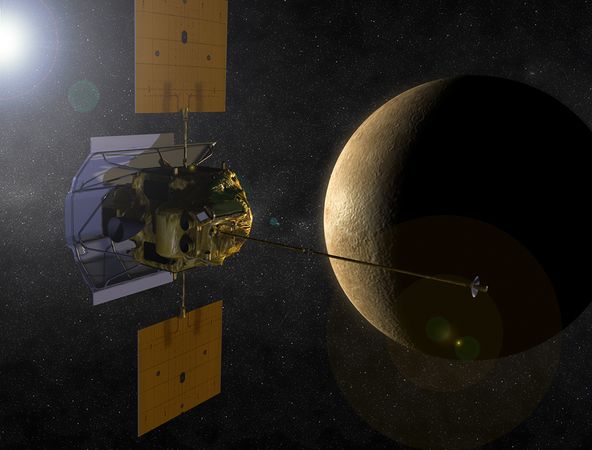
Artist's conception of MESSENGER approaching Mercury (Credit: NASA)

For the first time ever, we have a probe orbiting the planet Mercury. The MESSENGER probe was successfully maneuvered into orbit around Mercury yesterday following a six-and-a-half-year series of gravitational flybys past Earth, Venus, and Mercury, to nudge it into course. Starting in April, MESSENGER will make two orbits of Mercury per (Earth) day, collecting information to send back to scientists on Earth.

Previous missions to Mercury include the Mariner 10 spacecraft, which gathered data as it quickly flew past Mercury three times in 1974-1975, and three data-collecting flybys of Mercury by the MESSENGER probe in 2008-2009.

NASA scientists hope the mission will help answer several questions about Mercury, including why the tiny planet is so dense, what its geological history is, and whether there is actually ice at its poles.

Continue reading

American astronauts to hitch rides with the Russians

Now that the U.S. is retiring its shuttle fleet, Russia seems to be embracing the concept of supply and demand. Can’t really blame the Russians for taking advantage of the situation, but still … yikes:

The new deal will allow NASA to fly a dozen astronauts from the U.S. or its partner agencies on Russia’s venerable Soyuz spacecraft between 2014 and 2015 at a cost of about $62.7 million per seat. That’s an increase from the $55.8 million per seat NASA paid under a deal for six round trips to the station in 2013 and 2014.

At least we’re on friendly terms with them now. I remember what a big deal it was back in 1984 to portray American astronauts hitching a lift with the Soviets in the sequel to 2001: A Space Odyssey. But nobody ever thought they’d be fleecing us someday just for a ride to the International Space Station.

Happily, this is not a permanent arrangement. NASA’s priority for 2015 and beyond is to have private American companies develop spacecraft to deliver our astronauts into space, at which point it’s dasvidaniya to the Russians.

Continue reading

Nanotech may keep you chatting for much longer

Tired of having to charge your cell phone battery every couple of days? Nanotechnology may be coming to the rescue with an improvement in cell phone technology that could reduce the drain on your battery by a factor of 100 — that means months of use without having to charge your battery. The new technology involves the use of carbon nanotubes to reduce the size of tiny wires that convey digital information in your phone, which in turn cuts the amount of electricity that’s needed to make your phone work. Even better: reduced power consumption could eventually lead to cell phones that are powered by heat or sunshine.

Check out this quickie vid if you’re wondering what in the world these carbon nanotube thingies are anyway. (Note how the nanotube professor describes what he does as “curiosity-driven science.” That’s an outstanding explanation.)

Continue reading

Science fiction becoming science reality

Physicist Michio Kaku, who has penned several popular books about science, has written a new book called Physics of the Future in which he describes the sorts of innovations we can expect in the 21st century. Among the technological breakthroughs-in-the-making:

Any science fiction junkie will tell you that all of these ideas have been around for decades in television shows, movies, novels, and short stories. My two favorite TV shows when I was a kid were Star Trek and The Jetsons, and it occurred to me recently that an awful lot of what was imagined in those shows has become reality, or is about to according to Kaku.

I’m not sure which is more impressive — the prescience of the writers who seemingly foretold the future or the genius of the scientists and engineers who are making it all happen — but one thing seems certain: anything we can imagine we can eventually make reality.