
Sometimes words are inadequate, so no commentary for this. Turn up the sound, click on full-screen, and watch:
Space Science
American astronauts to hitch rides with the Russians
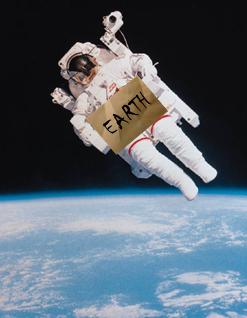
Now that the U.S. is retiring its shuttle fleet, Russia seems to be embracing the concept of supply and demand. Can’t really blame the Russians for taking advantage of the situation, but still … yikes:
The new deal will allow NASA to fly a dozen astronauts from the U.S. or its partner agencies on Russia’s venerable Soyuz spacecraft between 2014 and 2015 at a cost of about $62.7 million per seat. That’s an increase from the $55.8 million per seat NASA paid under a deal for six round trips to the station in 2013 and 2014.
At least we’re on friendly terms with them now. I remember what a big deal it was back in 1984 to portray American astronauts hitching a lift with the Soviets in the sequel to 2001: A Space Odyssey. But nobody ever thought they’d be fleecing us someday just for a ride to the International Space Station.
Happily, this is not a permanent arrangement. NASA’s priority for 2015 and beyond is to have private American companies develop spacecraft to deliver our astronauts into space, at which point it’s dasvidaniya to the Russians.
Science fiction becoming science reality
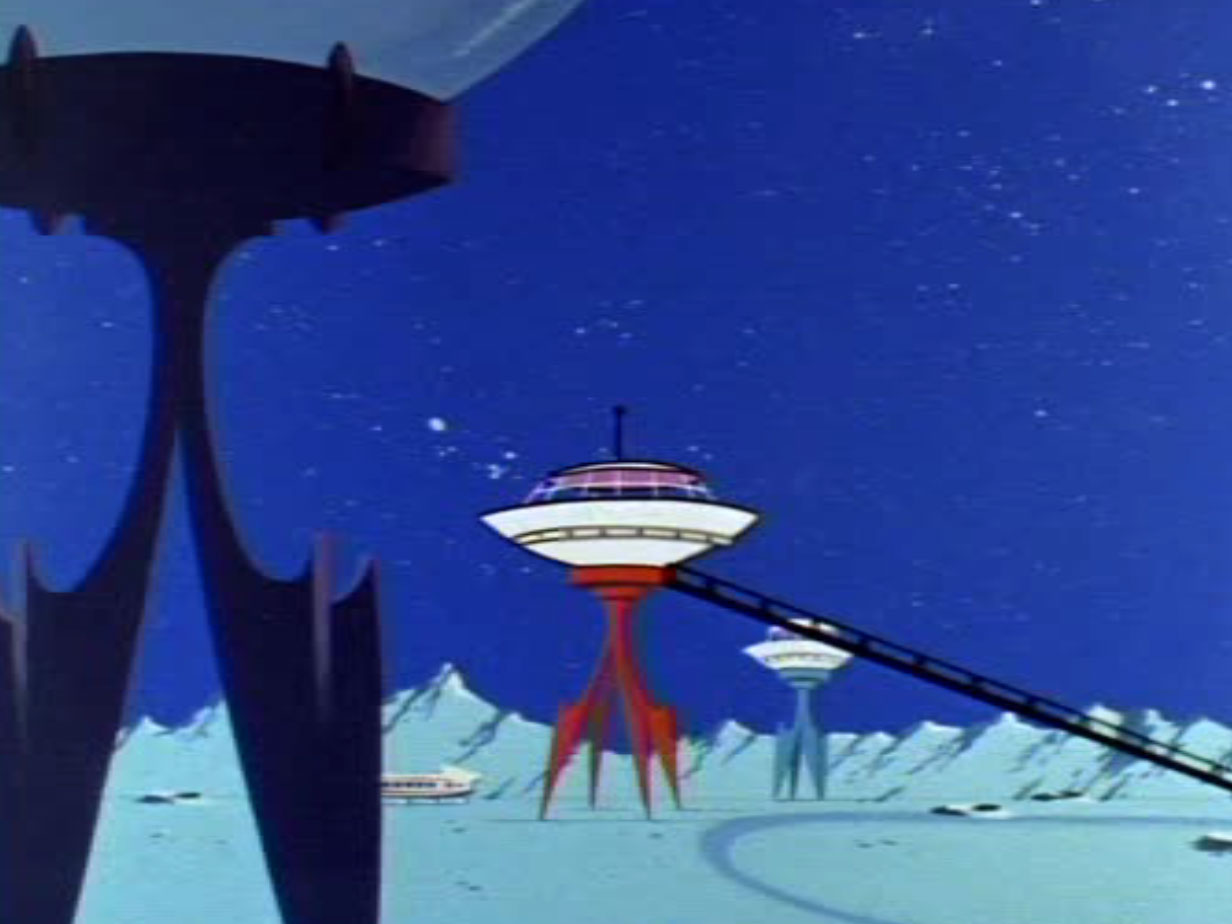
Physicist Michio Kaku, who has penned several popular books about science, has written a new book called Physics of the Future in which he describes the sorts of innovations we can expect in the 21st century. Among the technological breakthroughs-in-the-making:
- invisibility cloak and goggles
- Internet contact lenses
- modular robots
- a space elevator to the Moon
- space tourism
Any science fiction junkie will tell you that all of these ideas have been around for decades in television shows, movies, novels, and short stories. My two favorite TV shows when I was a kid were Star Trek and The Jetsons, and it occurred to me recently that an awful lot of what was imagined in those shows has become reality, or is about to according to Kaku.
I’m not sure which is more impressive — the prescience of the writers who seemingly foretold the future or the genius of the scientists and engineers who are making it all happen — but one thing seems certain: anything we can imagine we can eventually make reality.
You’re in space

Mars orbiter spots Mars rover
The Mars Reconnaissance Orbiter captured the progress of the Mars Exploration Rover Opportunity as it investigates a 90-meter crater on the Martian surface. A few months ago the rover was on one side of the crater, and it’s apparently made its way to the other side. See if you can spot it below. (No word on whether any hrossa or pfifltriggi have been seen.)

(Click on the photo to see a larger version.)
A final welcome home for Discovery

Space Shuttle Discovery made its final landing yesterday. Astronaut Michael Barratt noted it was “about time” for the shuttle to retire, but at the same time he and the rest of the crew expressed sadness at the occasion:
“This is a pretty bittersweet moment for all of us,” [Commander] Lindsey said on the runway. “As the minutes pass, I’m getting sadder and sadder about this being the last flight. And I know all the folks involved in the shuttle program feel the same way.”
A lot of that feeling comes from the knowledge that there is no new spacecraft to replace the aging fleet of shuttles.
Space Shuttle Endeavour is scheduled to make its final journey into the great beyond in April, followed by Atlantis in June.
Space missions for the next decade

Photo of the Jovian moon, Europa, taken by the Galileo spacecraft
To infinity and beyond! Well, to the middle-outer reaches of the solar system, anyway. If we can afford it. The National Research Council’s top recommendations for big space missions in the next decade:
- visit Mars to determine if it ever had life
- visit Jupiter’s moon, Europa, which likely has a liquid ocean underneath its icy surface that may harbor life
- check out the atmosphere of ice giant, Uranus
I got a little excited when I saw the title of the TechNewsWorld article, thinking we were planning manned visits to Mars and Europa, but alas these visits would all be carried out with unmanned probes. Still, these missions would bring back important information about our nearest neighbors and the potential for life beyond Earth.
These were the voyages of the Space Shuttle Discovery
Discovery’s final descent was commemorated this morning with the theme to the original Star Trek series and a recorded message by the original Captain Kirk himself, William Shatner. A nice touch.
Discovery docks with the ISS
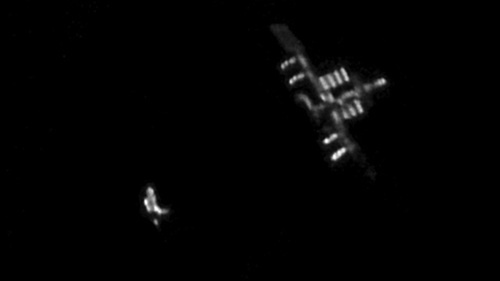
Photo of Discovery approaching the ISS taken by amateur astronomer Rob Bullen
The above is a photo of Space Shuttle Discovery approaching the International Space Station. Incredibly, it was taken by an amateur with a small telescope and camera.
I swear, I heard the Blue Danube when I saw that photo. Reminded me of the last two minutes of this:
Space researchers likely to benefit from space tourism

For every problem, there is almost always a free-market solution
Science, perhaps even more than tourism, could turn out to be big business for Virgin and other companies that are aiming to provide short rides above the 62-mile altitude that marks the official entry into outer space, eventually on a daily basis.
A $200,000 ticket is prohibitively expensive except for a small slice of the wealthy, but compared with the millions of dollars that government agencies like NASA typically spend to get experiments into space, “it’s revolutionary,” said S. Alan Stern, an associate vice president of the Southwest Research Institute’s space sciences and engineering division in Boulder, Colo.
I think it has escaped the general consciousness that up until the last one hundred years or so scientific research was privately funded. It looks like technical advancements combined with economic forces are driving research back in that direction, however slowly. Personally, I couldn’t be happier about that, because private funding disengages science from whatever government orthodoxy happens to be in place at the moment*.
 SixDay Science