Questions from Christian Students, Part 1

Sarah was recently invited, along with two other scientists, to take part in a panel discussion for a group of mostly Christian students. After the main discussion, students were invited to submit questions via text message; there was very little time to address them, so only a few were answered. The questions were quite good, so over the next few weeks, Surak and Sarah will answer most of them here. All of the questions are listed in the Intro to this series. 

How do you account for the Higgs boson particle?

The Higgs boson, which has been in the media quite a bit lately, is popularly referred to as the “God Particle.” Nobel laureate Leon Lederman explains the origin of the nickname in his book, The God Particle: If the Universe Is the Answer, What Is the Question?

This boson is so central to the state of physics today, so crucial to our final understanding of the structure of matter, yet so elusive, that I have given it a nickname: the God Particle. Why God Particle? Two reasons. One, the publisher wouldn’t let us call it the Goddamn Particle, though that might be a more appropriate title, give its villainous nature and the expense it is causing. And two, there is a connection, of sorts, to another book, a much older one …

Lederman goes on to quote from the Bible, specifically Genesis 11:1-9, which describes the building of the Tower of Babel and what happens to man because of it. He draws a fascinating parallel between the unified language of man prior to the building of the tower and the unified ‘language’ of nature during a much earlier time in the universe. He expresses hope that, unlike the Babylonians, particle physicists will succeed in building up their tower so that they can know the mind of God.

The Higgs boson is predicted to exist by the Standard Model of particle physics—the prevailing theory governing the organization of subatomic particles—and it explains why most subatomic particles have mass. Physicist Peter Higgs, after whom the particle is named, described its properties in a scientific paper in 1966. The idea seemed so strange and complicated to the public that UK science minister, William Waldegrave, challenged physicists to explain, in a simplified way and in only one page, what the Higgs boson is and why physicists want to find it. The winning entries can be read here. There are also numerous short videos attempting to explain the Higgs boson in (somewhat) simplified terms (e.g. Minute Physics Part I, Part II, and Part III, and PHD Comics).

Now, almost half a century after Higgs’ initial publication, physicists are pretty sure they’ve found evidence for the elusive particle. As with any discovery in science, it will need to be verified several times by independent groups of scientists before it’s really accepted. 

Within your field of study what has been the most remarkable observation that you have made that reinforces your faith?

That the universe is knowable, that it makes sense. As Einstein said, the most incomprehensible thing about the [universe] is that it is comprehensible. Over and over again in my work I see that the universe has an underlying order and logic to it. The only two explanations are: 1) against unimaginable odds, this orderly and logical universe arose purely by chance; or 2) the universe is a deliberate product of a vast Intellect. Explanation 2 strikes me as much more plausible than Explanation 1.

What’s the most remarkable, undeniable discovery you have used to prove or disprove the faiths of different persons?

The big bang. It shows that the first three words of the Bible are true and that the humanist belief in an eternal universe is false.


Questions from Christian Students

Sarah was recently invited, along with two other scientists, to take part in a panel discussion for a group of mostly Christian students. After the main discussion, students were invited to submit questions via text message; there was very little time to address them, so only a few were answered. The questions were quite good, so over the next few weeks, Surak and Sarah will answer most of them here. They are listed below, in no particular order. (Despite the title of this post, at least two of the questions appear to be from students who are currently struggling with belief.) 

Since becoming a Christian and living in an environment where your faith is tested every day, have you experienced doubt? If so, what has brought you through those doubts? (Part 9)

Was Adam the first man created or was he chosen from an already existing population? (Part 2)

Has an effort by students to share their faith with you ever made an impact on you in any way? (Part 3)

Have you ever had a student challenge an idea during class? (Part 3)

How does evolution relate to belief in a creator? And please address the time frame. / Please address the timing of evolution and the Bible. / How do you reconcile biologists teaching evolution and coming from apes with the creation story in Genesis? (Part 11)

What was it about Christianity that made you feel hostile towards it before you read the Bible? (Part 5)

Do you wish you could talk about your faith in the classroom / office hours? If so, what keeps you from doing it? (Part 3)

How do you account for the Higgs boson particle? (Part 1)

How hard is it to work in the field of academia in an anti-Christian environment from a faith perspective? (Part 9)

How do you recommend Christian students react to professors who are intolerant of their Christian faith? (Part 9)

You mentioned the big bang. In your interpretation, does the big bang coincide with the moment of creation? / How does scientific proof of the big bang line up with the biblical teaching of creationism? (Part 4)

Within your field of study what has been the most remarkable observation that you have made that reinforces your faith? (Part 1)

What was the most difficult specific objection to faith (particularly Christianity) that you had to get past? / What was the biggest stumbling block to faith that you had to overcome? / For new believers, how do you get past the line of ‘the Bible is just a story’ into faith? I’ve accepted that there is a God, but I’m struggling with accepting Jesus. (Part 7)

Outside of the creation story, have you found other parts of the Bible that support what you have observed scientifically? (Part 10)

What’s the most remarkable, undeniable discovery you have used to prove or disprove the faiths of different persons? (Part 1)

What’s the most common scientific argument you encounter against Christianity? How have you responded? (Part 6)

What is the most important piece of knowledge you have come to learn about evolution since becoming a believer? (Part 8)

What is your colleagues’ biggest reason for thinking the Gospel is not worth believing? (Part 5)

Would the discovery of intelligent life on another planet disprove the existence of God? (Part 8)

What would you say to someone who can’t believe in Christianity because of its exclusive claims, that no one enters the gates of Heaven without first meeting Jesus? (Part 12)

Six Days of Creation presentation

Was the universe created and developed in just six days? Is it possible to reconcile a literal interpretation of Genesis 1 with a billions-year-old universe? We address these questions in the following presentation. The material presented is inspired by The Science of God by Dr. Gerald Schroeder, a book we highly recommend.

Cross-posted here. We discuss the 26 testable statements made in Genesis 1 here.

Our year from heaven

What follows is a reflection on personal events of 2012. It also serves to explain why not much blogging has taken place in the last several months. After a little more time to rest and recuperate, I plan to resume regular posting in the new year.

My husband and I have lived through what most people would think of as a year from hell. First, I found out in late 2011 that I had early-stage breast cancer. I’m part of the roughly 2% of women every year who are diagnosed with breast cancer under the age of 40. I had to have surgery to remove the nascent tumor, and starting in January of this year I had to endure weeks of daily radiation treatments. When I finished the treatments in the spring, and all signs of cancer were gone, my husband and I rejoiced, thinking the worst was behind us. Even better, we found out three months later we were expecting our first child. We felt utterly blessed. 

With everything seemingly okay, my husband decided to take a summer trip to his native Finland to visit his father and do some fishing. I made the decision to stay home, since I was experiencing morning sickness and significant fatigue. About halfway through his vacation, my husband began to manifest flu symptoms. He didn’t think much of it, but when, a few days after coming home, he became incoherent and developed a life-threatening 106-degree fever I took him to the hospital.

There we discovered he had what is referred to in Finland as Kumlinge disease, a rare tick-borne virus that results in meningo-encephalitis in 20-30% of those who are exposed to the virus. For days, my husband was in and out of consciousness (mostly out) as his physicians monitored him. All they could do was mitigate the symptoms and try to prevent the fever from rising to the point of causing permanent damage or death. Once my husband emerged from the fog of encephalitis, it was not clear whether he would have partial paralysis from the nerve damage and/or permanent problems with his memory and thinking. Fortunately, and owing a great deal to his strong constitution, he made a good recovery in about two months and was able to return to work and playing hockey. Again, we thought the worst was behind us.

By November we were starting to prepare for the arrival of our baby. We discovered we were having a girl, and chose a Swedish name for her — Ellinor Kjerstin — to honor our mutual Swedish heritage. It was a perfect name: Ellinor means “shining light,” which she certainly was for us, and Kjerstin means “follower of Christ,” which we hoped she would be. During all this time, I had been reflecting on how lucky we were in conceiving a child so quickly; it was obviously ‘meant to be.’ The pregnancy had gone very well until we found out at five months, during a routine screen, that our baby was no longer growing. 

We were referred to a perinatologist, who told us that our little girl had a fatal chromosomal abnormality and was not expected to live. We were devastated. A week later she passed away. I gave birth to our precious daughter the morning following her passing, and we held her all day. We finally had the little family we wanted, brief as it was. My husband, who has seen firsthand the agony written on the faces of those who suffer terrible deaths, had found his peace in the serene countenance of our girl; she had gone to her heavenly Father without suffering. However, I found no peace at all. I had bonded with the little body I had held for those precious hours, and now she was gone. For a while, tormented by the loss, I wondered how I could go on.

What saved me was the peace I found in the idea that Ellinor was in the arms of God. We know she was sent to us for a reason, and while I will not reveal here what that reason was, those who are closest to us know it has been lovingly fulfilled.

These were horrible experiences to live through, but they have turned out to be tremendous gifts that I am thankful for. First, because they have taught me and my husband how precious life and love are. Holding our baby daughter for the few hours we had her has taught me more about unselfish love than all the previous experiences of my entire life. Second, because, as my husband has observed, each of these trials has actually strengthened our marriage. I feared that these experiences, particularly the loss of our child, would tear us apart. We had heard of people who suffered similar tragedies and lost their marriages as well. Our faith has sustained us, and I have never felt closer to my husband, and he to me. Third, it has shown us the unbelievable love of our family and friends. We are truly humbled by the outpouring of kindness and sympathy we have received in the wake of our trials. But, most of all, I am grateful because these experiences have brought us both closer to our Creator. I finally understand what it means to experience God’s protection and provision.

People often wonder why bad things happen to those who seemingly don’t deserve them. While I cannot claim to have any knowledge of who does or does not deserve such trials, I do know that those who truly understand the principal tenets of the Christian faith don’t wonder why these things happen. Ours is a fallen world, and we will all suffer because of it; but one of the blessings of our faith is to know that it is not for nothing. The great Christian apologist, C. S. Lewis, observed that a loving, compassionate God would not prevent his earthly children from experiencing pain, but would allow them to suffer in order to prepare them for the perfection of spiritual life. Through our earthly suffering we are all allowed to share in the experience of Christ, who suffered to ultimately save us all from the imperfection of this world.

This year has been a time of anguish for my husband and me. But we have passed through the fire and I know we are better people for it.  For that reason, I will not think of 2012 as the year from hell, but as a year in which we drew closer to heaven.

Dawkins hoisted by his own petard

According to Richard Dawkins, Expert on Religion, you cannot be a Christian if you don’t meet the criteria set by an atheist — which includes secular attitudes about certain issues and failure to identify the first book of the New Testament —  even if you self-identify as a Christian. Let’s adopt Dawkins’ standard as universal. Since Dawkins, himself, fails to identify the full title of Darwin’s Origin of Species, and in desperation even utters an appeal to God, it is reasonable to conclude that he’s neither an evolutionist nor an atheist.

An invalid equation

Scientists working in the Netherlands and the U.S. who developed a more transmissible strain of the deadly bird flu have temporarily suspended their work to allow governments around the world time to assess the risks to “biosecurity.” The Dutch and American scientists, who produced their work separately, have submitted their results for publication. The National Institutes of Health, which funded the research, has requested the omission of important details over fears that the information could be used by terrorists to unleash a potentially genocidal attack in the future.

Keep this in mind as you consider what atheist writer and neuroscientist, Sam Harris, says about his “extinction equation”:

religion + science = human extinction.

He argues that religion is the source of all great conflict. Continued conflict with the destructive tools provided by science will result in the destruction of humankind. Therefore, all those who are dedicated to science must work to eliminate religion if humankind is to avoid extinction.

Yet as Christian writer, Vox Day, stated in his book, The Irrational Atheist, if we take Sam Harris’ Extinction Equation seriously, historical evidence shows that the most prudent action we can take is to eliminate science. As a professional astrophysicist who has dedicated her life to science, I must grudgingly concede that Day is correct if we are limited to an either/or choice between religion and science.

From a purely pragmatic point of view, it’s not difficult to choose which variable to set equal to 0 in Harris’ Extinction Equation. It would be exceedingly difficult, if not impossible, to eliminate religion, which has existed in myriad forms for at least several thousands of years. Even religion’s greatest opponents, secular humanists devoted to Darwinism, recognize that the human species demonstrates a deep and enduring need for religion, so much so that even today as much as 90% of people in the world claim to be religious in some form or fashion.

Science by comparison has only been around in its modern form since the time of Galileo. It is understood, supported, and practiced by vastly fewer people around the world than religion is. The scientific method does not come easily to most people, which is why it takes many years of education and training to effectively instill it even in the small minority of humans who are predisposed to it. Science would simply be much easier to eliminate from humankind than religion.

Historical evidence also shows that religion, all by itself, poses far less of a threat to humankind than science does. It is true that throughout history religious groups have made war against each other. But the whole truth is that humans have always fought one another for territory and dominance beginning long before the appearance of modern religions. There is little or no evidence of peaceful coexistence on Earth at any time or place with or without religion. Monotheistic religion is therefore not a basic cause of conflict, but rather a relatively recently added element in the ongoing chaos and conflict of human affairs.

During the thousands of years that religion has existed, the human population has risen from a few million to almost seven billion. Since the time of the Reformation, human prosperity has improved to the point where 75% of humankind has risen out of its natural state of poverty, and there is a well-founded hope that the remaining 25% will follow in the next 50 years. The only threats to human survival during the time of religion were the possibility of an errant asteroid, such as the one that is believed to have wiped out the dinosaurs, and naturally-arising contagious diseases that periodically ravaged civilizations.

Science and technology has changed all of that — there can be no doubt that they’ve had a much greater and more negative impact on human violence than religion ever had. An explosion of technology beginning in the 15th century made it possible for the ongoing conflict to enter the era of modern warfare resulting in new levels of slaughter which eventually led to the horrors of the First World War. The determination of the Nazis to use science to destroy its enemies in World War II rushed humankind to the point where scientific knowledge could result in its utter destruction.

Realistically speaking, and regardless of the dangers, we can’t put the scientific genie back in the bottle. Nor can humans live without some spiritual/moral system. As the world seems on the brink of a preemptive attack (possibly nuclear in nature) to eliminate Iran’s nuclear capability, there is good reason to be pessimistic about the future of humankind. Some kind of moral system must function to prevent scientific knowledge from causing the end of conscious life on Earth. As Vox Day observes, “the more pressing question facing the technologically advanced societies today is Quis eprocuratiet ipsos scientodes? Who will supervise the scientists?”

Does such a moral system exist? Yes, and that’s why I don’t think we face Harris’ either/or choice. Surak explains why here.

Surviving the scientific age

** Written by “Surak” **

Humankind has one chance to survive the scientific age. The use of scientific knowledge must be restrained and guided in positive directions by the values of the same religion that gave birth to modern science, Christianity. It is not by accident that the great founders of modern science (from Copernicus to Lemaître) were Christians or at the very least the product of Christian values and beliefs (Darwin). Only by reuniting science and Christianity can humankind survive. I say this as a non-Christian and ask you to consider the differences between Christian and non-Christian societies in the age of science.

The Communist regimes in the USSR, Red China, and Cambodia demonstrated how militantly atheist societies would make use of any kind of power, including scientific knowledge. Their destruction of human life was unprecedented in the history of the human species. The argument that this will not be the case as soon as the right kind of secular belief system and enlightened leaders are found has no evidence to support it and, without further convincing evidence, it must be dismissed as nothing more than wishful thinking by the intellectual left. Power always corrupts.

We can learn a great deal about the interplay of religion and science from the Nazi experience. Nazis were scientific-minded materialists determined to create a new civic religion capable of instilling a fascist moral system in all the generations to come. To accomplish this they worked vigorously toward the gradual divorce of German religion from its Christian roots. Christian beliefs and values were already waning in Europe from the late 1800s and first decades of the 1900s, largely as the result of the assault on Christianity by secular humanists. The Nazis took the opportunity to fill the spiritual void in German society. There can be no doubt about what the Nazis would have done with their rockets, the atomic weapons they hoped to create, the results of their truly evil medical experiments, and their belief in social Darwinism. It is a nightmare too horrible to think about.

Compare the Communist and Nazi regimes to the American experience. The United States is the last bastion of Christianity in the developed world. It has possessed enough destructive power for the last 60 years to destroy our world many times over. So what has it done with this power? We can’t argue that American hands are clean — the million or more Vietnamese killed in the 1960s and 1970s are testimony that Americans are potentially as imperfect as anyone else. But it is telling that the American people finally put an end to the war they were tricked into fighting, and they accepted defeat rather than continue the slaughter. In other words, there was some meaningful degree of restraint on the use of destructive power by a people who were guided by their predominately Christian values.

There is more evidence that Christianity has been an effective restraint on and positive guide for humankind’s violent tendencies during the scientific age. Christian America possessed all the destructive power modern science provides from the time it took effective control of much of Europe, Japan, and Korea. It did not exploit and repress these nations as the Soviet Union did to Eastern Europe; instead, America helped these nations become free, prosperous, and independent.

The values and beliefs that restrained American behavior during the last half of the 20th Century were the same as those that motivated an earlier generation of Americans to march into battle and die by the hundreds of thousands to end the abomination of slavery. We can wish with all our hearts that war would never occur, but if it has to happen, there could be no more noble reason for it. The American Civil War is arguably the greatest moral event in the history of the human species. American has not been perfect, but it has been significantly different, and that difference is the result of its Christian foundation.

America has produced the most science, which has helped it possess the greatest destructive power ever, but so far it has abused that power to a degree far less than what human history would have led us to expect of any group of humans. Think about it, would you trust France with the same power? I hope not. But the United States is changing for the worse, and Leo Tolstoy can help us understand why.

In his book, The Kingdom of God Is within You, he explains how humanity has experienced three stages. The savage stage is a person’s self-love expressed in the mere striving for immediate gratification with little or no concern for others. The next highest stage is the social stage where self-love has been expanded to include all of those who are important to a person’s well-being and survival. Tolstoy argued that self-love can be expanded to many levels, including the family, the clan, the tribe, the village, the nationality, the party, and even the state. But it can never encompass all of humanity — an abstraction with which human understanding and emotions can never cope.

Only the final stage, the spiritual, can accomplish universal love and the end of violence. But, according to Tolstoy this can only be achieved in a roundabout manner. First, people must love God. Then, because God is perfect love, our love of God results in our love for all humanity since we recognize each other as sons and daughters of one Father. I do not know if this is true, but I hope it is. There is no other alternative for humankind’s survival. The only force on Earth that has effectively restrained the potentially destructive results of science is the same force that gave birth to science — a Christian belief in a rational world created by a loving God combined with Christian values based on love thy neighbor, turn the other cheek, and the sacredness of all human life.

America came closest to love of all humanity, but the level of love even in the United States is slipping back from the spiritual to the social and even the savage (look at the American inner cities). The cultural war between Christians and humanists, along with the trauma of 9/11, has caused the contraction of love back to the level of the nation or the party. In places in the United States, it has even become tribal in nature. I don’t know if Jesus was the Son of God. What I do know is that Christianity has been the greatest force for good the world has ever seen.

Astronomers find several new “Super-Earths”

Is our planet alone in its ability to host life? So far, it’s unique in the Solar System, which is dominated by apparently lifeless bodies, but it may not be unique in the universe. Astronomers have long speculated about the presence of extraterrestrial life elsewhere in the cosmos, but thanks to two planet-searching projects — ESO’s HARPS project and NASA’s Kepler mission — they are closer than ever to finding suitable candidate hosts orbiting other stars. Teams for both have announced intriguing discoveries in the last year, the latest of which includes detection by HARPS of a planet that is only 3.6 times the mass of Earth.

While Kepler is a space-based mission that searches for planetary transits — planets periodically passing in front of their host stars — HARPS (High Accuracy Radial velocity Planet Searcher) is part of the land-based La Silla telescope located in the Atacama Desert of Chile. The HARPS spectrograph looks for periodic shifts in the light from stars, tell-tale signs of gravitational tugs by orbiting planets. Most of the planets discovered by Kepler are orbiting distant stars; the planets discovered by HARPS, however, are orbiting nearby stars, and will be much easier to observe in follow-up projects to detect, for instance, spectral signs of water and other substances necessary for life as we know it.

The HARPS team at ESO recently announced the discovery of 50 new extra-solar planets, or exoplanets, including 16 planets designated as “Super-Earths.” A Super-Earth is a planet 2-10 times the mass of the Earth, but not necessarily rocky in composition; such planets could also be gas dwarfs without any discernible solid surface. One of the recently-discovered Super-Earths, designated HD 85512 b, is a rocky planet located just within the habitable zone around its parent star. The habitable zone is the orbital proximity to a parent star that allows the presence of liquid water on a planet’s surface. The holy grail, as it were, of planet searches is an Earth-like planet with the presence of liquid water — the essential ingredient for life as we know it. The mass of HD 85512 b is tantalizingly close to that of Earth — about 3.6 times greater. Professor Dimitar Sasselov, an astronomer at Harvard University (and the scientist who coined the term “Super-Earth”), speculates that such planets may be even better suited for life than our own Earth due to increased tectonic activity and stable rotation.

Astronomers point out that the frequency of exoplanet discoveries is increasing, and we seem to be on the verge of discovering that the universe is awash in potential hosts for life. So what does all this mean for Christians? Personally, I do not rely on the uniqueness of Earth to bolster my belief in a Creator. It may well be that many planets suitable for advanced life exist elsewhere in the universe, and such planets and life would be part of God’s purpose, as the many different continents and the variety of life on Earth are undoubtedly part of God’s purpose. Furthermore, the existence of many potentially life-supporting planets in the vast universe in no way diminishes the power of the fine-tuning argument, which says that the many physical constants and parameters that permit the existence of life as we know it — nearly 100 characteristics as identified by Hugh Ross — are so finely tuned that even the ostensibly atheist astrophysicist, Fred Hoyle, concluded “the universe looks like a put-up job.”

Related posts:

Recommended reading:

Politics, science, and a false dichotomy

** Written by “Surak” **

There was a political confrontation last Thursday in New Hampshire between conservative politician, Rick Perry, and a liberal woman protestor. The dispute concerned Perry’s views about evolution and creationism, and it demonstrated why we need to be concerned about the future of science in America. Governor Perry spoke to the woman’s young son in front of the usual swarm of reporters eager for a headline. Perry gave them one by telling the boy that evolution was a theory with gaps in it. In an obvious attempt to contrive an unflattering media incident to hurt the Texas governor’s campaign, the mother could be heard urging the child to ask Perry why he didn’t believe in science. Perry ignored the mother and told the boy that in Texas both evolution and creationism are taught, “… because I figured you’re smart enough to figure out which one is right.” I am appalled by what the mother did and troubled by the implications of Perry’s response.

The mother undoubtedly thinks of herself as a defender of ‘science,’ by which I guess she means the usual vague understanding of the currently popular but failed mid-20th century version of evolution. Whatever her beliefs, it was an abuse of science to pull a cheap political trick like this. And, it was a disturbing corruption of her child’s innocence by putting words in his mouth he couldn’t possibly have understood. She obviously thought she was protecting him and other children from false ideas, but her actions amount to nothing more than a crude form of indoctrination based on the prevailing conviction that any questioning of ‘evolution’ is an intellectual sin.

Continue reading

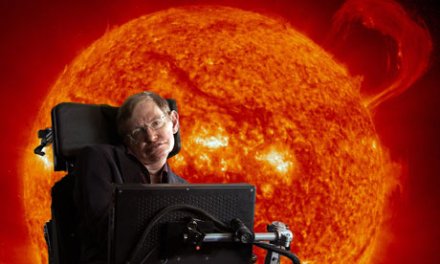
Heroes sometimes fail: Why Stephen Hawking is wrong

Please excuse the inactivity of the last few weeks. I was busy with extensive travel and work, but am now back to posting on a regular basis. The biggest story to emerge while I was away concerned Stephen Hawking’s comments about the non-existence of heaven and the nature of the human brain. I asked Surak to write a response to this, since he has a particular interest in the monist vs. dualist argument. – Ed.

** Written by “Surak” **

As a human being who often struggles with relatively trivial difficulties in life, I have long felt admiration for Stephen Hawking’s courage and determination to continue working in spite of a highly-debilitating disease. As a physics enthusiast, I have the greatest respect for his accomplishments. But now, as a result of an article published in The Guardian two weeks ago, I also feel embarrassment for, and disappointment in, Hawking. The article reported his views on religion and metaphysics — they were unoriginal, ill-informed, biased, insensitive, and even arrogant.

The article was entitled, “Stephen Hawking: ‘There is no heaven; it’s a fairy story’.” I don’t believe Hawking is capable of such an inane statement, so I attribute this bit of silliness to the reporter’s desire for an attention grabbing headline. It’s just another example of why no one can trust reporters. Unfortunately the rest of the silliness that follows is undoubtedly Hawking’s.

Continue reading