Weekly Psalm 19: The Pleiades

Here is your weekly reminder of Psalm 19 — the Pleiades.

Pleiades_large

The Pleiades star cluster. Credit: NASA, ESA, AURA/Caltech, Palomar Observatory.

The Pleiades is an open cluster of stars that forms an asterism — a recognizable pattern of stars — in the sky. The cluster is about 440 light-years from Earth, making it close enough and large enough to be easily observed with the naked eye. It’s also quite lovely through a good pair of binoculars.

The Pleiades is known by many different names, including the Maia Nebula and the Seven Sisters. In Japan, it’s known as Subaru. (You probably recognize the asterism in a certain car company logo now.)

These large, hot stars are relatively young at just 100 million years (our own Sun is 4.5 billion years old), but are already halfway through their main stage of life. The general principle with stars is that the bigger and more luminous the star, the faster it lives.

The cluster is currently passing through a cloud of dusty gas. The light from the stars reflects and scatters off the dust, creating the ethereal glowing wisps surrounding the stars.

Weekly Psalm 19: The Needle Galaxy

Here is your weekly reminder of Psalm 19 — the Needle Galaxy.

This galaxy, also known by its catalog name, NGC 4565, is about as fine an example of an edge-on spiral galaxy as you’ll ever see. If the Milky Way were to be seen at the same distance of 43 million light-years and on its edge, it would look very much like this.

Edge-on spiral galaxy NGC 4565, also known as the Needle Galaxy. Credit: Bruce Hugo and Leslie Gaul/Adam Block/NOAO/AURA/NSF.

The puffy part in the center is the bulge of the galaxy and the extended part is the disk. The dark strip running the length of the galaxy is a dust lane. Dust typically makes up about 10% of the gaseous stuff between the stars in the disk of a spiral galaxy, which doesn’t sound like much, but it’s enough to block a lot of the intense starlight coming from the galaxy.

Fire Back: Where the Readers Respond

In which a Twitter exchange exposes the blind faith of an anti-theist.

Here’s a person I think we can reasonably assume is an anti-theist. Last month, he pinged me on Twitter with the following:

By “FT” he means fine-tuning. What followed was an exchange that was more coherent than the one I had with “OpenMind” (see here and here), but no less demonstrative of the main problem many non-scientist anti-theists have, which is blind faith in their beliefs and unquestioned assumptions.

Before we continue, note that the reasoning I described in my testimony doesn’t really fall under what’s called the fine-tuning argument. This argument says that the improbability of our universe having precisely the right values for the many parameters and constants that permit human life to exist — the strengths of the fundamental forces, the masses of subatomic particles, the number of physical dimensions, etc. — is so high as to strongly imply the universe was designed by a personal being. However, in my testimony, I explained that I logically inferred the existence of a rational, transcendental being (God) who created the universe based on the fact that the universe is comprehensible. Not the same thing as fine-tuning. But no matter, I was game to see how exactly the fine-tuning argument for God constituted faith over reason, so I asked.

I don’t know if Joe’s World (JW) thinks the many, many atheist scientists who’ve embraced the multiverse idea on this basis are fools or what, but I suspected he didn’t understand the implications of fine tuning, so I asked him why he made his assertion.

His response surprised me a little, because it differs from the common anti-theist argument that God is merely superfluous to the workings of the universe. JW, on the other hand, believes that order arises spontaneously only in a godless universe and that a God-created universe would be nonsensical. I pointed out to him that this is the opposite of what Christians and even most atheists believe.

There are a number of problems with his assertion, the first of which is the origin of a “clockwork” universe in which complexity just arises. He’s begging the question. The problem is underscored by his metaphorical comparison of the universe to a clock — most of us are reasonably certain that precision instruments like clocks don’t just spring into being on their own, but are rather carefully designed and deliberately constructed by conscious beings.

Another problem is that he presupposes that the God of the Bible is a capricious being who would not create a rational universe with unchangeable laws. Sure, a supernatural being could in principle create anything he wants, but that’s not what’s important here. Since JW is talking to a Christian (me), that means we’re talking specifically about the God of the Bible. It doesn’t matter what anyone personally thinks about the God of the Bible, what matters is what scripture says about God and whether that’s contradicted or corroborated by reason and evidence. When we read the Bible, we see that God is not at all a capricious being, but rather a rational being. We are told throughout the Bible that God didn’t just slap together a whimsical universe, but by wisdom created a lawful universe:

By the word of the Lord the heavens were made (Psalm 33:6)

The Lord by wisdom founded the earth;
by understanding he established the heavens;
(Proverbs 3:19)

Do you know the laws of the heavens? (Job 38:33)

In the beginning was the Word, and the Word was with God, and the Word was God. (John 1:1)

Note that the Greek word translated in John 1:1 as “word” is logos, which also means logic, intellect, and wisdom. Putting all this together, Gerald Schroeder makes the argument that Genesis 1:1, properly translated, reads as follows: “With a first cause of wisdom, God created the universe.” (See Chapter Two of Schroeder’s book, God According to God.)

The heavens declare his righteousness (Psalm 50:6)

In other words, nature reveals the character of God. We see that nature operates according to knowable laws; God is not capricious.

As for corroboration, there’s a reason the Bible begins with Genesis. It first of all establishes the sovereignty of God as the creator of all things, but it also gives us a testable account of God’s creation. (See here for a discussion of Genesis 1 and modern science.)

What I found even more interesting than the backwards reasoning of JW was the tenacious way in which he clung to one particular belief in spite of the evidence, or rather the lack of it. I reminded him that there are only three options to explain why the universe is the way it is: necessity, luck, or God. I told him there’s no support for necessity, but he really, really wanted to believe it anyway.

It’s not difficult to define chance. The parameters, constants, all the things that make the universe fit for human life, can span a range of values. If there’s no physical theory requiring the universe to have three physical dimensions, the particular strengths of the various fundamental forces, the particular masses of subatomic particles, and so on, and no God to purposefully choose these values, then how did we end up with all of the “right” values? The answer is, a very, very lucky roll of the dice. In the multiverse, there is a mind-bogglingly huge number of universes, all with different parameters, and we just happen to inhabit one that hit the cosmic jackpot. (Incidentally, most physicists don’t seem to delight in this option. I get the impression most atheist physicists would prefer the necessity option, but as there’s no evidence for that, they grudgingly accept the multiverse.)

JW seemed to reject this notion, and he obviously wasn’t big on the God idea, so I challenged him, repeatedly, to show me which physical theories predict / require / necessitate the universe to be the way it is.

After a lot of back and forth, I finally got an answer out of him.

He admits he doesn’t know. The truth is, no one knows, and it’s deeply troubling to a lot of people, because it leaves as the only alternatives luck and God. Yet JW persists in his belief.

JW’s initial statement to me was that the fine-tuning argument was a triumph of faith over reason. But who’s exhibiting faith here? If you accept an explanation for why the universe is the way it is, then you must have evidence in favor of it or at least evidence ruling out the alternatives. Joe’s World has no scientific evidence, no physical theories predicting that the universe must be the way it is. Everything we know about the physical nature of the universe says that its various properties did not arise due to necessity. JW rejects God; I don’t know for certain if he rejects the multiverse, but I suspect he does. If so, then persisting in his belief in necessity is beyond faith — it’s blind faith.

Remember, having faith means holding onto a belief you once accepted through reason in spite of your transitory emotions. Blind faith means holding onto a belief without evidence or in spite of contradictory evidence. If you engage anti-theists long enough, you’ll find that a lot of them are the blind faithful. Christians, on the other hand, have good reasons to believe. If you’re a Christian, just make sure you can articulate what those reasons are.

Weekly Psalm 19: Jupiter

Here is your weekly reminder of Psalm 19 — the planet Jupiter.

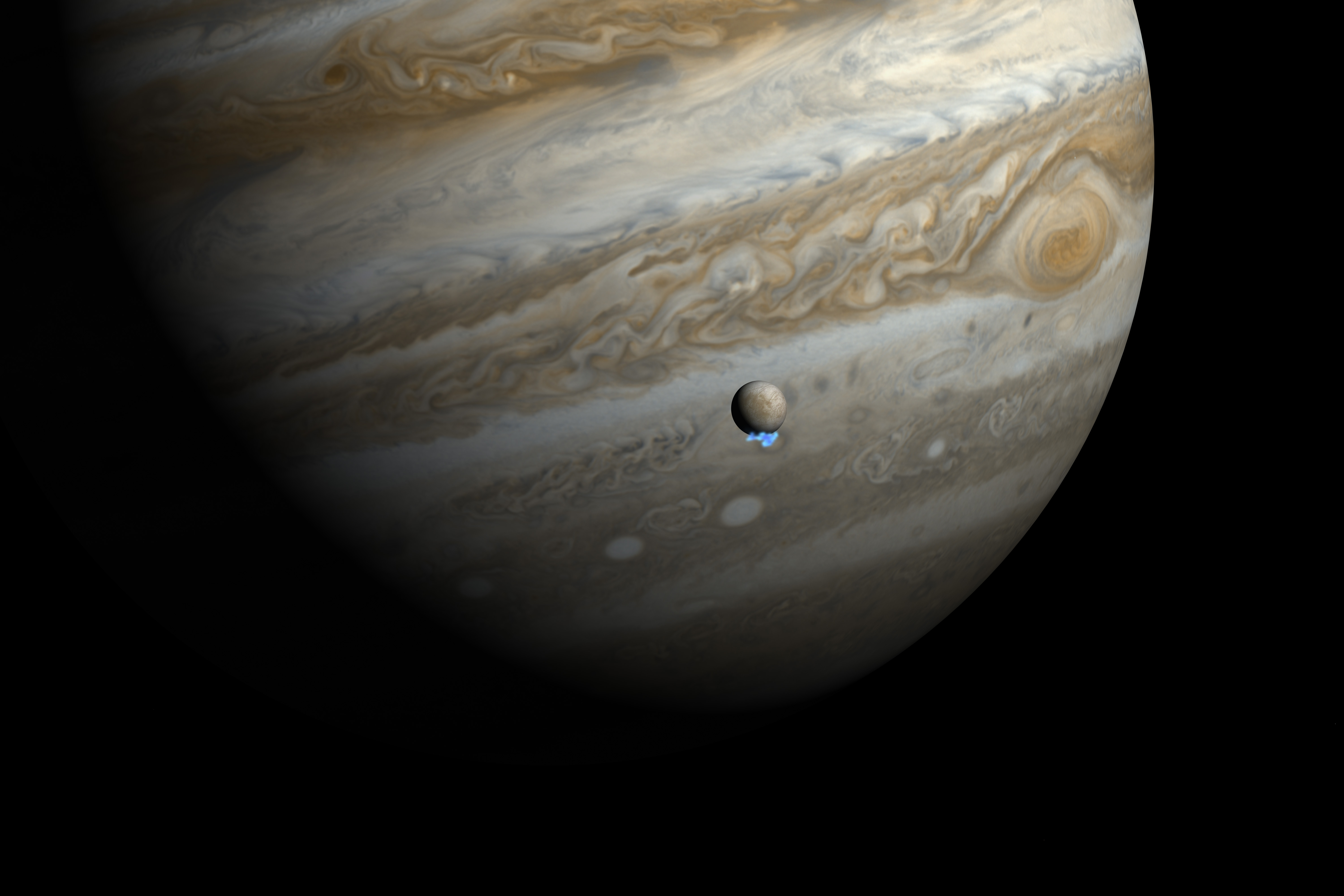
Anyone who has looked up at the night sky is acquainted with Jupiter. It’s the third-brightest object in our sky after the Sun and Venus. It’s also the largest planet in our solar system, a gaseous giant comprised almost entirely of hydrogen and helium. Interestingly, its size, in terms of orders of magnitude, places it exactly in the middle between the Earth and the Sun — it is almost exactly 10 times smaller than our Sun, but just over 10 times larger than the Earth.

This artist's impression shows Jupiter and its moon Europa using actual Jupiter and Europa images in visible light. The Hubble ultraviolet images showing the faint emission from the water vapour plumes have been superimposed, respecting the size but not the brightness of the plumes. Astronomers using Hubble have detected signs of water vapour being vented off this moon, creating variable plumes near its south pole — the first observational evidence of water vapour being ejected off the moon's surface.

An artist’s impression showing Jupiter and its moon Europa using actual Jupiter and Europa images in visible light with ultraviolet images of water vapor plumes superposed on Europa. Credit: NASA, ESA, and M. Kornmesser.

Some call Jupiter a failed star, but that’s an exaggeration. The defining characteristic of a star is that nuclear fusion is occurring in its core; however, Jupiter would need about 80 times more mass for this to occur, so it falls well short of the star limit. Still, it’s pretty massive as planets go, outweighing all of the other planets in our solar system combined by more than a factor of two.

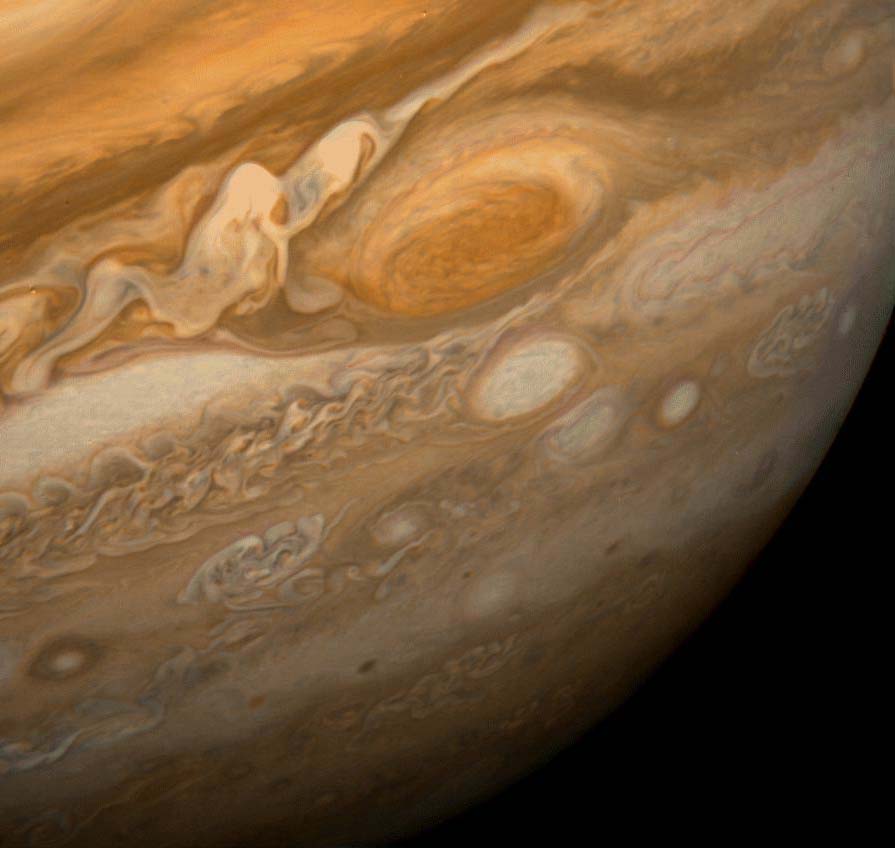
Jupiter is a visual treat for the astronomer for a number of reasons: its colorful bands of clouds, its Galilean moons, and its Great Red Spot. The bands represent regions of rising and descending clouds. The Galilean moons — Callisto, Europa, Ganymede, and Io — were discovered by (you guessed it) Galileo in the 17th century, and are visible through even small amateur telescopes. The Great Red Spot is a turbulent storm that has been raging on Jupiter for hundreds of years. To give you some perspective on size, consider that two Earths could fit inside the Great Red Spot.

Great_Red_Spot_From_Voyager_1

The Great Red Spot as seen from Voyager 1. Credit: NASA.

Weekly Psalm 19: The Helix Nebula

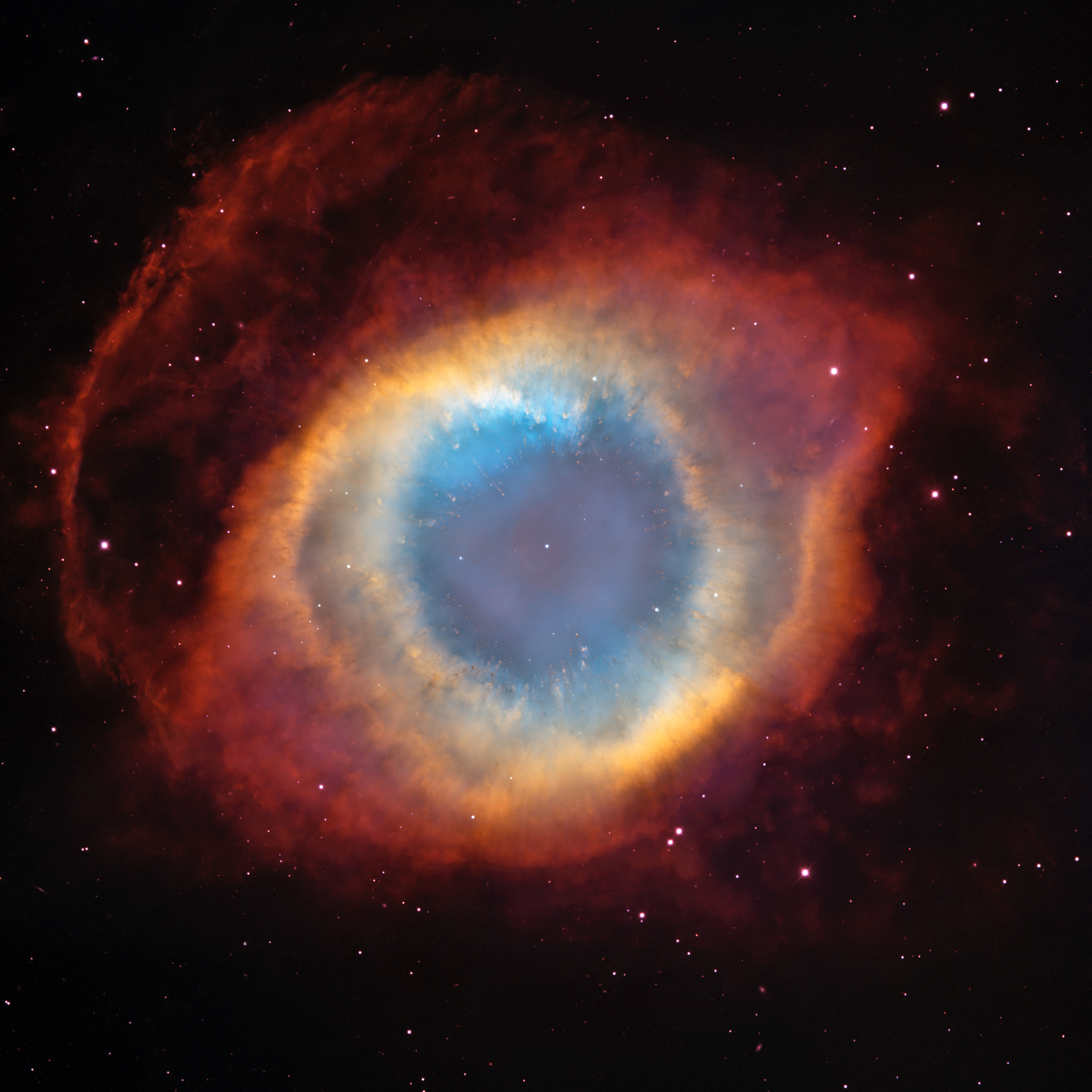
Here is your weekly reminder of Psalm 19–the Helix Nebula, also known as the Eye of God.

The Helix Nebula. Credit: NASA, NOAO, ESA, the Hubble Helix Nebula Team, M. Meixner (STScI), and T.A. Rector (NRAO)


This is my favorite nebula. It’s a planetary nebula (PN), so-called because astronomers hundreds of years ago, looking through their not-so-good telescopes, thought these might have been planets. They were wrong, but the name stuck. A PN is actually the cast-off outer layers of a dying low-mass star like our Sun. (High-mass stars die in spectacular light-shows called supernovae.) In the very center of the Helix Nebula you can see the glowing core of the dead star in the process of becoming what’s called a white dwarf.

The Helix Nebula is one of the closest PNs to Earth, and if it were bright enough for you to see it with the naked eye, it would span a distance across the sky almost as big as a full Moon. It looks like a bubble from our vantage point, but that’s a bit of an illusion–we’re really looking at two disks oriented nearly perpendicular to each other.

Astronomers discovered mysterious “cometary knots” appearing to radiate from the center of the nebula in a spoke pattern, and later found these same knots in other PNs. To give you some perspective on the size of the Helix, each knot, excluding the tail, is about the size of our solar system.

Close up of Helix Nebula

“Close-Up of the Helix Nebula” by NASA, NOAO, ESA, the Hubble Helix Nebula Team, M. Meixner (STScI), and T.A. Rector (NRAO)


Weekly Psalm 19: Pillars of Creation

Here is your weekly reminder of Psalm 19—the Pillars of Creation.

Pillars of Creation

The Pillars of Creation. Image credit: NASA, ESA, and the Hubble Heritage Team (STScI/AURA)


This is arguably NASA’s most famous image, first taken with detail in 1995 by two graduate students at Arizona State University.

The so-called Pillars of Creation are a huge conglomerate of interstellar gas and dust in the Eagle Nebula, some 6,500 light-years from Earth. “Creation” refers to the ongoing formation of stars in the pillars; although NASA has also referred to them as the Pillars of Destruction, since ultraviolet light from the newly-forming stars is gradually boiling off the cool gas in the clouds.

The longest pillar (on the left) is four light-years in height. To give you a sense of scale, that means you could fit over 3,000 solar systems end-to-end in that pillar.

NASA recently commemorated the 25th anniversary of the iconic image by releasing a high-def version (above) earlier this year.

Mailbag: Why did God create dinosaurs?

JB writes:

Hi Dr. Salviander,

I’m a undergrad student in Dallas and I want to thank you for your dedication to the Lord in your work. It has helped me greatly and I’ve suggested your blog to my friends.

I had a simple question, just looking to get some insight:

Assuming the Anthropic Principle, why do you think God created dinosaurs and other species for mass extinction?

Thanks for your time–if you can!

I get wonderful questions from students, and this is no exception.

Dr. Hugh Ross runs an apologetics ministry called Reasons to Believe (also linked under “Helpful Resources”), and he talks a great deal about the fine-tuning argument. This argument says that the universe, and specifically the Earth, are very finely tuned for human life. In fact, so much so that all this fine-tuning overwhelmingly points to a Creator. Dr. Ross would say that, as with all cosmic events, mass extinctions play a part in preparing the Earth for the eventual appearance of humans. He discusses the dinosaur extinction in this article.

A corollary to this question might be, why did God carry out such an elaborate plan for the eventual appearance of humans—why not just create the universe and humans all at once and just bypass stuff like dinosaurs? The answer to that is in scripture, e.g. Psalm 8 and Romans 1:20. We learn about our Creator and his actions in this world by studying his creation. As physicist and theologian Dr. Gerald Schroeder points out, there is a Talmudic tradition that says the Torah (the first five books of Moses) was split in two on Mount Sinai; half was given to us in the book of scripture, the other half was sequestered in nature. In fact, the only name used for God in Genesis is ‘Elokiim,’ which means ‘God as made manifest in nature.’ Schroeder claims that we must study both scripture and nature in order to truly understand God’s word (see Schroeder’s book God According to God for more about this).

How the Christian view of time led to modern science

People in the modern West take for granted that events proceed in a line stretching from the past through the present and into the future. They also believe that each point in time is unique—two events can be very similar, but no event or chain of events is ever exactly repeated. This view of time is called linear time, and it is so deeply ingrained in Westerners from birth that it is difficult for them to imagine any other view of time. However, the overwhelming majority of people who have ever lived have had a very different view of this fundamental aspect of existence.

Cyclical Time

Non-linear time

The alternative to linear time is a belief that time endlessly repeats cycles. I have great difficulty convincing my astronomy students that, from an observational point of view, cyclical time makes much more sense than linear time. I ask them to place themselves in the ancient world with no clocks or telescopes or computers, but only their senses to guide them and imagine what they would be capable of understanding about time. The days would be marked by the daily motions of the Sun and other celestial objects rising and setting in the sky, the months would be marked by repeated phases of the Moon, and the years would be marked by the reappearance of certain constellations in the sky. Other cycles in nature, such as the seasons, tides, menstrual cycles, birth-life-death, and the rise and fall of dynasties and civilizations, would dominate ancient life.

It should therefore be no surprise that the religion and worldview of many cultures were based on a belief in cyclical time. Among them were the Babylonians, ancient Chinese Buddhists, ancient Greeks and Romans, Native Americans, Aztecs, Mayans, and the Old Norse. These societies practiced an ancient astronomy called astrology which had as its chief function the charting of the motions of heavenly objects to predict where people were in some current cycle. It was a complicated process, because there are multiple cycles occurring in the heavens at any time, and ancient beliefs were based on the idea that human fate was determined by cycles working within other cycles. As a result, ancient calendars, such as the Hindu and Mayan, were very elaborate with a sophistication that surpasses those of the modern West. The idea of cyclical time continues in the present day with Hindu tradition and native European tradition such as that of the Sami people of northern Scandinavia.

Mayan Calendar

Mayan calendar

Not only does cyclical time make sense in terms of what people observe in nature, but it also satisfies a deep emotional need for predictability and some degree of control over events that the idea of linear time can’t. If time flows inexorably in one direction, then people are helplessly pulled along, as though by a powerful river current, toward unpredictable events and inevitable death. Cyclical time gives the promise of eternal rebirth and renewal, just as spring always follows winter. These pagan beliefs were so powerful that they continue to influence all of us today; for example, the celebration of the belief in the constant process of renewal is the basis for the New Year holiday.

Obviously, all people have thought in terms of linear time on a daily level, otherwise they wouldn’t be able to function. But on the larger scale of months, years, and lifetimes, the notion of linear time was viewed as vulgar and irreverent. A cyclical view of time was a way for people to elevate themselves above the common and vulgar and become connected to that which appeared heavenly, eternal, and sacred. This view also offered a form of salvation in the hope that no matter how bad things are in the world at the moment, the world will inevitably return to some mythical ideal time and offer an escape from the terror of linear time. You and I would consider this ideal time to be in the past, but in cyclical cultures, the past, the present, and the future are one.

Primitive cultures, like the Australian aborigines, had no word for time in the abstract sense—that is, a concept of time that exists apart from people and the world. For them, time was concretely linked to events in their lives—the past, the present, and the future formed an indistinguishable whole as the great cycles determined everything. The ancient Hebrews also had no word for and therefore no concept of abstract time, yet their concept of time was a linear one in which events occurred sequentially. These events formed the basis for their concrete notion of time. Except for the first six days of creation, time as described in the Old Testament was completely tied to earthly events like seasons, harvest, and, most importantly, God’s interaction with the world.

The ancient Greeks also believed the universe was cyclical in nature, but unlike other ancient cultures they also believed in an abstract notion of time that exists separately from events. They had two words for time—chronos and kairos—representing quantitative/sequential time and qualitative/non-sequential time respectively. From chronos we derive familiar time-related words such as chronological, chronic, and anachronism. In order to appreciate the Greek concept of time, one has to understand that to the Greeks time was motion. It’s not difficult to envision since the length of a day is measured by tracing the path of the sun and stars across the sky. When Plato spoke of time, he described an “image of eternity … moving according to number.” His student, Aristotle, said that time is “the number of motion in respect of before and after.”
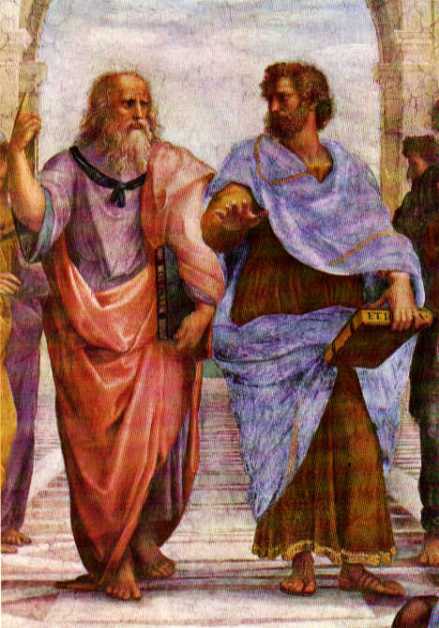
Plato and Aristotle

Plato and Aristotle from the fresco “The School of Athens” by Raffaello (1510)

The Judeo-Christian beliefs about time that emerged during the time from Moses to that of Jesus mark a profound break with the thinking of the ancient past. Events of the Bible clearly indicate a unidirectional, sequential, notion of time that is utterly counter-intuitive to what the senses observe in nature. Time is not discussed directly in the Old Testament, but we can gain an understanding of the ancient Hebrew notion of time from the language. The ancient Hebrew root words for time were related to distance and direction: the root word for “past” and “east” (qedem, the direction of the rising Sun) is the same; the root word for the very far distant in time (olam), past or future, is also used for very far distant in space.

Perhaps the ancient Hebrews anticipated the early 20th century mathematician Hermann Minkowski, who postulated that space and time are two aspects of a single entity called spacetime.  In any case, the Hebrew practice of viewing time from a perspective that looked backward was eventually adopted by modern astrophysics. The Judeo-Christian concept of linear time developed into our modern view of time and became one of the great foundations of modern science.

Something very powerful was required to overcome the ancient perceptions of and feelings about time.  Though the concept of linear time started with Judaism, it took hold and was spread throughout the Western world by the rise of Christianity. In the fifth century, Augustine noted that the Bible is full of one-time events that do not recur, beginning with the creation of the universe, culminating with the Crucifixion and Resurrection, and ending with the Second Coming and Judgment Day. He realized that Christian time is therefore linear rather than cyclical. The desire for some sense of control and the hope for eternal renewal became better satisfied by a belief in a loving Creator and the resurrection of his Son who was sacrificed on the cross. (It is interesting to note, however, that cyclicality does have some place in Christianity—we are born when we leave the womb and we are reborn when we go to heaven.)

Nearly a thousand years after Augustine made his pronouncement, the era of clock time emerged. Clock time is measured by mechanical apparatuses rather than by natural events, and marks the final triumph of abstract linear time over concrete, cyclical, event-driven time. Mechanical clocks were invented in Europe in the 14th century, followed by spring-driven clocks in the 15th century. Refinements to spring-driven clocks in the 16th century enabled Danish astronomer Tycho Brahe to make his famously accurate celestial observations, which were used by Johannes Kepler to formulate the laws of planetary motion.
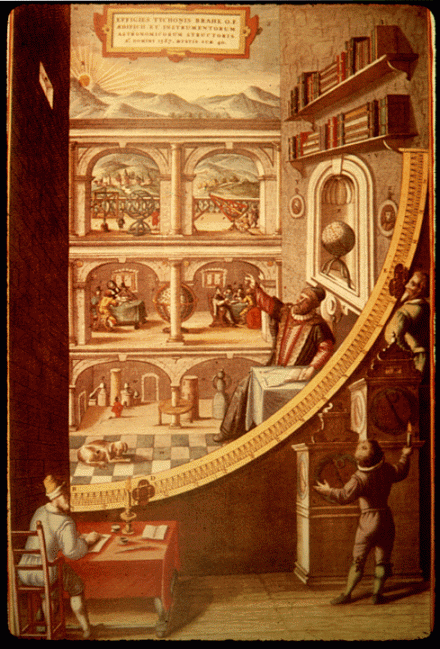
Tycho Brahe and his quadrant

Tycho Brahe and his quadrant

However, the motivation for increasing precision in time-keeping was not motivated by pure science, but rather by the application of science in the quest for accurate navigation. Sea-faring navigators required precise measurements of time so that they could use the positions of star-patterns to determine longitude. With these highly precise clocks, it was possible to keep excellent time. It is interesting to note in the phrase “keeping time” the abstract notion, meaning we keep up with the external flow time rather than events defining the concrete notion of time.

It is not a coincidence that the era of modern science began after the invention of high-precision time-keeping devices. Modern science began with the Scientific Revolution in the 16th and 17th centuries, starting with the Copernican Revolution, but it progressed slowly because of a lack of necessary technology. Galileo, for instance, was forced to time some of his experiments by using his own heartbeat. By the late 17th century, Newton had formulated the branch of mathematics now referred to as calculus and published his laws of gravity and motion. His work was based on his belief in a flow of time that was both linear and absolute. Absolute time means that it always takes place at a rate that never changes.

Remember that the ancient Greeks viewed time and motion as one. This is important because the scientific study of motion based on the principle of cause and effect requires linear time. Newton’s laws and his view of time as absolute held sway for almost two hundred years. But Newton suffered from limited perspective just as the ancients had—humans perceive time on Earth as always taking place at the same rate, but that isn’t true. Newton is still considered the greatest scientist who ever lived, but we know now that he did not have the full picture.

Isaac Newton performing an experiment

It was Albert Einstein and his theory of relativity that gave humankind the strange truth about time. By the early 20th century Einstein had succeeded in demolishing Newton’s notion of absolute time, showing instead that time is flexible, it goes by at a rate that is different in different places in the universe, and it is really dependent on the location and movement of the observer of time. It is interesting that the Bible anticipated this in Psalms 90:4, “For a thousand years in your sight are like a day that has just gone by, or like a watch in the night.”

The current scientific view of time is a combination of the ancient Greek abstract notion of time, the Judeo-Christian notion of linear time, and Einstein’s relative time. Cosmology, the branch of physics that deals with the overall structure and evolution of the universe, works with two times: local time, governed by the principles of relativity, and cosmic time, governed by the expansion of the universe. In local time, events occur in the medium of spacetime as opposed to being the cause of time. Time is motion, motion is time, and objects may freely move in any direction in space.
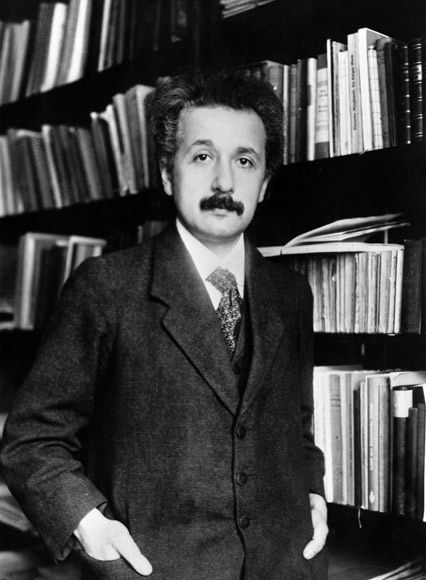
Albert Einstein

Albert Einstein

But the next big scientific question is, can objects also move in any direction in time? Physicists have determined that the arrow of time points in one direction. But how can we determine that direction? Biblically, we understand that time flows from the creation to Judgment Day. Scientifically, it has been less clear.

Ultimately, physicists determined that the arrow of time points in the direction of increasing disorder. A branch of physics known as thermodynamics, the study of how energy is converted into different forms, quantifies disorder using a concept called entropy. The second law of thermodynamics states that in a closed system, entropy (the amount of disorder) never decreases. This means the universe will never spontaneously move back in the direction of increasing order. It is the progression of the universe from order to disorder that provides the direction for the arrow of time.

The linearity and direction of time determined by thermodynamics seemed clear until physicist and mathematician Henri Poincaré showed mathematically that the second law of thermodynamics is not completely true. The Poincaré recurrence theorem proved that entropy could theoretically decrease spontaneously (the universe could go back in the direction of increased order). But, the timescale necessary to give this spontaneous decrease any significant chance of happening is so inconceivably long, much longer than the current age of the universe, there is little probability that it will happen before the universe could reach maximum entropy.

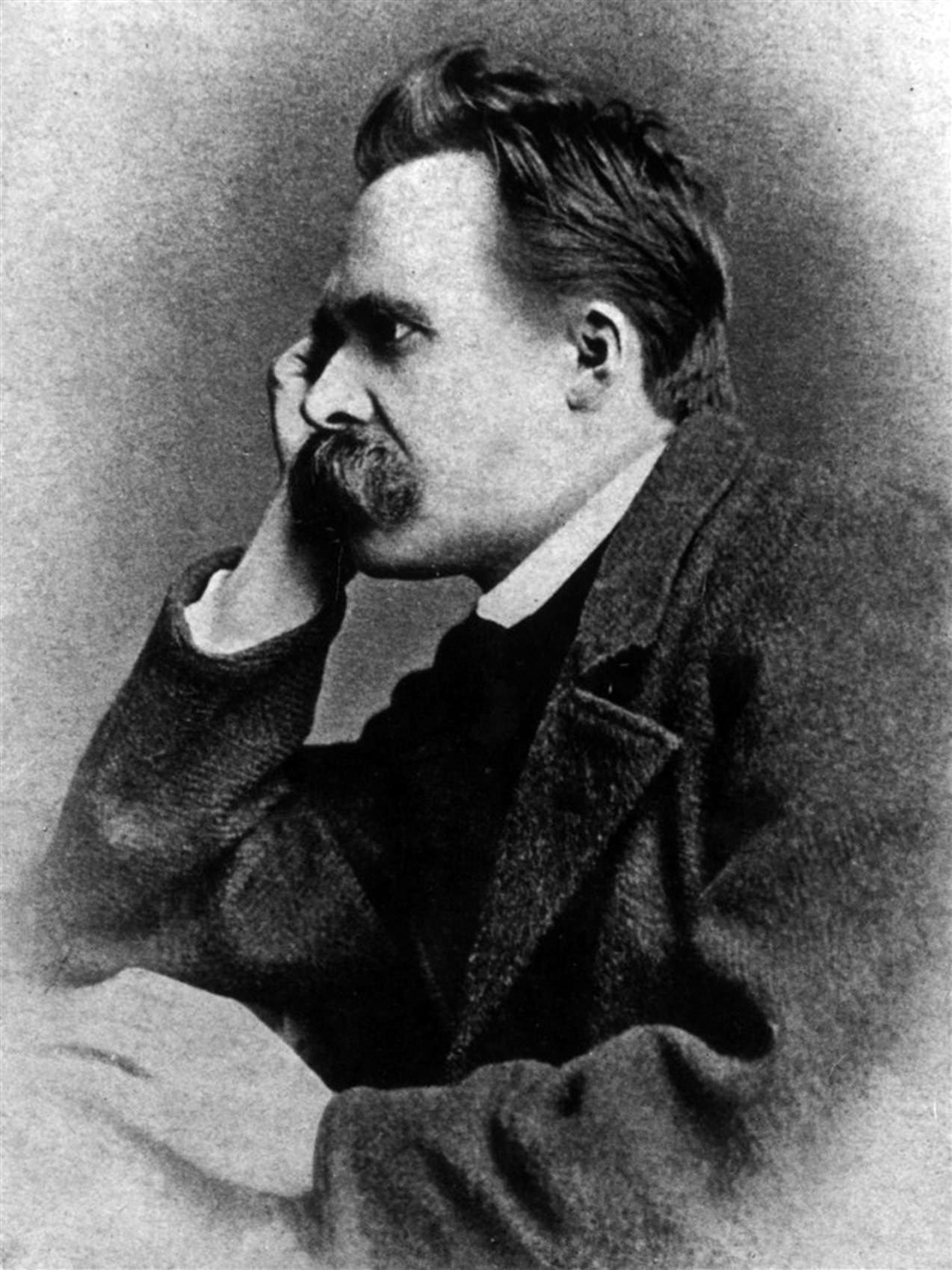
Nevertheless, some Western thinkers mistakenly took Poincaré’s theorem to mean that reality is cyclical in a way that does not provide the ancient escape from the profane to the sacred. This led these thinkers to despair about the possibility that human existence is nothing more than the pointless repetition of all events for all of eternity. Nineteenth century philosopher Friedrich Nietzsche was one who took the Poincaré recurrence theorem to the hasty and illogical conclusion that there was no purpose or meaning to existence. On the other hand, there is little comfort to be gained from contemplating an endlessly expanding universe in which everything becomes hopelessly separated from everything else. One may well wonder if there is no escape from time.
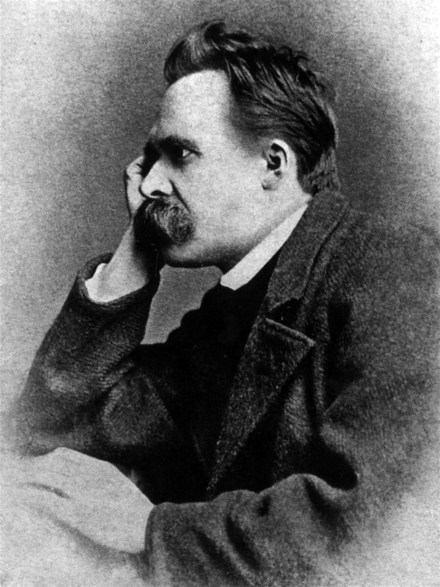
Friedrich Nietzsche

Friedrich Nietzsche — contemplating the Poincaré recurrence theorem?

Christians need not despair. The Bible tells us that the universe in its present form will cease to exist on Judgment Day, which will presumably occur long before there is any significant probability of a Poincaré recurrence, and will certainly make the notion of an endless expansion moot. If that is true, we inhabit a universe that is for all purposes linear and finite in time, and we have a much happier fate than being condemned to a never-ending repetition of meaningless events or a universe that expands forever and ever.

While it is important that Christians understand that modern science confirms the biblical view of time, it is also important that Christians understand the role of biblical belief in shaping modern science. Modern science developed only after the biblical concept of linear time spread through the World as a result of Christianity. True science, which at its root is the study of cause and effect, absolutely requires linear time.

The Bible

Fertile ground for modern science

The foundation of 21st century astronomy and physics is the big bang theory—the “orthodoxy of cosmology” as physicist Paul Davies describes it—which relies on linear time with a definite beginning. The false cyclical view was perpetuated by two human limitations: limited perspective and misleading emotions. It took faith in the Word of God enshrined in the Bible and trust in the scientific method to overcome these limitations so that humankind could understand the true nature of time.

Replay: Politics, science, and a false dichotomy

Traffic’s up after the announcement of the publication of our Astronomy and Astrophysics curriculum, so we’re replaying some of our more important posts from the archives for our new readers.

** Written by “Surak” **

There was a political confrontation last Thursday [August 2011] in New Hampshire between conservative politician, Rick Perry, and a liberal woman protestor. The dispute concerned Perry’s views about evolution and creationism, and it demonstrated why we need to be concerned about the future of science in America. Governor Perry spoke to the woman’s young son in front of the usual swarm of reporters eager for a headline. Perry gave them one by telling the boy that evolution was a theory with gaps in it. In an obvious attempt to contrive an unflattering media incident to hurt the Texas governor’s campaign, the mother could be heard urging the child to ask Perry why he didn’t believe in science. Perry ignored the mother and told the boy that in Texas both evolution and creationism are taught, “… because I figured you’re smart enough to figure out which one is right.” I am appalled by what the mother did and troubled by the implications of Perry’s response.

The mother undoubtedly thinks of herself as a defender of ‘science,’ by which I guess she means the usual vague understanding of the currently popular but failed mid-20th century version of evolution. Whatever her beliefs, it was an abuse of science to pull a cheap political trick like this. And, it was a disturbing corruption of her child’s innocence by putting words in his mouth he couldn’t possibly have understood. She obviously thought she was protecting him and other children from false ideas, but her actions amount to nothing more than a crude form of indoctrination based on the prevailing conviction that any questioning of ‘evolution’ is an intellectual sin.

I do not endorse Rick Perry or his political viewpoints. Having said that, I do agree with two important things he said. First, evolution theory, even in its best, most current form, does have serious gaps. For instance, it cannot explain how life began, the incredible explosion of animal life in the Cambrian, the fossil record that shows the sudden appearance of a multitude of new organ, limbs and species with no apparent transition stages, or the very recent appearance and mysterious nature of human consciousness. One cannot defend science by becoming indignant when someone else points out the obvious.

More importantly, I hope Governor Perry was sincere about trusting students to get it right. Science education in America should be based on that trust in (and challenge for) young minds. The foundation of modern science, as well as the basis of genius, is the ability to ask good questions, usually in the form of ‘how’, ‘why’ and ‘what if.’ Einstein’s thought experiments are a famous example. Scientific questioning, if it is to continue to lead to amazing and useful new answers, should never be shackled by politics, religion, or philosophy. Children must be taught and encouraged to ask their own questions no matter how strange, silly, or politically incorrect they might seem to parents and teachers.

Years ago, my high school science classes consisted mostly of rote memorization of facts and stale reenactments of old experiments. We were forced to think about other people’s questions (including a lot of mind-numbing ‘who’, ‘when’, and ‘where’) rather than our own questions. The whole process was as divorced from real life concerns, important philosophical questions, and religious beliefs as possible, and therefore totally irrelevant and boring. It wasn’t until years later that I discovered the wonders and power of real science.

I have a deep commitment to the scientific method. But, that commitment is tempered by an understanding that science is a tool that has limitations which must be acknowledged. Science cannot continue its positive role in society by becoming some kind of false idol, something created by humans but worshiped as infallible. Scientists and science teachers need to model a necessary and healthy humility that includes the need to state up front that science can only deal with our material world and can have nothing legitimate to say about anything that might lie outside our universe, such as God or heaven. Then maybe we’d get fewer annoying distractions at political events, and politicians could focus more on what they really need to do.

But humility is not happening. Science is being promoted by some as the complete, unerring, and only way to arrive at the truth. So, instead of being a good example for others, we witness more than a few scientists make the grave mistake of denigrating other people’s deepest beliefs and alienating them from science. Look up the latest silly musings of the great scientist Stephen Hawking to see a sad and disturbing example of this. If humility fails on a large enough scale, science can’t help but slide in the direction of political correctness and eventually petrify as dogma.

We won’t be able to avoid this fate if protecting science comes to mean putting young people like the woman’s son in an educational bubble to protect them from philosophy and religion under the guise of separation of church and state. Remember that science started as something called natural philosophy and was given its modern form by its devoutly Christian founders. You cannot separate these three things without damaging science. If our current generation of students is to become the next generation of effective scientists, they must be given the opportunity to understand how science relates to and differs from religion and philosophy objectively without the biases and fears that currently stifle our schools and rupture our communities.

So, Governor Perry is right about teaching creationism, because it is a powerful force in American history and culture that needs to be studied not just in social studies classes but also in science classes. Even young-Earth creationism, which I view as sadly non-scientific, should be squarely presented to high school students. Students need to understand what science is not in order to understand what it is. They will benefit from understanding young-Earth creationism, have fun debating it, and discover the truth for themselves if given the necessary tools, opportunity, and encouragement.

My challenge to the mother and all others on the left of the political spectrum is ‘what are you afraid of?’ If all the variations of creationism are so totally wrong, if the science you believe in is so strong, won’t it be obvious to the vast majority of students by the time they finish high school? Allow creationism, intelligent design, and the various forms of evolutionary theory to contend with one another in an honest competition of ideas, and then trust students to get it right. One can only object to this if his or her real goal is indoctrination.

This open approach to science education would include a spirited defense of Darwinism in the schools, because Darwin is a prime example of a great scientist asking important questions and coming up with an original and compelling answer. But evolutionary theory must be presented truthfully and fully, including not only its strengths, but also its many weaknesses. In the spirit of an open and effective science curriculum, would the liberal mother from New Hampshire be willing to have science teachers discuss the totally unexpected results of evolutionary development (Evo Devo)? Is this ‘defender of science’ even aware that the findings of biologists in this new field have turned evolutionary thought on its head in the last few years? (I refer the reader to Sean B. Carroll’s excellent book, Endless Forms Most Beautiful: The New Science of Evo Devo and the Making of the Animal Kingdom). Would she be willing to have students informed that the three great enduring mysteries of biology – the origins of life, the inexplicable explosion of animal life in the Cambrian, and the sudden development and mysterious nature of human consciousness – correspond to the three instance in Genesis that the word ‘creation’ is used to describe how things came about? (As an agnostic about religion, I’m not sure what this means, but it is really interesting.) Or, would she insist that young people be kept ignorant of all this in defense of some quasi-sacred belief she calls evolution?

To be fair, it is likely and terribly unfortunate that most people on the political right and the Christian side of the science/religion debate don’t trust young people either. As the religious and political conflict continues to intensify, which it seems to be doing, each side will probably do all it can to indoctrinate and control children. I fear that, as a result of this irresolvable conflict, science as the search for truth will eventually be fatally corrupted and seriously diminished as a force for good in people’s lives.

So, I want to say this to people on the left who declare their desire to protect science: you don’t protect science by sanitizing education and excluding other ways of thinking. You must look at yourselves in the mirror and realize that you are just as susceptible to political dogma and metaphysical prejudice as the people you oppose. Quit trying to use science to score political points and undercut Christian influence. In other words, if you have to fight, fight fair and leave science out of it.

To the people on the religious right who want to protect their faith: you can’t protect it by rejecting science or promoting false scientific views, because it will only make you look foolish and alienate your children in this age of science. Young-Earth creationism in particular is self-defeating because it leaves Christian youth vulnerable to the powerful (but false) scientific arguments of prominent atheists who are increasingly successful in turning young people away from faith. You believe, or at least many of you say you believe, that the Bible is true. You also understand that God gave us minds capable of comprehending his works. Won’t both paths, scripture and science, eventually lead to the same truth?

If you doubt this, consider the following quote from Gerald L. Schroeder’s bestselling book, The Science of God:

At the briefest instant following creation all the matter of the universe was concentrated in a very small place, no larger than a grain of mustard. The matter at this time was so thin, so intangible, that it did not have real substance. It did have, however, a potential to gain substance and form and to become tangible matter. From the initial concentration of this intangible substance in its minute location, the substance expanded, expanding the universe as it did so. As the expansion progressed, a change in the substance occurred. This initially thin noncorporeal substance took on the tangible aspects of matter as we know it. From this initial act of creation, from this ethereally thin pseudosubstance, everything that has existed, or will ever exist, was, is and will be formed.

As Dr. Schroeder points out (p. 56), “This … could be a quote from a modern physics textbook.” But in fact it comes from the 13th century biblical scholar, Nahmanides (1194-1270), who was able to anticipate modern science by 700 years using nothing more than a literal interpretation of the Bible. It’s true that the best scientists in the world were not capable of this level of understanding of our universe until after 1965, but science did finally catch up with scripture. Christians must have faith that scripture and science are two paths to the one and only truth, and God intended us to use both. (See Psalms 19:1 and Romans 1:20.)

This is why I am concerned about Governor Perry’s statement. His indirect response to the mother’s attack assumes that either science (in this case, evolution) or Christian scripture (in this case, creationism) is right, that they can’t both be right. Christians must not buy into the imagined conflict between science and faith — there is no inherent schism. I believe both the scientific view of our universe (effectively understood) and the Genesis account of creation (properly understood) are entirely compatible.

You don’t have to be a believer in scripture to accept the possibility there can be more than one path to the truth. It would be wonderful if we could all wish each other well on whichever path each of us chooses and help one another in the search for truth. If we can’t manage that level of good will, then we should at least accept, in the American spirit of freedom, that no one has a right to tell anyone else what to believe. I hope that all Americans will embrace science as the objective search for truth and keep it above the fray, that Christians will not see science as the enemy but will once again become fully involved in the scientific adventure, and that our brothers and sisters on the left will refrain, even if they must see religion as the enemy, from using science as a weapon. Otherwise we will all lose so much.

Replay: Heroes sometimes fail: Why Stephen Hawking is wrong

Traffic’s up after the announcement of the publication of our Astronomy and Astrophysics curriculum, so we’re replaying some of our more important posts from the archives for our new readers.

** Written by “Surak” **

As a human being who often struggles with relatively trivial difficulties in life, I have long felt admiration for Stephen Hawking’s courage and determination to continue working in spite of a highly-debilitating disease. As a physics enthusiast, I have the greatest respect for his accomplishments. But now, as a result of an article published in The Guardian two weeks ago [May 2011], I also feel embarrassment for, and disappointment in, Hawking. The article reported his views on religion and metaphysics — they were unoriginal, ill-informed, biased, insensitive, and even arrogant.

The article was entitled, “Stephen Hawking: ‘There is no heaven; it’s a fairy story’.” I don’t believe Hawking is capable of such an inane statement, so I attribute this bit of silliness to the reporter’s desire for an attention grabbing headline. It’s just another example of why no one can trust reporters. Unfortunately the rest of the silliness that follows is undoubtedly Hawking’s.

For example, Hawking believes the human brain is like a computer that will stop working when its components fail. This is an old and discredited view of the human mind. The brain is not like any known computer. For one thing, computers process serially, while the brain has the wonderful ability to process things in parallel. Hawking simply has the metaphor backwards, as any computer engineer struggling to make computers more like the human brain can tell you.

This simplistic view of humans can also be faulted for his apparent ignorance of the related problems of consciousness and mind/body dualism. Consciousness is one of the great unsolved mysteries of the universe, and there are no conscious computers except in movies. Since Hawking doesn’t say anything new about consciousness, his statements about the human condition are pretentious.

The dualist/monist debate about whether or not the mind and brain are the same thing has been raging for about 2,500 years. The best philosophers in the world have failed to resolve the question, something of which Hawking seems unaware, since he takes the monist side and simply dismisses the dualist view without argument. When it comes to philosophical arguments, scientists — even great scientists — need to understand that they have no special privileges.

Hawking was also reported to have said, “There is no heaven or afterlife for broken-down computers; that is a fairy story for people afraid of the dark.” From an uninspired and misleading analogy he leaps into metaphysics with an arrogant disregard for the limitations of science. Science is the study of our material universe, and as such it can have nothing to say about heaven or the afterlife. It is destructive of science for one its best to loudly proclaim scientifically unsupportable and irresponsible conclusions.

Hawking certainly has as much right as any other person to speculate on the great questions of human existence. But, honest inquiry and open communication do not appear to be his intent. Hawking does not acknowledge his lack of expertise in these matters nor does he invite the rest of us to discuss heaven or the after-life as his equals. Instead he engages in a condescending and mean-spirited condemnation of deeply-held religious beliefs. There is no empathy for those who fear the darkness of an existence devoid of genuine love, objective moral truths, and the hope of eternal purpose. His message seems to be ‘here is the way smart people think, and if you think differently, you’re a pathetic dimwit.’

Hawking is blind to the wrong he is doing science. He reportedly told Diane Sawyer that “there is a fundamental difference between religion, which is based on authority, and science, which is based on observation and reason. Science will win, because it works.” There are three parts to this statement, all of which are wrong:

  1. There are at least three relevant definitions of the word ‘authority.’ Hawking is using the word in the following sense:

    The power or right to control, judge, or prohibit the actions of others.This would be a generally accepted definition of religious authority. Hawking certainly has in mind the atheist myth that Christian leaders have over the centuries prohibited scientists in significant ways. The false allegation of Galileo’s persecution by the Catholic Church is a notable example1. The undeniable historic truth is that Christian faith and beliefs were the necessary foundation of modern science.Hawking should keep in mind two other important definitions of authority:An expert in a particular field.The ability to influence or control others.Hawking, as a renowned expert in physics, has significant influence over others — he is a scientific authority. When he uses this sort of authority to make pronouncements that go far beyond the scope of legitimate science, Hawking is the one abusing authority.
  2. I wholeheartedly agree with Hawking that science is largely based on observation and reason. So, what has Hawking observed to lead him to the conclusion there is no afterlife or heaven? Has he teleported to the far reaches of the universe? Has he managed to visit the other seven dimensions that string theory posits to exist? Has he somehow escaped the confines of our universe to see what is outside? Has he at least had a near-death experience? If his beliefs are not based on direct observation, then what exactly does Hawking’s reason tell him that has eluded so many other great thinkers before him?
  3. In what way does science work better than religion? Science gives knowledge of one kind, but it cannot give humankind a viable ethics to live by2or explain the meaning or purpose of life. The Bible does these important things for billions of people. Even for non-Christians, the dominant moral system in the world today has its roots in Christianity, which is the major reason the world has never been safer or more prosperous than it is now.Furthermore, the Bible is arguably superior to science as a source of truth about our universe. Is Hawking aware that the Bible states that the universe had a beginning3, that it was created out of nothing4, and that time in our universe is relative5? Scientists didn’t figure any of this out until the 20th century. Genesis 1 alone makes at least 26 scientifically testable statements about the creation of the universe and the origins of life. All 26 are consistent with current scientific understanding and in the correct order. The inconvenient truth for atheists is that the Bible somehow beat science to important truths by about 3,000 years.

    Science works in an important but very narrow sense — it assists humankind in understanding and controlling much of the natural world. But it also gives people tremendous destructive power. Without religion to give people direction in the choices they make about using that power, humankind could end up destroying itself.Finally, if you compare societies around the world in regard to which works best, science or religion, one fact of supreme importance will jump out at you. Generally speaking, non-religious peoples are not reproducing themselves while religious ones are. This single aspect of a society overrules all others; if a nation doesn’t reproduce itself, it is irrelevant how many other wonderful qualities it may have because they won’t be projected into the future. In the long run, atheist or secular humanist societies, no matter how scientific, don’t work because they lack the power to continue.

Hawking goes on to say that the concept of religion is in constant conflict with his life’s work — science, and understanding the most basic ways in which the universe works — and it’s almost impossible to reconcile the two. The first part of this statement is an old atheist lie: there is no inherent conflict between Christianity and science. Hawking either ignores or is ignorant of the historical fact that the Christian faith and beliefs made science possible in the first place. If you doubt this, take a look at when and where modern science developed and flourished, along with the religious beliefs of the great scientists who laid the foundations of science.

This is not to say that there hasn’t been conflict between science and religion, but it’s not the fault of Christianity. From at least the time of Darwin, secular humanists such as Thomas Huxley have misused science and misrepresented Christian beliefs in an effort to undermine the influence of Christian faith. The truth is that some scientists are in constant conflict with religion because of their atheist beliefs, and they betray science as a result.

The report reminds the public of Hawking’s position that it is “not necessary to invoke God … to get the universe going.” He has maintained this position since very early in his career, telling German news-magazine Der Speigel in 1988 that “what I have done is to show that it is possible for the way the universe began to be determined by the laws of science. In that case, it would not be necessary to appeal to God to decide how the universe began.”

He’s not saying that he knows the cause of the Big Bang. He is saying that he has constructed a mathematical model of a possible explanation. To say something is possible is meaningless and useless. It’s possible that somewhere in the universe, blue gooses lay gold coins with Hawking’s likeness on them. Like Hawking’s statement, it’s not scientific, because no one can prove it’s not true. The other weakness of his argument against the necessity of God is that it requires the laws of nature to be eternal. They would have had to ‘predate’ the universe in some manner that can never be scientifically proved, such as the emerging atheist myth of the multiverse.

Hawking continues, “This doesn’t prove that there is no God, only that God is not necessary.” Hawking is at least aware that science cannot be used to prove that God does not exist. Instead, he engages in the weasel argument that there is effectively no God since anything that is not necessary can be ignored or discarded. It’s like a child denying the necessity of parents. Child to parent: “I’m not saying you don’t exist, you just aren’t necessary. I can live without you, so just give me the keys to the house and the car along with your credit card, and go away and leave me alone.”

Scientists such as Hawking and Richard Dawkins start from a bias against God and then play in a child-like way with concepts to justify their prejudice. Just as a child cobbles together some rough approximation of an airplane out of Lego, Hawking imagines that he has constructed a viable worldview that doesn’t rest on the notion of God. But he has explained nothing and ignored almost everything of significance. He has his mathematical model of a godless universe; don’t bother him with the mysteries of what came before the Big Bang, the origins of life, the sudden Cambrian explosion of animal life, the nearly universal human need for spiritual beliefs, or the greatest mystery of all, the origin and meaning of human consciousness. He has his toy and wants to show it off.

Then Hawking says something that gives an important insight into the workings of the atheist mind. The report continues, “And it’s his work that keeps him going — even if there isn’t a heaven.” “I’m in no hurry to die. I have so much I want to do first.” This statement illustrates the most telling and annoying aspect of atheism: atheists seem incapable of taking any of their beliefs and reasoning to necessary and obvious conclusions. They dismiss God and the afterlife, argue that the material world is all that exists, assert that man is the measure of all things, and conclude that people can free themselves of religious restrictions and do whatever they want. If you ask them to continue with this train of thought, they usually make some kind of vague statement about a life in the service of humankind and the possibility of a kind of immortality in the sense that society will remember a person’s good deeds ‘forever.’

The problem, of course, is that it is delusional nonsense. What any good scientist should know is that our material universe is very likely heading toward what is called heat death, a state in which energy no longer exists in a form that can support life. But even before this occurs, the human species will have become extinct anyway. What is the point of doing anything in this life when you will be annihilated in the blink of a cosmic eye followed in short order by the rest of humankind? If atheists really believed this, they would either commit suicide or become Buddhist monks. But the vast majority of them continue to act as if human existence has some kind of meaning greater than that of their material state. If Hawking is right about God and the afterlife, every trace of humanity will be destroyed, all of Hawking’s work will be lost, and every effort he makes will be futile.

What he is really means when he says he is in no hurry to die is that he values his existence and he wants to keep on existing. He feels he has purpose, but he does not wonder where that purpose could possibly come from. He’s not thinking his own position to its logical end, which is that without God his existence is pathetically finite and ultimately meaningless. He says there is no God, but acts as if there is.

Interestingly, Hawking has also made headlines in recent years over his views about the existence of aliens, and what interactions between our races would be like. “If aliens ever visit us, I think the outcome would be much as when Christopher Columbus first landed in America, which didn’t turn out very well for the Native Americans,” he said.

Here we detect the pessimism that will always be a result of atheism (as well as a lack of imagination based on what little he thinks he knows about the past). Without God and the hope for the redemption of humankind, he has no reason for optimism, no belief that things will work out better in the future than in the past. Christians believe this because they believe that good is stronger than evil, that by following God’s direction people can always triumph over evil, and that good therefore must be the future of humankind. That’s why, for instance, evangelical Christians, not atheists, put an end to the worldwide slave trade; that’s why Christians, not atheists, marched into horrendous Civil War battles singing, “He died to make men holy, let us die to make men free,” and ended slavery in America.

In spite of all this, I still believe Stephen Hawking is a hero. He has persevered with a debilitating disease and done tremendous work in theoretical physics. But what do you do when a hero lets you down? There’s a line from the Gordon Lightfoot song, “If You Could Read My Mind,” that goes “The hero would be me. But heroes often fail …” That’s what I think about Stephen Hawking. When it comes to religion and metaphysics, he has failed, but he is still a hero in a way that does not diminish the meaning of the word.

I came to believe in God because of what I learned about the universe. I had the good fortune not to go to Oxford and be saturated with humanist bias against the “God hypothesis.” When I look at the structure of the universe and life on Earth, I see evidence of a great mind at work. I am sorry for Hawking that he can’t.

—–

[1] Dinesh D’Souza provides a succinct reopening of “the Galileo Case” in Chapter 10 of What’s So Great About Christianity.

[2] Not that atheists haven’t tried. See Vox Day’s review of The Moral Landscape by Sam Harris.

[3] Genesis 1:1.

[4] Genesis 1:1. See Gerald Schroeder’s explanation of the significance of the word “create” in The Science of God (pp 143-144).

[5] Psalms 90:4.