Backyard Astronomy: July 2014

A bit late in posting this, but there isn’t much going on this month, anyway.

July 29-30: Delta Aquarid Meteor Shower. This shower runs mid-July to mid-August and peaks the night of the 29th / the early morning of the 30th. The meteors are debris from Comets Marsden and Kracht. The expected rate is a moderate 20 meteors per hour.

Backyard Astronomy: June 2014

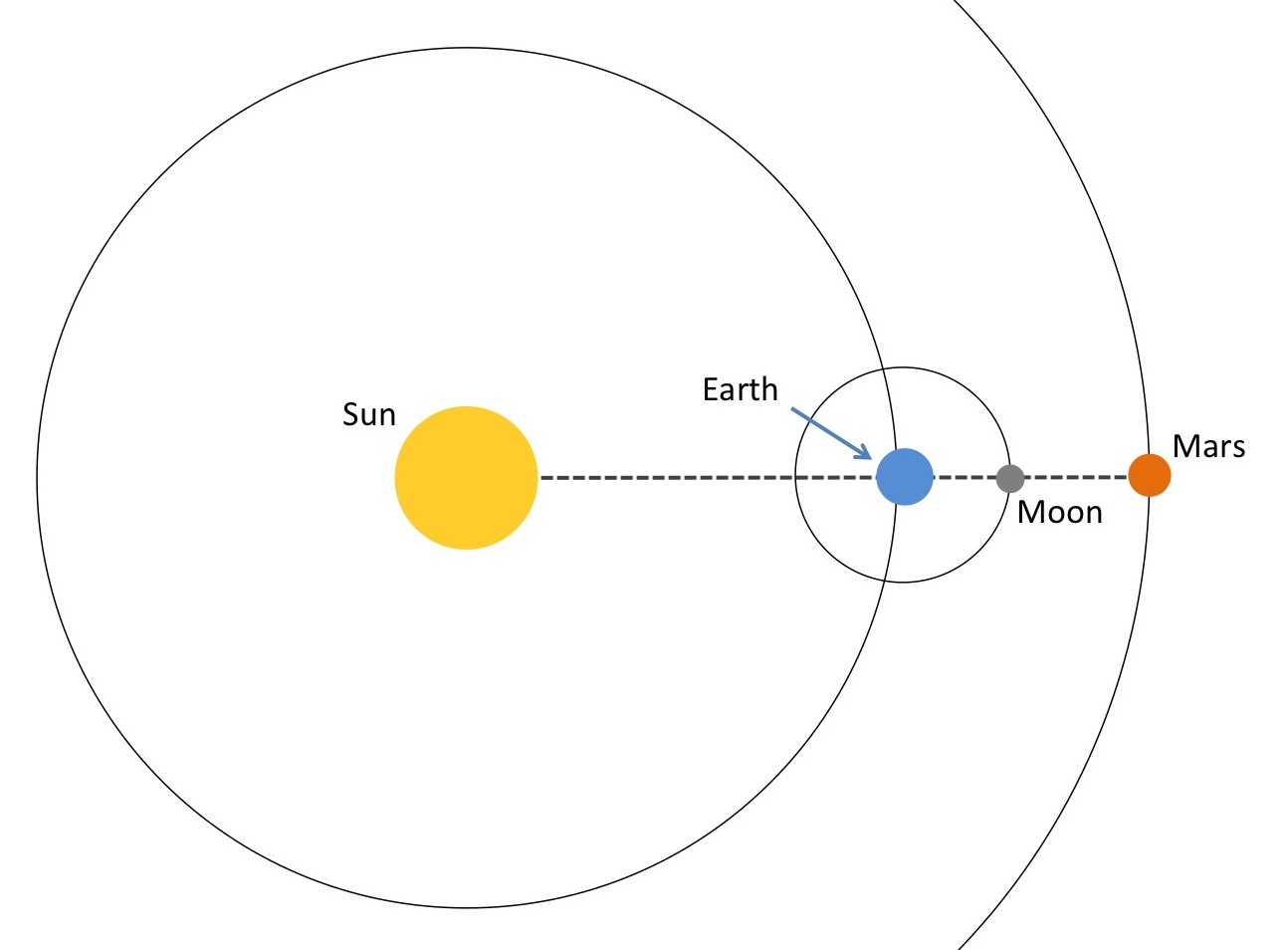
June 7: Conjunction of the Moon and Mars. Conjunction is when two celestial objects line up along the line of sight from the Earth. For instance, during the New Moon phase, the Moon is in conjunction with the Sun. During this month’s Moon-Mars conjunction, the two objects will come within two degrees of each other in the sky. It’s not super-close — by way of comparison, the angular size of the Moon is just half a degree — but it makes for a nice pairing for binoculars or a telescope.

Moon - Mars conjunction


June 22 – July 2: June Boötids meteor shower. As far as meteor showers go, this one’s pretty wimpy. The expected rate is one to two meteor per night, though on rare occasions there can be strong outbursts. Unlike most meteor showers, this one is best viewed in the evening hours.

Saturday morning astronomy news roundup

The Serpent

The Serpens Cloud Core [Credit: NASA / JPL-Caltech / 2MASS]

NASA’s Spitzer Space Telescope has captured several photos of the Serpens Cloud Core, where moderate-mass stars like our Sun are being born, and compiled them into the beautiful image above. The image is a combination of infrared light, which can penetrate through dust, and visible light, which is blocked by dust. The dark region to the left of the bright core is a region of dust so dense that not even infrared light could get through.

We all know that the Moon (with some help from the Sun) causes the tides on the Earth, but most people probably don’t realize that the Moon also becomes distorted by its gravitational interaction with the Earth. NASA scientists have been studying the distortion using NASA’s Lunar Reconnaissance Orbiter and Gravity Recovery and Interior Laboratory missions. The tidal effect on the Earth is most evident in the ocean tides, because water is easy to move around, but the effect on the Moon, which is mostly solid except for its small core, is to distort it into a slight egg shape. The force of the Earth’s gravitational tugging is sufficient to produce a bulge of about 20 inches on the surface of the Moon. The position of that bulge changes with time so that the Moon appears to wobble in the sky. Earth likewise appears to move around in the sky from the Moon’s point of view.

How the Christian view of time led to modern science

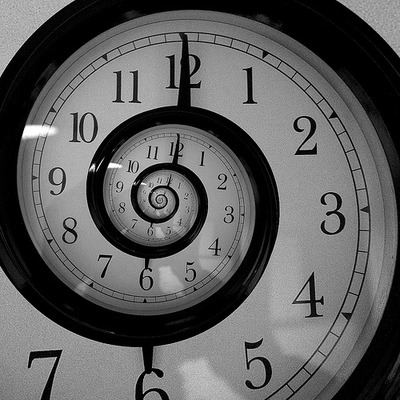
People in the modern West take for granted that events proceed in a line stretching from the past through the present and into the future. They also believe that each point in time is unique—two events can be very similar, but no event or chain of events is ever exactly repeated. This view of time is called linear time, and it is so deeply ingrained in Westerners from birth that it is difficult for them to imagine any other view of time. However, the overwhelming majority of people who have ever lived have had a very different view of this fundamental aspect of existence.

Cyclical Time

Non-linear time

The alternative to linear time is a belief that time endlessly repeats cycles. I have great difficulty convincing my astronomy students that, from an observational point of view, cyclical time makes much more sense than linear time. I ask them to place themselves in the ancient world with no clocks or telescopes or computers, but only their senses to guide them and imagine what they would be capable of understanding about time. The days would be marked by the daily motions of the Sun and other celestial objects rising and setting in the sky, the months would be marked by repeated phases of the Moon, and the years would be marked by the reappearance of certain constellations in the sky. Other cycles in nature, such as the seasons, tides, menstrual cycles, birth-life-death, and the rise and fall of dynasties and civilizations, would dominate ancient life.

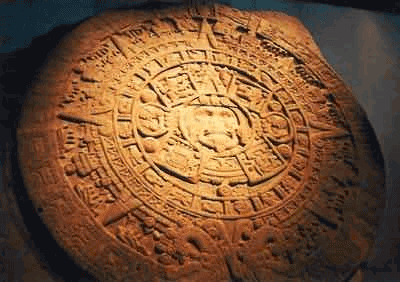
It should therefore be no surprise that the religion and worldview of many cultures were based on a belief in cyclical time. Among them were the Babylonians, ancient Chinese Buddhists, ancient Greeks and Romans, Native Americans, Aztecs, Mayans, and the Old Norse. These societies practiced an ancient astronomy called astrology which had as its chief function the charting of the motions of heavenly objects to predict where people were in some current cycle. It was a complicated process, because there are multiple cycles occurring in the heavens at any time, and ancient beliefs were based on the idea that human fate was determined by cycles working within other cycles. As a result, ancient calendars, such as the Hindu and Mayan, were very elaborate with a sophistication that surpasses those of the modern West. The idea of cyclical time continues in the present day with Hindu tradition and native European tradition such as that of the Sami people of northern Scandinavia.
Mayan Calendar

Mayan calendar

Not only does cyclical time make sense in terms of what people observe in nature, but it also satisfies a deep emotional need for predictability and some degree of control over events that the idea of linear time can’t. If time flows inexorably in one direction, then people are helplessly pulled along, as though by a powerful river current, toward unpredictable events and inevitable death. Cyclical time gives the promise of eternal rebirth and renewal, just as spring always follows winter. These pagan beliefs were so powerful that they continue to influence all of us today; for example, the celebration of the belief in the constant process of renewal is the basis for the New Year holiday.

Obviously, all people have thought in terms of linear time on a daily level, otherwise they wouldn’t be able to function. But on the larger scale of months, years, and lifetimes, the notion of linear time was viewed as vulgar and irreverent. A cyclical view of time was a way for people to elevate themselves above the common and vulgar and become connected to that which appeared heavenly, eternal, and sacred. This view also offered a form of salvation in the hope that no matter how bad things are in the world at the moment, the world will inevitably return to some mythical ideal time and offer an escape from the terror of linear time. You and I would consider this ideal time to be in the past, but in cyclical cultures, the past, the present, and the future are one.

Primitive cultures, like the Australian aborigines, had no word for time in the abstract sense—that is, a concept of time that exists apart from people and the world. For them, time was concretely linked to events in their lives—the past, the present, and the future formed an indistinguishable whole as the great cycles determined everything. The ancient Hebrews also had no word for and therefore no concept of abstract time, yet their concept of time was a linear one in which events occurred sequentially. These events formed the basis for their concrete notion of time. Except for the first six days of creation, time as described in the Old Testament was completely tied to earthly events like seasons, harvest, and, most importantly, God’s interaction with the world.

The ancient Greeks also believed the universe was cyclical in nature, but unlike other ancient cultures they also believed in an abstract notion of time that exists separately from events. They had two words for time—chronos and kairos—representing quantitative/sequential time and qualitative/non-sequential time respectively. From chronos we derive familiar time-related words such as chronological, chronic, and anachronism. In order to appreciate the Greek concept of time, one has to understand that to the Greeks time was motion. It’s not difficult to envision since the length of a day is measured by tracing the path of the sun and stars across the sky. When Plato spoke of time, he described an “image of eternity … moving according to number.” His student, Aristotle, said that time is “the number of motion in respect of before and after.”
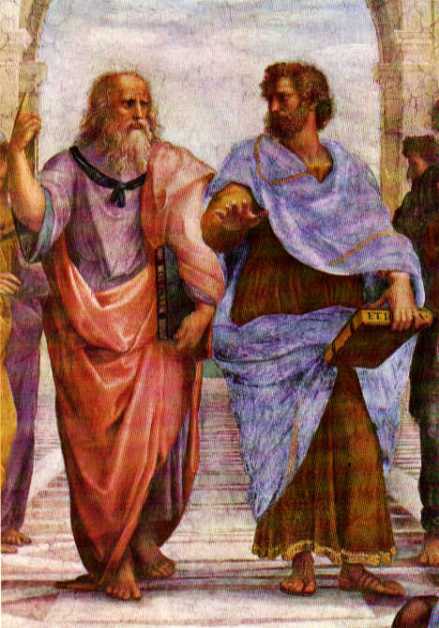
Plato and Aristotle

Plato and Aristotle from the fresco “The School of Athens” by Raffaello (1510)

The Judeo-Christian beliefs about time that emerged during the time from Moses to that of Jesus mark a profound break with the thinking of the ancient past. Events of the Bible clearly indicate a unidirectional, sequential, notion of time that is utterly counter-intuitive to what the senses observe in nature. Time is not discussed directly in the Old Testament, but we can gain an understanding of the ancient Hebrew notion of time from the language. The ancient Hebrew root words for time were related to distance and direction: the root word for “past” and “east” (qedem, the direction of the rising Sun) is the same; the root word for the very far distant in time (olam), past or future, is also used for very far distant in space.

Perhaps the ancient Hebrews anticipated the early 20th century mathematician Hermann Minkowski, who postulated that space and time are two aspects of a single entity called spacetime.  In any case, the Hebrew practice of viewing time from a perspective that looked backward was eventually adopted by modern astrophysics. The Judeo-Christian concept of linear time developed into our modern view of time and became one of the great foundations of modern science.

Something very powerful was required to overcome the ancient perceptions of and feelings about time.  Though the concept of linear time started with Judaism, it took hold and was spread throughout the Western world by the rise of Christianity. In the fifth century, Augustine noted that the Bible is full of one-time events that do not recur, beginning with the creation of the universe, culminating with the Crucifixion and Resurrection, and ending with the Second Coming and Judgment Day. He realized that Christian time is therefore linear rather than cyclical. The desire for some sense of control and the hope for eternal renewal became better satisfied by a belief in a loving Creator and the resurrection of his Son who was sacrificed on the cross. (It is interesting to note, however, that cyclicality does have some place in Christianity—we are born when we leave the womb and we are reborn when we go to heaven.)

Nearly a thousand years after Augustine made his pronouncement, the era of clock time emerged. Clock time is measured by mechanical apparatuses rather than by natural events, and marks the final triumph of abstract linear time over concrete, cyclical, event-driven time. Mechanical clocks were invented in Europe in the 14th century, followed by spring-driven clocks in the 15th century. Refinements to spring-driven clocks in the 16th century enabled Danish astronomer Tycho Brahe to make his famously accurate celestial observations, which were used by Johannes Kepler to formulate the laws of planetary motion.
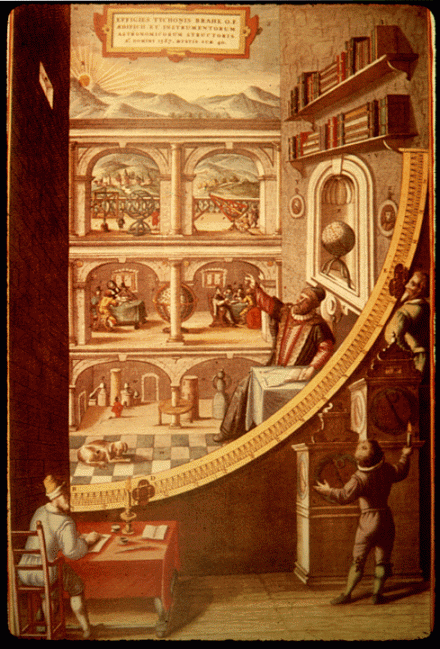
Tycho Brahe and his quadrant

Tycho Brahe and his quadrant

However, the motivation for increasing precision in time-keeping was not motivated by pure science, but rather by the application of science in the quest for accurate navigation. Sea-faring navigators required precise measurements of time so that they could use the positions of star-patterns to determine longitude. With these highly precise clocks, it was possible to keep excellent time. It is interesting to note in the phrase “keeping time” the abstract notion, meaning we keep up with the external flow time rather than events defining the concrete notion of time.

It is not a coincidence that the era of modern science began after the invention of high-precision time-keeping devices. Modern science began with the Scientific Revolution in the 16th and 17th centuries, starting with the Copernican Revolution, but it progressed slowly because of a lack of necessary technology. Galileo, for instance, was forced to time some of his experiments by using his own heartbeat. By the late 17th century, Newton had formulated the branch of mathematics now referred to as calculus and published his laws of gravity and motion. His work was based on his belief in a flow of time that was both linear and absolute. Absolute time means that it always takes place at a rate that never changes.

Remember that the ancient Greeks viewed time and motion as one. This is important because the scientific study of motion based on the principle of cause and effect requires linear time. Newton’s laws and his view of time as absolute held sway for almost two hundred years. But Newton suffered from limited perspective just as the ancients had—humans perceive time on Earth as always taking place at the same rate, but that isn’t true. Newton is still considered the greatest scientist who ever lived, but we know now that he did not have the full picture.

Isaac Newton performing an experiment

It was Albert Einstein and his theory of relativity that gave humankind the strange truth about time. By the early 20th century Einstein had succeeded in demolishing Newton’s notion of absolute time, showing instead that time is flexible, it goes by at a rate that is different in different places in the universe, and it is really dependent on the location and movement of the observer of time. It is interesting that the Bible anticipated this in Psalms 90:4, “For a thousand years in your sight are like a day that has just gone by, or like a watch in the night.”

The current scientific view of time is a combination of the ancient Greek abstract notion of time, the Judeo-Christian notion of linear time, and Einstein’s relative time. Cosmology, the branch of physics that deals with the overall structure and evolution of the universe, works with two times: local time, governed by the principles of relativity, and cosmic time, governed by the expansion of the universe. In local time, events occur in the medium of spacetime as opposed to being the cause of time. Time is motion, motion is time, and objects may freely move in any direction in space.
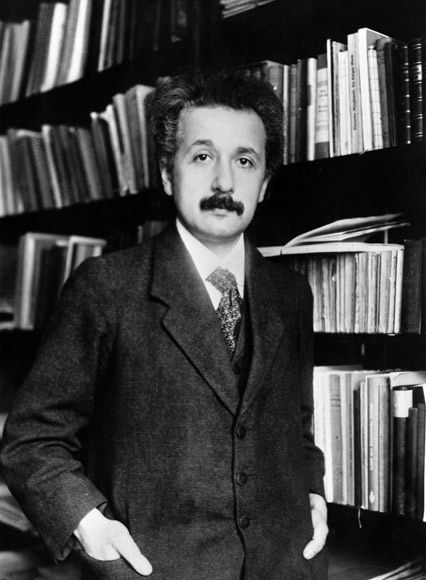
Albert Einstein

Albert Einstein

But the next big scientific question is, can objects also move in any direction in time? Physicists have determined that the arrow of time points in one direction. But how can we determine that direction? Biblically, we understand that time flows from the creation to Judgment Day. Scientifically, it has been less clear.

Ultimately, physicists determined that the arrow of time points in the direction of increasing disorder. A branch of physics known as thermodynamics, the study of how energy is converted into different forms, quantifies disorder using a concept called entropy. The second law of thermodynamics states that in a closed system, entropy (the amount of disorder) never decreases. This means the universe will never spontaneously move back in the direction of increasing order. It is the progression of the universe from order to disorder that provides the direction for the arrow of time.

The linearity and direction of time determined by thermodynamics seemed clear until physicist and mathematician Henri Poincaré showed mathematically that the second law of thermodynamics is not completely true. The Poincaré recurrence theorem proved that entropy could theoretically decrease spontaneously (the universe could go back in the direction of increased order). But, the timescale necessary to give this spontaneous decrease any significant chance of happening is so inconceivably long, much longer than the current age of the universe, there is little probability that it will happen before the universe could reach maximum entropy.

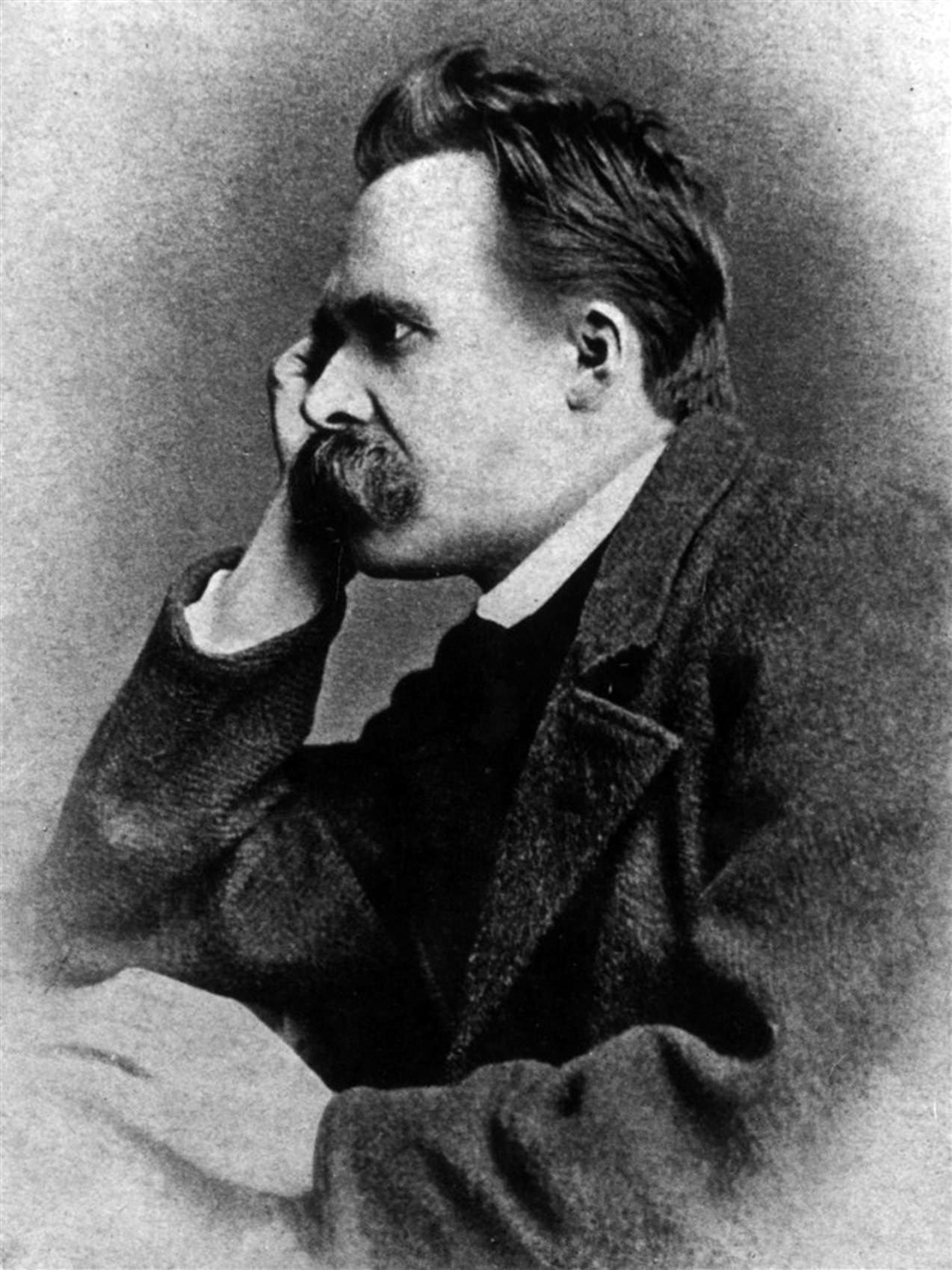
Nevertheless, some Western thinkers mistakenly took Poincaré’s theorem to mean that reality is cyclical in a way that does not provide the ancient escape from the profane to the sacred. This led these thinkers to despair about the possibility that human existence is nothing more than the pointless repetition of all events for all of eternity. Nineteenth century philosopher Friedrich Nietzsche was one who took the Poincaré recurrence theorem to the hasty and illogical conclusion that there was no purpose or meaning to existence. On the other hand, there is little comfort to be gained from contemplating an endlessly expanding universe in which everything becomes hopelessly separated from everything else. One may well wonder if there is no escape from time.
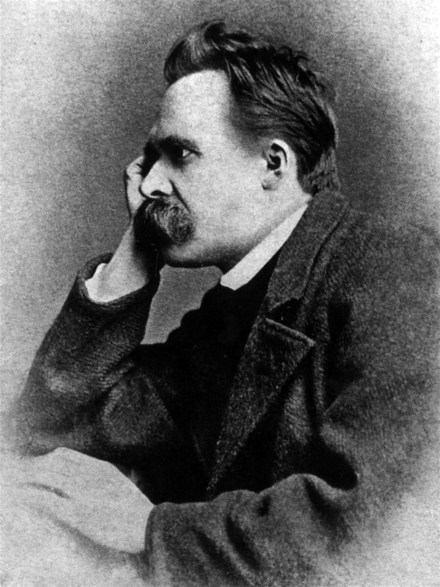
Friedrich Nietzsche

Friedrich Nietzsche — contemplating the Poincaré recurrence theorem?

Christians need not despair. The Bible tells us that the universe in its present form will cease to exist on Judgment Day, which will presumably occur long before there is any significant probability of a Poincaré recurrence, and will certainly make the notion of an endless expansion moot. If that is true, we inhabit a universe that is for all purposes linear and finite in time, and we have a much happier fate than being condemned to a never-ending repetition of meaningless events or a universe that expands forever and ever.

While it is important that Christians understand that modern science confirms the biblical view of time, it is also important that Christians understand the role of biblical belief in shaping modern science. Modern science developed only after the biblical concept of linear time spread through the World as a result of Christianity. True science, which at its root is the study of cause and effect, absolutely requires linear time.

The Bible

Fertile ground for modern science

The foundation of 21st century astronomy and physics is the big bang theory—the “orthodoxy of cosmology” as physicist Paul Davies describes it—which relies on linear time with a definite beginning. The false cyclical view was perpetuated by two human limitations: limited perspective and misleading emotions. It took faith in the Word of God enshrined in the Bible and trust in the scientific method to overcome these limitations so that humankind could understand the true nature of time.
Camelopardalid “storm” a dud

Oh, by the way, the much-anticipated Camelopardalid meteor “storm” (camelopardala)didn’t live up to the hype. We were clouded out here in Central Texas, so I didn’t even get a chance to try to watch it. After predictions of possibly hundreds of meteors per hour, the actual tens per hour that were observed must’ve been pretty disappointing to those who had clear skies and tried to watch.

Saturday morning astronomy news roundup

Black holes of a feather flock together, and this means the popular ‘unification model’ of active galaxies is probably wrong. Virtually all galaxies have a supermassive black hole in the center, but in active galaxies, the black hole is actively feeding on gaseous and stellar material and kicking out a huge amount of energy. The unification model attempted to explain the different types of active galaxies as really the same type of galaxy viewed from different angles, but new results from NASA’s Wide-field Infrared Survey Explorer (WISE) show that active galaxies of one type cluster differently than active galaxies of another type, indicating that the differences are intrinsic.

Astronomers at SETI think we’ll make contact with an alien intelligence within 20 years. This is based on the sheer number of stars in our neighborhood (lots) and the recent discoveries by the Kepler space observatory hinting that at least 70% of the stars in our galaxy have Earth-size-ish planets orbiting around them. If any of those planets have liquid water on them, the conditions may be favorable for life. There are a lot of ‘ifs’ leading to the possibility of intelligent life on other planets, but given the hundreds of billions of stars in our galaxy alone, some astronomers think the odds are pretty good.

Meteor storm!

Perseid meteor shower

Perseid meteor shower [Credit: David Kingham]


Tonight is the night!

In the very early morning hours of Saturday, May 24 (or very late tonight, depending on how you look at it), we may be in for one doozy of a show from a never-before-seen Camelopardalid meteor shower. The shower is predicted to be so intense—with up to 200 meteors streaking across the sky per hour—that it’s being referred to as a possible “meteor storm.” The meteor shower is a result of the Earth crossing the trail of debris left by the newly-discovered Comet 209P/LINEAR. The shower should last for hours, since it will emanate from a northern part of the sky (remember, for those in the Northern Hemisphere, the North Star never sets), but the best time to view the show will be between the hours of 1:00 am and 3:00 am CDT on the 24th.

Parade has some tips on how to view the meteor shower.

New supernova observation reveals details about massive dying stars

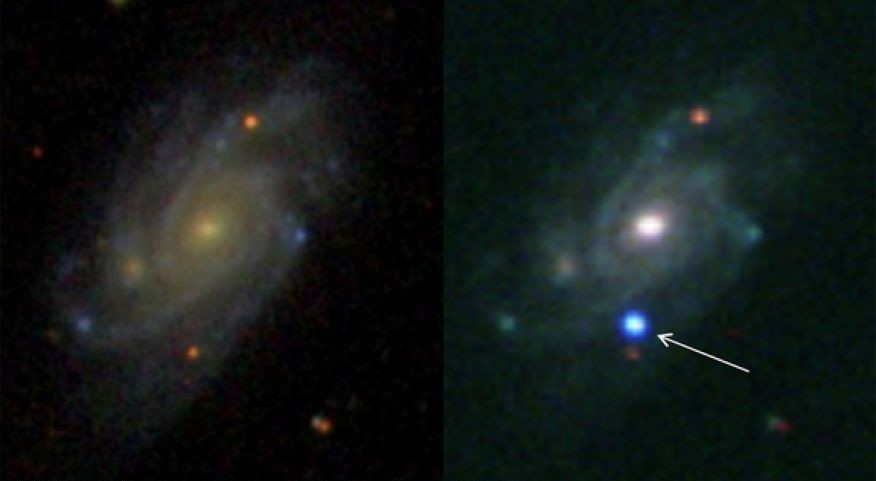
Before and after of supernova SN 2013cu in the galaxy UGC 9379, about 330 million light-years away. The left image is from the Sloan Digital Sky Survey; the right image is from the robotic telescope at the Palomar Observatory. [Credit: Avishay Gal-Yam, Weizmann Institute of Science]

For the first time, scientists have direct evidence that the biggest and brightest stars die in supernova explosions. The evidence comes in the form of SN 2013cu, a gigantic star that scientists were able to virtually catch in the act of going supernova last year. A new robotic sky survey, called the intermediate Palomar Transient Factory (iPTF) scans the sky for supernova events, alerting astronomers to possible supernovae so they can be observed very soon after they happen. The iPTF caught SN 2013cu soon after it detonated, allowing astronomers to make detailed observation of the dying star. Most of the time, astronomers are not aware of what type of star went supernova once they go off, since — for the last 400 years, anyway — all supernovae we’ve observed have gone off in other galaxies and we don’t tend to catalog the different types of stars in other galaxies.

Wolf-Rayet star

Wolf-Rayet star WR 124 [Credit: Yves Grosdidier (University of Montreal and Observatoire de Strasbourg), Anthony Moffat (Universitie de Montreal), Gilles Joncas (Universite Laval), Agnes Acker (Observatoire de Strasbourg), and NASA]

This is what makes this latest discovery so extraordinary. Astronomers were able to tell from the supernova spectrum, obtained very soon after the detonation, that this particular object was what is called a Wolf-Rayet star (see image above), a huge and hot type of star that is so massive, astronomers weren’t even sure if it would go supernova when it died. This particular star became what is called a Type IIb supernova. Astronomers will use this information to better understand the way massive stars change throughout their lifetimes.

The scientific method and ‘real science’

The following is a comment left by a reader at Vox Popoli about a year ago, in response to another reader who was concerned about the current state of science. I had written the following response with the intention of posting it here, and then forgot about it. Surak is about to offer some commentary on a disturbing development in science that bears on this, so I figured now was a good time to dig it up and post it.

To answer your question as to what ever happened to the scientific method, here’s the shocking truth: Science does not operate according to the scientific method unless there’s a crisis. Never did.

Science, just like every other avenue of human endeavor (why should it be different, honestly?) operates under the thrall of a power structure. Always has.

The scientific method only applies when challenges come up against prevailing paradigms. Then, it is utilized, and don’t be a fool understand that every effort is made, always, to doom the challenger and to favor the prevailing paradigm.

The great merit of the scientific method is that under these rare conditions reason and proof hold sway. But please do not be so foolish as to assume that science is governed by the scientific method on a basis, because it is not.

Science is governed by egos. And nothing more.

It is true in a grand Kuhnian sense that crisis precedes advancement. It is also true that egos are a factor in science. But so what? Science is the triumph of the human mind over ego and a multitude of other human failings—limited perspective, misleading emotions, dominant philosophies that act as closed boxes, and the corrupting effects of the universal desire for fame, fortune, and/or political power. The scientific method is the means by which these frailties are remedied. Since these obstacles to advancements in knowledge will always be with us, there will always be a turbulent interplay between human nature and the pursuit of science.

The key element of the scientific method that keeps it from flying off in the direction of wild, unsubstantiated speculation is the peer-review process. If you want to know if the scientific method is alive and well in any branch of science, simply observe how rigorously the peer-review process is being used. I go through the peer-review process on several levels every time I submit a research paper for publication.

The first hoop I have to jump through is the judgment of the referee assigned by the journal in which I hope to have my paper published. The most important thing the referee does is check how well I have accomplished the observe –> hypothesize –> predict –> test –> theorize part of the process. If the judgment is that my work is scientifically sound, the paper is published. Then the whole body of my profession passes judgment on my work by deciding whether or not to cite my work. At the next level of the peer-review process, decisions are made about which scientists are deserving of funding, tenure, and promotions. At the final level, judgments are made about which work is deserving of awards. The end result of this in physics is a steady advance in knowledge where occasional detours from truth are corrected and dead ends are usually recognized and reversed.

I accept that there are some areas of science in which the scientific method does not currently function as it should. So-called “climate change science” is the most obvious example of science being corrupted by politics, money, and dogma. Surak will have something to say about this soon with regard to a disturbing development in this field. Meanwhile, there is a simple test one can apply in this regard: any time the name Al Gore or the terms “scientific consensus” and “the debate has been settled” are used in regard to any branch of science, it has undoubtedly strayed from the scientific method.

Biology certainly suffers from an ego problem to the extent that it is nearly impossible to get a mainstream biologist to utter the words, “Darwin was wrong about some important things.” He was wrong about some important things, and a paradigm shift is long overdue in the field of evolution. But, it must be acknowledged that a multitude of biologists are doing very good work that is firmly based on the scientific method.

The real test of any field’s application of the method is whether that field petrifies into dogma or if it routinely accepts change. I must speak in defense of my field of physics/astrophysics. It has a long history that includes the initial establishment of the scientific method as well as continuous successful applications of its process. After the Copernican revolution and the invention of precision clocks, experimental methods were sufficiently advanced that it didn’t take all that long to accumulate enough evidence to overthrow old ideas and adopt new paradigms. To name but a very few examples: Newton’s uniting the heavens and the earth under one set of laws, Maxwell’s unification of electricity and magnetism, Poincaré’s relativity of time and space, Planck’s quantum, Hubble’s confirmation of other galaxies and the expanding universe, Einstein’s new view of gravity, Lemaître’s big bang theory, Zwicky’s dark matter, and the supernova teams’ accelerating universe.

You say this is rare, but how often do you think this is supposed to happen? How often can it happen on such a large scale? The Hubble/Lemaître paradigm is an especially important example of the scientific method working as well as it possibly can. Most physicists did not like the idea of a universe with a beginning, but the scientific method is so firmly established in physics that the vast majority of them accepted it once there was sufficient evidence to overcome all reasonable objections. Those who clung to the notion of the eternal universe for reasons of ego and non-scientific concerns were discredited for straying from the scientific path.

The application of the scientific method does not have to be perfect to be functional. My own everyday experience in the field of astrophysics has been that the method sometimes proceeds as the classic observe -> hypothesize -> predict -> test -> theory. But quite often it is something very different: observe -> huh? -> observe -> what the … ?! -> hypothesize -> predict -> test -> getting close to a theory! -> test again -> wait, what? -> OH! -> hypothesize -> test, and so on. As long as it is evidence- and prediction-driven throughout the confusion, that’s good enough.

As for the system being set up to doom the challenger, how else would you have it? That’s the way it should be, as long as this resistance is not rooted in ideology (e.g. “climate change science”). It’s not unlike a court of law, where the presumption should be the innocence of the accused and the burden of proof lies with the accuser.

Egos, admittedly, often get in the way of true science, but on the other hand I doubt science could proceed without them. Scientists will always be fully human and infinitely closer in nature to Captain Kirk than to Mr. Spock. The vast majority of people I work with are truly driven by a desire for truth, but also the competitive hope for recognition and reward (which is why science has always been a traditionally masculine endeavor). And yes, they also have an understandable instinct to protect the fruits of their labor.

The point of all this, do not confuse the inevitable imperfect application of the scientific method for its absence.

Kepler’s resurrected!

Kepler spacecraft

Artist’s conception of the Kepler spacecraft [Credit: NASA/Ames/JPL-Caltech]


The space observatory
, that is, not the late great astronomer.

NASA is breathing new life into the currently defunct Kepler spacecraft, which was designed to look for Earth-size exoplanets (planets orbiting other stars) in the Milky Way. Partway through its mission, the Kepler spacecraft lost function in two of the four flywheels it uses to orient itself, and, without the ability to steadily point in a given direction, it became effectively dead.

However, NASA scientists have figured out how to use the pressure from the solar wind to stably orient the spacecraft, and it will hopefully resume its mission of searching out the Milky Way for Earth-size planets. The use of the solar wind to stabilize Kepler will limit where the spacecraft can point itself, but it will still be able to collect a lot of meaningful data.