Space missions for the next decade

Photo of the Jovian moon, Europa, taken by the Galileo spacecraft

To infinity and beyond! Well, to the middle-outer reaches of the solar system, anyway. If we can afford it. The National Research Council’s top recommendations for big space missions in the next decade:

  • visit Mars to determine if it ever had life
  • visit Jupiter’s moon, Europa, which likely has a liquid ocean underneath its icy surface that may harbor life
  • check out the atmosphere of ice giant, Uranus

I got a little excited when I saw the title of the TechNewsWorld article, thinking we were planning manned visits to Mars and Europa, but alas these visits would all be carried out with unmanned probes. Still, these missions would bring back important information about our nearest neighbors and the potential for life beyond Earth.

Continue reading

Of robots and revulsion

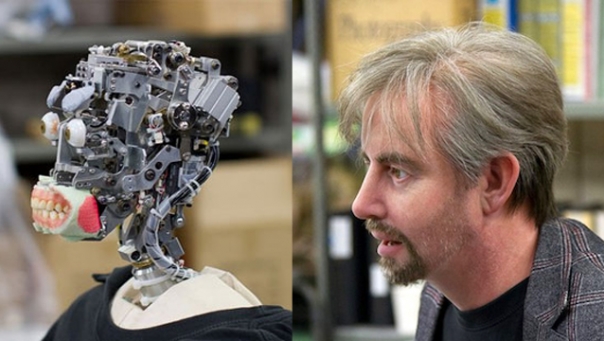
I am generally positive about high technology, and as a science fiction fan I have never had a problem with the concept of androids — until now. Check this thing out:

The guy on the right is not a real person, it’s a very sophisticated robot, called Geminoid DK, created by Japanese researchers. It seriously creeps me out:

Why am I disturbed by this thing instead of curious about it or even sympathetic to it the way I am with Data, the android from Star Trek: The Next Generation? Because, underneath all the makeup, I know Data is a real person. (Plus, the more you think about his character, the more you realize how unintentionally human he is.) But the Geminoid robot? I know it’s not a real person.

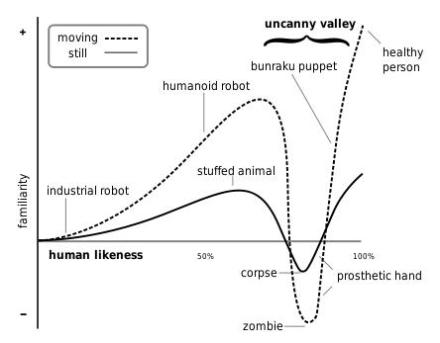
There is supposedly an explanation for this revulsion. It’s called the “uncanny valley,” and it says that our feelings of sympathy for a robot are proportional to how human-like it is, up until a point where the similarities rapidly become repulsive. Then as the robot becomes indistinguishable from a human, our feelings of sympathy rise again. The effect is enhanced if the robot moves. The graph below shows what this looks like:

Human emotional response to objects as a function of how human-like they are. (From the Wikipedia entry on "uncanny valley.")

The problem with this explanation is that until now, we haven’t had any robots that were anywhere close to indistinguishable from humans, so there could not have been direct testing of how humans react to such robots. Furthermore, when I showed the video to some relatives, they didn’t think anything of it until they realized it wasn’t human. Then they were horrified. There seems to be something within us that is innately repelled by an object that looks and acts human and yet lacks both animal intelligence and a soul.

I don’t see the Geminoid robot as a wonderful technological breakthrough. In fact, for the first time I am deeply troubled about the prospect of androids ever serving humanity. I don’t think the outcome would be like Data, but something more like the replicants from Blade Runner.

Continue reading

Alien life and the Christian view of Creation

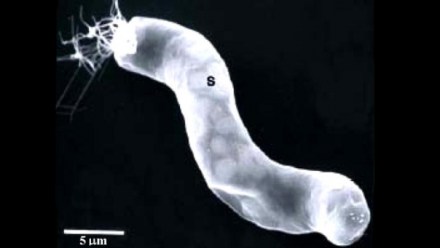
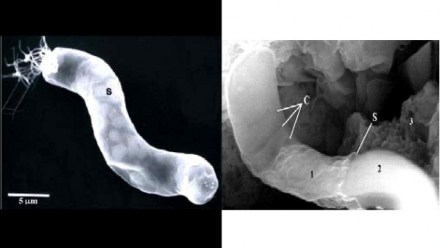
A bacterium from the meteorite (right) is similar in size and structure to the terrestrial bacterium Titanospirillum velox (left) (Riccardo Guerrero / Richard B. Hoover / Journal of Cosmology)

Fascinating:

Dr. Richard B. Hoover, an astrobiologist with NASA’s Marshall Space Flight Center, has traveled to remote areas in Antarctica, Siberia, and Alaska, amongst others, for over ten years now, collecting and studying meteorites. He gave FoxNews.com early access to the out-of-this-world research, published late Friday evening in the March edition of the Journal of Cosmology. In it, Hoover describes the latest findings in his study of an extremely rare class of meteorites, called CI1 carbonaceous chondrites — only nine such meteorites are known to exist on Earth.

Though it may be hard to swallow, Hoover is convinced that his findings reveal fossil evidence of bacterial life within such meteorites, the remains of living organisms from their parent bodies — comets, moons and other astral bodies. By extension, the findings suggest we are not alone in the universe, he said.

Claims like this have been made before, and while previous claims turned out to be unsupported by the evidence, they always give rise to the question of whether the presence of life elsewhere in the universe undermines the Judeo-Christian view of Creation. The best answer is the simplest one: it doesn’t. Ancient and medieval Jewish scholars of the Genesis account of creation maintained that the universe was created with the potential for life built into it. This agrees with the growing scientific evidence that the universe is undeniably tuned for life. Working from both perspectives, I would be surprised if we did not eventually find evidence of at least the most basic forms of life elsewhere.

The religiously pivotal question is whether or not we ever find intelligent or even conscious life elsewhere since, according to the Judeo-Christian view, these would have to be deliberate creations by God. As physicist and theologian Gerald Schroeder points out in his book The Science of God, two different verbs are used in Genesis when describing key events: “created” and “made.” The former refers to the instantaneous act of bringing something into existence from nothing. Genesis uses this word only three times: first for the creation of the universe on day one, then for the creation of animal (intelligent) life on the fifth day, and for the last time on the sixth day when Adam is endowed with a human soul. For the remaining events of the six days of Genesis, including the third day when life first appears, the word “made” is used, as though something that already existed was merely being restructured. Non-intelligent forms of life, like the primitive bacteria discovered by Dr. Hoover, would fall under the category of “made.” Intelligent and conscious forms of life would fall under the category of “created.”
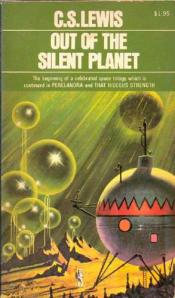
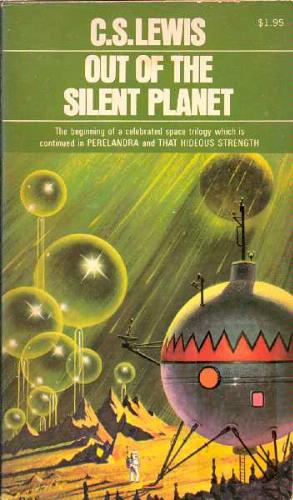
With this in mind, let’s ask a revised version of the key question, “Would the discovery of conscious beings elsewhere in the universe undermine the Judeo-Christian view of Creation?” It would if Genesis stated that the creation of Adam is a unique event, not to be repeated elsewhere in space or time. I have not seen anything in scripture to suggest this is the case. In fact, the great Christian apologist, C. S. Lewis, laid out a plausible scenario for conscious life on other planets within the context of the Judeo-Christian view in The Space Trilogy. In these novels, humans encounter alien beings on other planets in the solar system that, though they have some things in common with us, are wonderfully unfallen and thus enjoy direct communication with the Creator.

This brings us to one of the great problems for the materialist view that humans have no spiritual component: the need to explain why an overwhelming majority of humans throughout history have demonstrated a deep longing for the spiritual. The prevailing explanation seems to be that it is an evolutionary tic, an unfortunate byproduct of an otherwise beneficial genetic mutation. So let’s engage in a bit of speculation to turn the tables: would the discovery of conscious beings on another planet who turn out to be as spiritually-inclined as humans undermine the materialist view of existence? Seems to me it would, given the immense improbability of two entirely different species of conscious beings developing the same evolutionary tic independently.

Continue reading

Rethinking the origin of cosmic rays

The PAMELA instrument. Credit: Piergiorgio Picozza

New results from an Italian space-based experiment have astronomers puzzled about the origins of cosmic rays. Cosmic rays are charged particles — protons and other atomic nuclei — that are accelerated to near-light speeds and continue on through the universe. The Earth is awash in them, with dozens of cosmic rays passing through your body every second of every day. Until now, the prevailing explanation for their origin was that they are accelerated by the remnants of supernovae, the spectacular final moments of dying high-mass stars. However, evidence gathered by the exquisitely sensitive Italian space-based instrument, called PAMELA, suggests this is not the case. It seems that different types of particles are accelerated in different ways, contrary to what is expected if they are accelerated by the same source.

It’s another entry in the “We didn’t expect that” file, which is part of what science is all about. And theorists always like the extra business.

Continue reading

Buckyballs in space

Sounds like the title of a cheesy sci-fi movie, doesn’t it? Buckyballs (short for “buckminsterfullerenes”) are the largest molecules that we know of, and just last year they were discovered for the first time in space. Based on their properties, astronomers predicted that buckyballs would exist in certain environments in space and not in others. However, a group using the Spitzer Space Telescope has found precisely the opposite. This is why observation and experiment are so important in science.

Continue reading

Never tell me the odds!

The Pan-STARRS telescope in Hawaii discovered a record-breaking 19 asteroids in one night last January, two of which are projected to come close to the Earth at some point.

Even with all of these discoveries, it’s estimated we’re tracking only about 1% of the total number of Near Earth Objects (NEOs) in the solar system. To get an idea of the distribution of all the stuff zipping around out there, check this out (seriously).

A little scary perhaps, but at least it’s not this bad:

Recommended reading: