What about lizard and Spock?

Sheldon Cooper once pointed out a flaw inherent in the game of rock-paper-scissors — that people who know each other can anticipate the most likely outcome — which is why he introduced millions of viewers of The Big Bang Theory to a relatively new twist on the old game. Of course, there’s a weakness with this twist, especially for a certain kind of person:

Chinese scientists, meanwhile, have discovered that even people who don’t know each other can more often than not anticipate the outcome of rock-paper-scissors by observing a tendency called “win-stay lose-shift”

When players won a round, they tended to repeat their winning rock, paper or scissors more often than would be expected at random (one in three).

Losers, on the other hand, tended to switch to a different action. And they did so in order of the name of the game – moving from rock, to paper, to scissors.

Now that you know this, do you think you can consciously avoid making the same strategic error?

Replay: Our analysis of “The Great Debate: Is There Evidence for God?”

Traffic’s up after the informal announcement of the publication of our Astronomy and Astrophysics curriculum, so in the coming weeks we’re going to replay some of our more important posts from the archives for our new readers.

On March 30, 2011, Christian theologian and philosopher William Lane Craig debated atheist physicist Lawrence Krauss at North Carolina State University. The topic was, “The Great Debate: Is There Evidence for God?” Video of the rather lengthy event is here. What follows is our analysis of the debate. 

** Written by Sarah and “Surak” **

The two opposing sides of the scientific debate over the God hypothesis were well represented on Wednesday by Dr. William Lane Craig (Christian Philosopher and Theologian from Talbot School of Theology) and Dr. Lawrence Krauss (Theoretical Physicist from Arizona State University). Dr. Craig’s argument was based on the clearly-stated and logical assertion that if God’s existence is more probable given certain information, that information meets the essential criterion for evidence. Dr. Krauss was equally clear in his definition of evidence: it must be falsifiable to be scientific. We find both standards to be very useful.

There was some confusion on the part of the moderator as to whether the topic of the debate was the existence of any evidence for God or the existence of enough evidence to prove God’s existence. We think the moderator erred in his statement of the debate’s purpose, since no one could reasonably argue that there is proof or disproof of God’s existence. As Dr. Krauss correctly stated, science cannot falsify God; so, the question can only be, “Is God likely?”

We will assess the debate in terms of whether or not there is any evidence for the existence of God, although Dr. Krauss tried to set the bar unfairly high with his assertion that a highly extraordinary proposition, such as the God hypothesis, requires extraordinary evidence. However, we think defenders of the God hypothesis can accept and meet this challenge.

Dr. Krauss acknowledges that the big bang is fact and one of science’s great achievements. The big bang theory establishes that the universe had a beginning, and that the universe was created from nothing. There was some debate and confusion about the meaning of “nothing.” It can mean the absence of matter, such as in “empty” space, or it can mean no space, no matter, and no time. The big bang involves the second notion of nothing, which is about as much of a nothing as most human minds can conceive of.

The appearance of our universe from this nothing makes it an undeniable instance of creation – something coming from nothing – as opposed to an example of making, which is something being fashioned from something that’s already there. Science is based on the premise that everything has a cause, especially if it has a beginning. Since the universe had a beginning, it must have a cause, and a reasonable extension of the big bang theory is that the cause must be something greater than and outside of the universe.

The cause of our universe must therefore be a transcendent or super-natural cause. This ultimate cause must include not only the difficult idea that some entity “exists” outside our universe, but also the humanly inconceivable idea that it has as part of its nature the capacity to exist and make other things come into existence. In other words, there must be something that is its own cause and the essence of existence. We humans can never understand such an entity, but it’s the only way to avoid a common patch of logical quicksand that threatens to swallow anyone who attempts to discuss the origins of our universe.

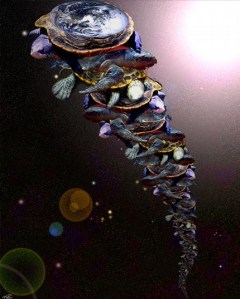
This danger to fruitful discussion is best illustrated by a story that appeared in Stephen Hawking’s A Brief History of Time. One of the greats of science, probably Bertrand Russell, had given a lecture on astronomy. He described how the Earth orbits around the Sun and how our solar system is part of a much larger galaxy. After the lecture, he was approached by a little old lady who informed him that the Earth is really sitting on the back of a giant tortoise. Russell replied, “What is the tortoise standing on?” “You’re very clever, young man, very clever,” said the old lady. “But everyone knows it’s turtles all the way down!” We must accept that at the bottom of any conceivable pile of cosmic turtles, there must ultimately be one that has as part of its nature the power of existence.
There is perhaps only one relevant or useful question humans can pose about this scientifically unknowable causal agent of the universe, “Is it conscious or unconscious?” If the transcendent cause of the universe is conscious, God is the most useful name we can give it. If the cause of the universe is unconscious, then it is some kind of super-nature. The best known and most likely candidate for the super-natural is the ‘eternal multiverse.’

This brings us to what we thought was the best question from the audience: What testable prediction does the God hypothesis make? Let’s examine this question in light of two things that Dr. Krauss said:

  1. Truly scientific evidence must be falsifiable.
  2. The big bang is established fact.

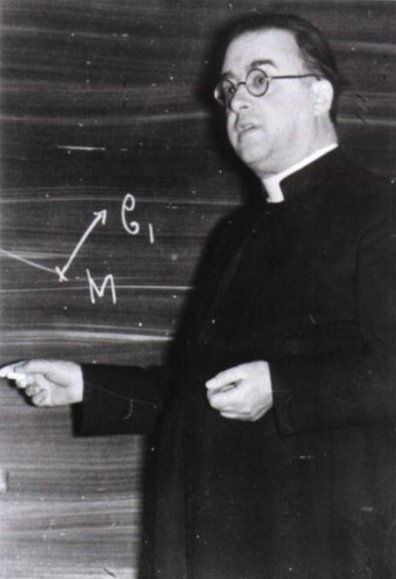
The Judeo-Christian God hypothesis includes a prediction made over 3,000 years ago in Genesis 1 that the universe had a beginning. This prediction ran counter to the theory of an eternal universe that dominated philosophical and scientific thinking until the 1960s. The great physicist and Jesuit priest, Georges Lemaître, developed the big bang theory in part because of his belief in the Genesis account of Creation. This Genesis prediction was testable and turned out to be true.  So, at least one major testable prediction of the God hypothesis meets the standard for scientific evidence.
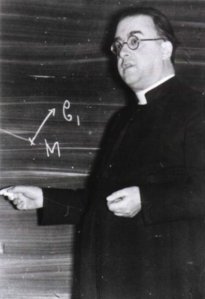
The Father of the Big Bang, Georges Lemaître

It is not proof of God, but it is undeniable evidence for God that meets even the “extraordinary” benchmark set by Dr. Krauss. The prediction that the universe had a beginning is more than ordinary evidence because it is so ancient. It turns Dr. Krauss’s somewhat derisive comment about Bronze Age peasants back on his own argument: how indeed could such scientifically ignorant people have boldly stated what would three millennia later become astonishing fact?

Apply the same test to the best super-nature alternative: what testable prediction(s) does the multiverse hypothesis make? We are still learning about the different multiverse hypotheses, but there are at least two predictions that we’re aware of. The first involves an explanation for the weakness of gravity, which is by far the weakest of the four fundamental forces of nature. Some physicists predict that gravity is weak, because gravitons – the particles responsible for conveying the force of gravity – escape our universe into parallel universes.

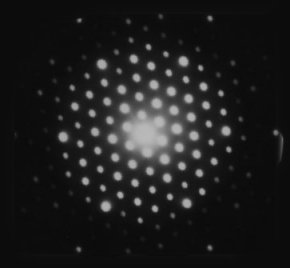
The second prediction is the existence of “ghost particles” from parallel universes. Some physicists believe these particles must exist in order explain one of the great mysteries of quantum physics, the interference pattern observed when electrons pass through a double-slit. Interference is behavior we expect from waves, not particles; moreover, the pattern is observed even if electrons are fired at the double-slit one at a time, ruling out any possibility that two electrons, each going through a different slit, are interfering with each other. The interference pattern must arise, the prediction goes, from the electrons in our universe interfering with ghost electrons in a parallel universe.

Electron interference pattern

There are two insurmountable problems with these predictions. Not only do they contradict Dr. Krauss’ assertion that parallel universes are causally disconnected from each other, but neither of these predictions is testable. The evidence for the multiverse does not rise to the level of the scientific — not because we currently lack the knowledge or technology to perform the experiments, but because they are not falsifiable in principle. Science is limited to the study of this universe. The multiverse idea as it is currently framed is not scientific, it is metaphysical.

It seems that at this time the God hypothesis is superior in evidence to the best “natural” alternative.

The evidence in favor of the God hypothesis is even stronger than what Dr. Craig presented. We at SixDay Science propose that the Genesis 1 account of Creation makes at least 26 scientifically testable statements. All 26 are compatible with modern science and they are in the correct order. A discussion of this is available here. We believe this evidence is so extraordinary that it comes close to being something akin to J. B. S. Haldane’s “Precambrian rabbit” in the sense that a creation story which succeeded in anticipating so much of modern science by 3,000 years is just as out of place in time as a fossilized rabbit in 600 million year old rock.
Saturday morning astronomy news roundup

Number Five is alive! NASA’s rover, Curiosity, snaps selfies on Mars and looks reminiscent of a certain movie robot from the 1980s.

In other NASA photo news, the Cassini spacecraft, which has been studying the dickens out of Saturn for about 10 years, has snapped a lovely photo of Uranus offset by the rings of Saturn.

And, in even more NASA news, the space agency has unveiled its prototype design for the Mars mission spacesuits. The Z-2, as the suit is called, will include parts that are made in 3-D printers. The first design, the Z-1, looked like something Buzz Lightyear would wear. The Z-2, however, looks kind of TRON-ish with its luminescent design.

Genesis time and the changing length of a day

Scientists have discovered an exoplanet that spins so fast its day is just eight hours long. Beta Pictoris b, which is 65 light-years from Earth, rotates on its axis at a whopping 62,000 miles per hour, about 50 times faster than Earth’s rotation rate (since the exoplanet is much bigger than the Earth, its day is a third as long). Scientists made this calculation using the same method meteorologists use to track earthly weather systems — the Doppler effect.

What is not generally known is that the Earth once had a much shorter day than it does now, due to its changing gravitational interaction with the Moon (and the Sun). Because of tidal friction — the loss of energy due to the gravitational tugging on Earth’s oceans — the Moon is gaining orbital energy at the cost of Earth’s rotational energy. As a result, the length of an Earth day increases. With the extra bit of orbital energy, the Moon’s orbit is increasing by about 4 cm each year and the length of a day increases by a couple of milliseconds per century. It doesn’t sound like much, but over millions and billions of years, it adds up. Computer simulations suggest that billions of years in the past, the Moon was so close to the Earth that an Earth day was a mere six hours long.

Intriguingly, an Earth-day that changes in duration is consistent with Gerald Schroeder’s reconciliation of a literal interpretation of Genesis 1 and an old Earth. Schroeder argues that the length of each Genesis day is 24 actual hours, but only measured from God’s perspective. From our earthly perspective, each of those days is a different length, ranging from billions to millions of years. It isn’t until humans appear on Day 6 that Genesis time comes to agree with Earth time. It would seem God chose a perspective for Genesis that was 24 hours, because that’s how long an Earth day would be once Adam appeared. For a detailed explanation of this reconciliation, see here.

Backyard Astronomy: May 2014

Most of May, peaking May 6-7: Eta Aquariid meteor shower. A meteor shower occurs when the Earth, in its orbit around the Sun, passes through the debris trail of a comet. The Eta Aquariids are associated with Halley’s Comet. Meteor showers are named after the constellation from which they appear to be coming in the sky—in this case, the constellation Aquarius, near Eta Aquarii, one of its brighter stars.

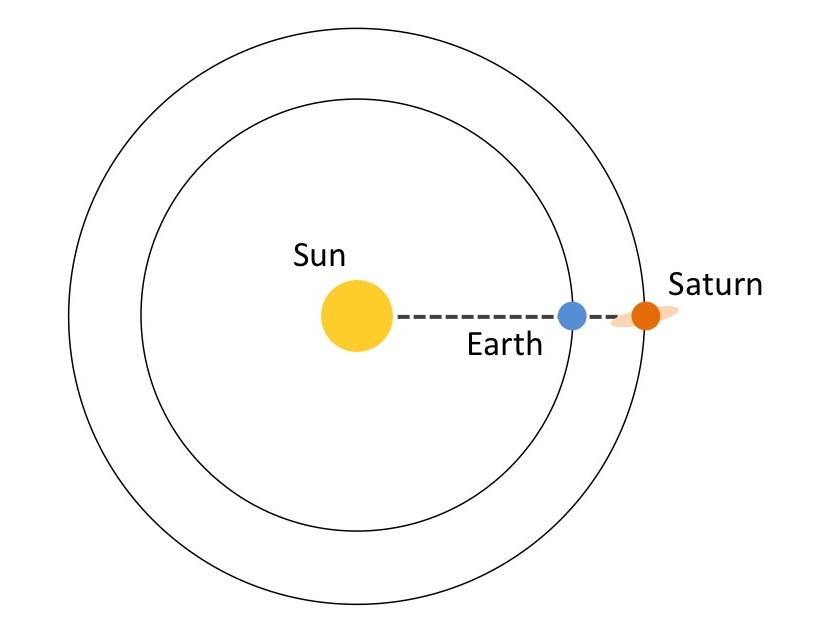
May 10: Saturn at opposition. Opposition is when a planet is on the opposite side of the Earth from the Sun (see below). It’s the best time to view a planet through a telescope.

opposition_saturn


May 24: Meteor shower outburst. When the Earth passes through the debris trail of Comet 209P LINEAR, it promises an exciting meteor “storm.” This burst will appear to originate from the constellation Camelopardalis.

Black hole pair shreds star

Artist's concept of merging black holes [Credit: NASA]

Artist’s concept of merging black holes [Credit: NASA]


Writing about science in a way that not only conveys information accurately, but entertains and captures the imagination, can be pretty tough. The author of this article does a remarkable job of both with a topic that’s near and dear to my heart: supermassive black holes in the process of devouring a star:

In the deep forest of stars that lies at the center of galaxies, a voracious monster lives: a black hole millions or billions of times more massive than the Sun. These cosmic beasts are more ambush predators than hunters, though: they only feed on hapless stars and other objects that get too close. Otherwise, they are content to sit quietly if they can’t get any prey for long times.

This would make a very good opening narration for a documentary about supermassive black holes. The whole thing is worth reading.

As for the actual science, this is pretty neat stuff. I’m a member of a team that’s been hunting black hole pairs for years — I covered the topic here — and can attest to their exceeding rareness. To find one that’s also in the process of ripping apart a star is certainly newsworthy.

Captain Kirk honored by NASA

From Trek News:

On Saturday, NASA awarded Star Trek’s original Captain Kirk, William Shatner, with the Distinguished Public Service Medal, at his annual Hollywood Charity Horse Show in Los Angeles.

The award, presented to Shatner by NASA’s Deputy Associate Administrator, Communications Bob Jacobs, is “the highest award bestowed by the agency to non-government personnel.” and is given “for outstanding generosity and dedication to inspiring new generations of explorers around the world, and for unwavering support for NASA and its missions of discovery.”

“William Shatner has been so generous with his time and energy in encouraging students to study science and math, and for inspiring generations of explorers, including many of the astronauts and engineers who are a part of NASA today, ” said NASA’s associate administrator for the Office of Communications David Weaver. “He’s most deserving of this prestigious award.”

Without question, Star Trek was a big influence on me and my love of all things space, so I can well believe that it — and Captain Kirk, in particular — inspired many people to pursue careers in science. Congratulations to Mr. Shatner.

Ultra-cold neighbor star discovered — or is it a planet?

WISE_J085510.83–071442.5_movement_(PIA18002)

Time-lapse image of of WISE 0855–0714’s movement in the sky. [Credit: NASA/JPL-Caltech/Penn State University]

Think all stars are hot? Think again. The coldest star ever discovered, a sub-brown dwarf called WISE J085510.83-071442.5, has been found to have a surface temperature somewhere in the range of -54 to 9 degrees F. It’s also one of the closest stars to our solar system at 7.2 light-years. 

That is, IF it is a star.

WISE J085510.83-071442.5 (the WISE stands for Wide-field Infrared Survey Explorer; the numbers stand for its celestial coordinates) is only 3-10 times the mass of Jupiter. We know of exoplanets — planets orbiting stars other than the Sun — with masses greater than this. So, with such a low mass, one might reasonably wonder why this object isn’t classified as a planet — and the distinction is not always clear to scientists, either. At such low masses, the distinction is how the body formed. In the case of our super-cold neighbor, it is believed to have formed by the collapse of a gas cloud rather than as a planet that formed in a star system and was later ejected. But scientists haven’t ruled out the latter scenario.

relative star sizes

Relative star sizes [Credit: NASA]

As the image above shows, there is a gradual progression from “normal” stars, like our Sun, to cooler, redder stars down to gas giant planets. Sometimes distinctions in science are a bit arbitrary — unlike, say, the distinction between a human and a volcano — but scientists make them in an attempt to better understand what they’re studying. 

Replay: When philosophy dominates science

Traffic’s up after the informal announcement of the publication of our Astronomy and Astrophysics curriculum, so in the coming weeks we’re going to replay some of our more important posts from the archives for our new readers. 

** Written by “Surak” **

Dr. Robb Wilson, who blogs at The Scholar Redeemer, commented on my article “Separating philosophy from science,” and made the following important points:

“good science is NOT aphilosophical”

“a blanket statement that philosophy corrupts science is misleading … there is a philosophy at the root of methodological naturalism as well.”

In light of his excellent comment, I would like to take another shot at what I intended to say.

Ancient Greek philosophy was indeed the solid and necessary foundation on which the first scientific efforts took place, and it was the Judeo-Christian worldview that made modern science possible. I fully accept that whenever and wherever the dominant philosophy/religion of the day acted as a rational foundation on which something higher and broader could be constructed, science flourished. But sometimes the dominant worldview has included beliefs that act like confining walls and a low ceiling on science. The most obvious example is the ancient belief that the Earth was the center of the universe, which helped delay modern science by about 1,800 years.

The point I wanted to make in my original article is that there is today a philosophy that dominates most Western centers of learning, and elements of that philosophy threaten to delay desperately-needed scientific advances in fields such as biology, medicine, psychology, and social behavior. My fears seem to be confirmed by an article published in the February 7, 2011 online edition of the New York Times, titled “Social Scientist Sees Bias Within” by John Tierney. The article quotes Jonathan Haidt, a social psychologist at the University of Virginia, regarding what he describes as a liberal bias in his field:

“This is a statistically impossible lack of diversity,” Dr. Haidt concluded, noting polls showing that 40 percent of Americans are conservative and 20 percent are liberal. In his speech and in an interview, Dr. Haidt argued that social psychologists are a “tribal-moral community” united by “sacred values” that hinder research and damage their credibility — and blind them to the hostile climate they’ve created for non-liberals.

While Tierney and Haidt appear to see the problem largely in political terms as part of a liberal vs. conservative struggle, the root of the problem for this branch of science is really philosophical because the “sacred values” cited by Dr. Haidt are those of humanism.  Our original article on ‘transcranial magnetic stimulation’ was an attempt to demonstrate that a similar philosophical problem exists in biology.

There is also evidence that humanist dominance is causing severe problems in the field of anthropology, for example, the controversial decision last year by the American Anthropological Association to remove the word “science” from an official statement of its long-range plan. The problem extends to general psychology, as well. In their 2005 book, Destructive Trends in Mental Health: The Well-Intentioned Path to Harm, Rogers H. Wright and Nicholas A. Cummings identify some distressing developments in behavioral science. In the preface they include the following statements:

Why, after decades of fighting to establish the rightful role of professionalism in psychology, do we now question the validity and integrity of some of the prevalent practices in our profession? The answer is simple: psychology and mental health have veered away from scientific integrity and open inquiry, as well as from compassionate practice in which the welfare of the patient is paramount.

These taboo topics typically unleash a silencing array of unwarranted charges ranging from political incorrectness, insensitivity, and lack of compassion to (in the extreme) bigotry. We are troubled that disciplines such as psychology, psychiatry, and social work, which pride themselves on diversity, scientific inquiry, intellectual openness, and compassion for those who need help, have created an atmosphere in which honest, albeit controversial, points of view are squelched.

We decry the extremism on the right, but we do not address it in this volume because that is not the problem within organized mental health today. Psychology, psychiatry, and social work have been captured by an ultraliberal agenda, much of which we agree with as citizens. However, we are alarmed with the damaging effect it is having on our science, our practice, and our credibility.

It [American Psychological Association] is no longer perceived as an authority that presents scientific evidence and professional facts. The APA has chosen ideology over science, and thus diminished its influence on the decision makers in our society.

Within the profession of psychology there is currently debate over treatment techniques and interventions that have not been scientifically validated.

It is obvious that we need a greater diversity of ideas and a counterbalance to the prevailing ideologies within mental health circles today. … We must broaden the debated by reducing the ridicule and intimidation of ideas contrary to the thinking of the establishment in the field of psychology.

Once again, the ultra-liberalism identified by the authors is best understood as the political manifestation of a relatively new philosophical orthodoxy, and the indisputable truth is that humanism is the philosophy that dominates many if not most universities and colleges in America today. I believe a strong case can be made that some humanists are guilty of many of the same transgressions against science that Christians have long been accused of, including

  • Attempting to establish a new orthodoxy verging on dogma
  • Stifling of descent
  • Condemning and purging those with non-humanist views
  • Corrupting science for political, social and economic goals

If psychology and the social ‘sciences’ continue to be dominated by a philosophy hostile to the free exploration and exchange of ideas, how will they ever develop desperately needed casual understanding about the human condition? A delay in the behavioral sciences similar to the delay in the physical sciences that occurred between Aristarchus and Copernicus would be more than a scientific tragedy; it would be a disaster for humankind. Our hope has to be that the study of human behavior will somehow break through the confining walls of humanism, undergo a cathartic paradigm shift, and become true science.

Saturday morning astronomy news roundup

The Sun is acting up again. Forget the wimpy M-class flare from a couple of weeks ago — this week the surface of the Sun has erupted with an X-class flare, the most intense kind. Click on the link for nifty images.

Mystery solved: scientists had been confused by an exceptionally bright supernova detected in another galaxy until they realized that it was artificially brightened by a gravitational lens. The supernova, which was 30 times brighter than any other of the same class, had scientists wondering if they had discovered a new type of stellar explosion. But new evidence indicates another galaxy lies along the line of sight between us and the supernova and has warped the light coming from the supernova in a way that makes it appear ultra-bright.

NASA’s Mars rover, Curiosity, has captured the first-ever images of asteroids from the surface of Mars. The asteroids, Ceres and Vesta, are the largest and third-largest objects in the asteroid belt that lies between Mars and Jupiter. In fact, these asteroids are so big that if you were standing on the surface of Mars, you would be able to see them without a telescope.