Twisted history

Alex Berezow and James Hannam systematically dismantle a post by atheist evolutionary biologist, Jerry Coyne, who manages to get nearly every one of his claims about science and religion wrong. Example:

Coyne:

If you think of science as rational and empirical investigation of the natural world, it originated not with Christianity but with the ancient Greeks, and was also promulgated for a while by Islam.

Berezow and Hannam:

This is only half-true. Science is a lot more than just reason and observation. You need experiments too. For example, the Greeks, following Aristotle, thought that heavy objects must fall faster than light ones. It takes two seconds to disprove that by an experiment that involves dropping a pebble and a rock. But for a thousand years, no one did. There didn’t seem to be much point in testing a theory they already thought to be true. That’s probably why the Greeks were so good at geometry, as Dr. Coyne notes, because progress in mathematics is largely based on reason alone.

I’ll further point out that Aristotle — hero of humanism and champion of reason — was wrong about just about everything in terms of science, and the acceptance of his model of an eternal geocentric universe in particular held back progress in science for nearly two thousand years. Until it was revolutionized by a bunch of Christians.

Read the whole rebuttal.

The authors have not addressed all of Coyne’s claims, as, they have pointed out, there is “an impressive amount of error and misunderstanding [in] a very small space.” He certainly manages to cram a lot of error into the following unaddressed point:

If religion promulgated the search for knowledge, it also gave rise to erroneous, revelation-based “scientific” conclusions that surely impeded progress. Those include creation ex nihilo, the Great Flood, a geocentric universe, and so on.

By all appearances, the universe was created ex nihilo. Physicists have struggled to explain the origin of the universe in a way that avoids an ex nihilo creation event, without success. As this Reasons to Believe article points out, the Bible mentions a worldwide flood, not a global flood. A Great Flood, as described in Genesis, that wiped out all of human and animal life in the Mesopotamian region — the entire known world at the time — is scientifically plausible. And, geocentric theory began with the ancient Greeks. I suppose you could say that since the Greeks were religious, religion is therefore responsible for geocentric theory, but that would be a gross oversimplification. And, anyway, as Coyne is lumping this in with other biblical conclusions, one can reasonably assume he’s pinning this one specifically on Christianity. But, as we all know, Aristotle was responsible for promulgating the idea, which was later elaborated upon by Ptolemy. Yet, the erroneous notion persists that Christians were to blame for this faulty cosmology. As with the Galileo and Bruno affairs, this is the result of atheist myth-making.

The more commentary I read from atheists, the more I’m convinced that these self-styled champions of fact and reason are anything but.

New superheavy element announced

A new, superheavy element will likely be added to the pantheon of known elements. Created in a lab, and weighing in at 40% heavier than lead, element 117 is highly unstable and has a half-life of less than a second. Nevertheless, its fleeting existence in a lab will likely earn it a permanent place on the periodic table.

The periodic table contains both primordial (elements that have existed on Earth since the planet formed) and synthetic (manmade) elements. Element 117, also temporarily known as ununseptium, is a synthetic element. Despite its lesser atomic number, the announcement of element 117 follows that of element 118 (ununoctium), which was announced years before (and has a bit of a checkered past). Once these elements become approved members of the periodic table, they will be given proper elementy names by their discoverers.

Now, despite using the word “created” above, elements are not created, they are made, whether by nature or by man. We tend to use the term “created” rather loosely, but in terms of the biblical, the distinction between created and made is rather important. Created refers to the instantaneous act of bringing something into existence that did not exist before. Made refers to the process of fashioning something from pre-existing raw material, which takes time. Even the simplest element — primordial hydrogen, with just one proton and one electron — was fashioned over a period of time from pre-existing material. And elements 117 and 118, which took careful planning and execution in a lab, were effectively fashioned the same way.

Christians must reclaim science

Modern science exists because of the Christian faith. That is a provable fact. So, why is there so much conflict over the supposed conflict between science and Christianity? In terms of explaining the atheist myth-making about the supposed conflict — having once been an arrogant atheist, myself — I can tell you that it’s born of either total ignorance (as was the case with me) or the kind of hostility that makes a person blind to the truth or willing to distort it. In terms of Young-Earth Creationism, however, I’m still trying to figure that one out. Modern science is one of the many blessings of the Christian faith, and I can only surmise that YECs have allowed the atheists to frame the argument and have accepted a gross distortion — and outright omission — of historical facts.

The Stand to Reason Blog explains that, in contrast to atheist fables, science and Christianity go way back:

The myth begins with the notion of the “dark ages,” a time when the church suppressed education. It’s just not true. Scholarship was alive and well prior to Copernicus. In fact, scholars were working on heliocentric theories before Copernicus. He learned these in university and built on them when he published in final work. His theory didn’t emerge from a dark vacuum, but from rich science that had been nurtured in the universities, many of them established by the church.

In fact, as the article goes on to point out, sociologist of religion, Rodney Stark, found that 50 out of 52 of the key figures of the scientific revolution were religious.

Hugh Ross goes even further and explains how the scientific method comes straight from the Bible:

The Bible not only commands us to put everything to the test, it shows us how. Christian scholars throughout church history, from early church fathers to present-day evangelical scientists, philosophers, and theologians, have noted a pattern in biblical narratives and descriptions of sequential physical events such as the Genesis creation account. Bible authors typically preface such depictions by stating the narrative or description’s frame of reference or point of view. In the same statement or immediately thereafter comes a listing of the initial conditions for the narrative or description. The narrative or the description itself follows. Finally, the author describes final conditions and conclusions about what transpired.

Furthermore, there is not just one narrative or description of physical events in the Bible. There are dozens. Because the Bible is inspired by God––for whom it is impossible to lie or deceive––these dozens must be consistent with one another. Therefore, each of these dozens of descriptive accounts can be used to test the validity of the interpretation of the others.

In the near future, I’ll be posting an article about the concept of linear time that’s necessary for the emergence of modern science, and how it comes from Christianity.

It’s simple: the pillars upon which modern science stand — the notion of scholarship as a form of true worship, the scientific method, and the concept of linear time / cause-and-effect — were all built by the Christian faith. As the influence of the Christian worldview wanes in the West, replaced by a worldview that actively hammers away at the pillars of science, so will the quality of science diminish. This is why Christians must reclaim science instead of turning away from it.

Replay: Our analysis of “The Great Debate: Is There Evidence for God?”

Traffic’s up after the informal announcement of the publication of our Astronomy and Astrophysics curriculum, so in the coming weeks we’re going to replay some of our more important posts from the archives for our new readers.

On March 30, 2011, Christian theologian and philosopher William Lane Craig debated atheist physicist Lawrence Krauss at North Carolina State University. The topic was, “The Great Debate: Is There Evidence for God?” Video of the rather lengthy event is here. What follows is our analysis of the debate. 

** Written by Sarah and “Surak” **

The two opposing sides of the scientific debate over the God hypothesis were well represented on Wednesday by Dr. William Lane Craig (Christian Philosopher and Theologian from Talbot School of Theology) and Dr. Lawrence Krauss (Theoretical Physicist from Arizona State University). Dr. Craig’s argument was based on the clearly-stated and logical assertion that if God’s existence is more probable given certain information, that information meets the essential criterion for evidence. Dr. Krauss was equally clear in his definition of evidence: it must be falsifiable to be scientific. We find both standards to be very useful.

There was some confusion on the part of the moderator as to whether the topic of the debate was the existence of any evidence for God or the existence of enough evidence to prove God’s existence. We think the moderator erred in his statement of the debate’s purpose, since no one could reasonably argue that there is proof or disproof of God’s existence. As Dr. Krauss correctly stated, science cannot falsify God; so, the question can only be, “Is God likely?”

We will assess the debate in terms of whether or not there is any evidence for the existence of God, although Dr. Krauss tried to set the bar unfairly high with his assertion that a highly extraordinary proposition, such as the God hypothesis, requires extraordinary evidence. However, we think defenders of the God hypothesis can accept and meet this challenge.

Dr. Krauss acknowledges that the big bang is fact and one of science’s great achievements. The big bang theory establishes that the universe had a beginning, and that the universe was created from nothing. There was some debate and confusion about the meaning of “nothing.” It can mean the absence of matter, such as in “empty” space, or it can mean no space, no matter, and no time. The big bang involves the second notion of nothing, which is about as much of a nothing as most human minds can conceive of.

The appearance of our universe from this nothing makes it an undeniable instance of creation – something coming from nothing – as opposed to an example of making, which is something being fashioned from something that’s already there. Science is based on the premise that everything has a cause, especially if it has a beginning. Since the universe had a beginning, it must have a cause, and a reasonable extension of the big bang theory is that the cause must be something greater than and outside of the universe.

The cause of our universe must therefore be a transcendent or super-natural cause. This ultimate cause must include not only the difficult idea that some entity “exists” outside our universe, but also the humanly inconceivable idea that it has as part of its nature the capacity to exist and make other things come into existence. In other words, there must be something that is its own cause and the essence of existence. We humans can never understand such an entity, but it’s the only way to avoid a common patch of logical quicksand that threatens to swallow anyone who attempts to discuss the origins of our universe.

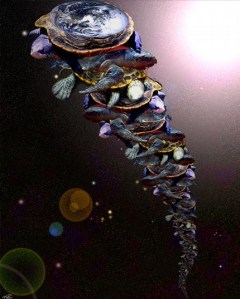
This danger to fruitful discussion is best illustrated by a story that appeared in Stephen Hawking’s A Brief History of Time. One of the greats of science, probably Bertrand Russell, had given a lecture on astronomy. He described how the Earth orbits around the Sun and how our solar system is part of a much larger galaxy. After the lecture, he was approached by a little old lady who informed him that the Earth is really sitting on the back of a giant tortoise. Russell replied, “What is the tortoise standing on?” “You’re very clever, young man, very clever,” said the old lady. “But everyone knows it’s turtles all the way down!” We must accept that at the bottom of any conceivable pile of cosmic turtles, there must ultimately be one that has as part of its nature the power of existence.

There is perhaps only one relevant or useful question humans can pose about this scientifically unknowable causal agent of the universe, “Is it conscious or unconscious?” If the transcendent cause of the universe is conscious, God is the most useful name we can give it. If the cause of the universe is unconscious, then it is some kind of super-nature. The best known and most likely candidate for the super-natural is the ‘eternal multiverse.’

This brings us to what we thought was the best question from the audience: What testable prediction does the God hypothesis make? Let’s examine this question in light of two things that Dr. Krauss said:

  1. Truly scientific evidence must be falsifiable.
  2. The big bang is established fact.

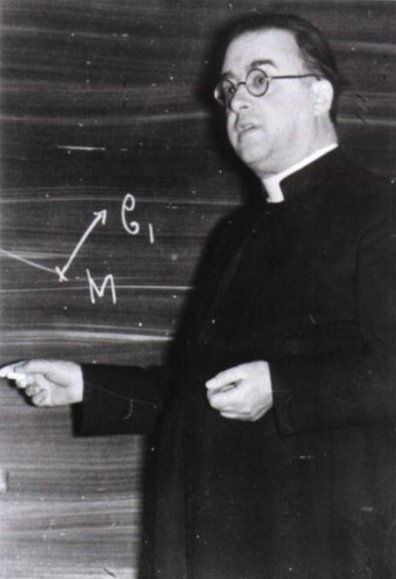
The Judeo-Christian God hypothesis includes a prediction made over 3,000 years ago in Genesis 1 that the universe had a beginning. This prediction ran counter to the theory of an eternal universe that dominated philosophical and scientific thinking until the 1960s. The great physicist and Jesuit priest, Georges Lemaître, developed the big bang theory in part because of his belief in the Genesis account of Creation. This Genesis prediction was testable and turned out to be true.  So, at least one major testable prediction of the God hypothesis meets the standard for scientific evidence.

The Father of the Big Bang, Georges Lemaître

It is not proof of God, but it is undeniable evidence for God that meets even the “extraordinary” benchmark set by Dr. Krauss. The prediction that the universe had a beginning is more than ordinary evidence because it is so ancient. It turns Dr. Krauss’s somewhat derisive comment about Bronze Age peasants back on his own argument: how indeed could such scientifically ignorant people have boldly stated what would three millennia later become astonishing fact?

Apply the same test to the best super-nature alternative: what testable prediction(s) does the multiverse hypothesis make? We are still learning about the different multiverse hypotheses, but there are at least two predictions that we’re aware of. The first involves an explanation for the weakness of gravity, which is by far the weakest of the four fundamental forces of nature. Some physicists predict that gravity is weak, because gravitons – the particles responsible for conveying the force of gravity – escape our universe into parallel universes.

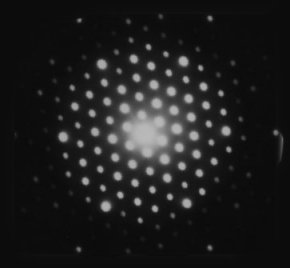
The second prediction is the existence of “ghost particles” from parallel universes. Some physicists believe these particles must exist in order explain one of the great mysteries of quantum physics, the interference pattern observed when electrons pass through a double-slit. Interference is behavior we expect from waves, not particles; moreover, the pattern is observed even if electrons are fired at the double-slit one at a time, ruling out any possibility that two electrons, each going through a different slit, are interfering with each other. The interference pattern must arise, the prediction goes, from the electrons in our universe interfering with ghost electrons in a parallel universe.

Electron interference pattern

There are two insurmountable problems with these predictions. Not only do they contradict Dr. Krauss’ assertion that parallel universes are causally disconnected from each other, but neither of these predictions is testable. The evidence for the multiverse does not rise to the level of the scientific — not because we currently lack the knowledge or technology to perform the experiments, but because they are not falsifiable in principle. Science is limited to the study of this universe. The multiverse idea as it is currently framed is not scientific, it is metaphysical.

It seems that at this time the God hypothesis is superior in evidence to the best “natural” alternative.

The evidence in favor of the God hypothesis is even stronger than what Dr. Craig presented. We at SixDay Science propose that the Genesis 1 account of Creation makes at least 26 scientifically testable statements. All 26 are compatible with modern science and they are in the correct order. A discussion of this is available here. We believe this evidence is so extraordinary that it comes close to being something akin to J. B. S. Haldane’s “Precambrian rabbit” in the sense that a creation story which succeeded in anticipating so much of modern science by 3,000 years is just as out of place in time as a fossilized rabbit in 600 million year old rock.

Genesis time and the changing length of a day

Scientists have discovered an exoplanet that spins so fast its day is just eight hours long. Beta Pictoris b, which is 65 light-years from Earth, rotates on its axis at a whopping 62,000 miles per hour, about 50 times faster than Earth’s rotation rate (since the exoplanet is much bigger than the Earth, its day is a third as long). Scientists made this calculation using the same method meteorologists use to track earthly weather systems — the Doppler effect.

What is not generally known is that the Earth once had a much shorter day than it does now, due to its changing gravitational interaction with the Moon (and the Sun). Because of tidal friction — the loss of energy due to the gravitational tugging on Earth’s oceans — the Moon is gaining orbital energy at the cost of Earth’s rotational energy. As a result, the length of an Earth day increases. With the extra bit of orbital energy, the Moon’s orbit is increasing by about 4 cm each year and the length of a day increases by a couple of milliseconds per century. It doesn’t sound like much, but over millions and billions of years, it adds up. Computer simulations suggest that billions of years in the past, the Moon was so close to the Earth that an Earth day was a mere six hours long.

Intriguingly, an Earth-day that changes in duration is consistent with Gerald Schroeder’s reconciliation of a literal interpretation of Genesis 1 and an old Earth. Schroeder argues that the length of each Genesis day is 24 actual hours, but only measured from God’s perspective. From our earthly perspective, each of those days is a different length, ranging from billions to millions of years. It isn’t until humans appear on Day 6 that Genesis time comes to agree with Earth time. It would seem God chose a perspective for Genesis that was 24 hours, because that’s how long an Earth day would be once Adam appeared. For a detailed explanation of this reconciliation, see here.

Blood Moon eclipse

Lunar eclipse

Lunar eclipse of October 24, 2007 [Credit: Doug Murray]


Late Monday / early Tuesday has the first in a series of four total lunar eclipses — a lunar tetrad — that will take place in 2014 – 2015. Follow this link to learn how to watch this week’s lunar eclipse.

I recently heard someone refer to the coming eclipse as a “Blood Moon eclipse.” I’d never heard that term before, but it has something to do with biblical prophecy. The folks at EarthSky explain:

From what we’ve been able to gather, two Christian pastors, Mark Blitz and John Hagee, use the term Blood Moon to apply to the full moons of the upcoming tetrad – four successive total lunar eclipses, with no partial lunar eclipses in between, each of which is separated from the other by six lunar months (six full moons) – in 2014 and 2015. John Hagee appears to have popularized the term in his 2013 book Four Blood Moons: Something is About to Change.

Mark Blitz and John Hagee speak of a lunar tetrad as representing a fulfillment of Biblical prophecy. After all, the moon is supposed to turn blood red before the end times, isn’t it? As described in Joel 2:31 (Common English Bible):

“The sun will be turned to darkness, and the moon to blood before the great and dreadful day of the LORD comes.”

That description, by the way, describes both a total solar eclipse and total lunar eclipse. Sun turned to darkness = moon directly between the Earth and sun in a total solar eclipse. Moon turned to blood = Earth directly between the sun and moon, Earth’s shadow falling on the moon in a total lunar eclipse.

See the image above for why someone might describe a lunar eclipse as the Moon being turned to blood.

There are eight tetrads in the 21st century, but what’s apparently significant about this tetrad is that it coincides with the Jewish feasts of Passover and Tabernacles. I guess you’ll have to buy the book to see exactly how this fulfills prophecy.

Stephen Hawking is still wrong

Stephen Hawking is at it again:

The Big Bang and the subsequent expansion of the Universe did not need God to set it off, theoretical physicist Stephen Hawking suggested to an audience in California this week.

A combination of quantum theory and the theory of relativity [would better] explain our existence than divine intervention, he told a packed auditorium at the California Institute of Technology.

Hawking is doing a tremendous disservice to science. In his later years he is transforming himself from respected physicist and successful author of popular science books to a pathetic amateur philosopher with a grudge against the notion of God. Here are the major problems with what he said in California:

1. The combination of quantum theory and the theory of relativity would explain a great deal. That’s why so many great scientists have tried to unify the two theories for almost a century. The problem is that no one has yet figured out how to combine them. So, Hawking is writing God off on the basis of a scientific achievement that hasn’t occurred and shows no sign that it is even achievable.

2. Even if physicists manage to combine them or figure out some other way to the long sought after theory of everything, it would not provide the ultimate answer to the question of how the universe came to be. At best,  we might be able to push back the question of the universe’s origin one step. But, then what? Hawking’s speculation implies the laws of nature pre-date the universe, which raises the question, where did the laws of nature come from? Are they eternal? How would we know? Remember that science is limited to studying our material universe.

3. Far from ruling out God as the creator of the universe, the idea of pre-existing laws of nature is supportive of biblical truth. As Gerald Schroeder points out in his book, God According to God, the Bible tells us that wisdom (the collective laws of the universe) predates the creation of the universe:

John 1:1: “In the beginning was the logos [logic, intellect, word].”

Psalm 33:6: “With the word of God the heavens were made.”

Proverbs 8:12, 22-24: “I am wisdom. … God acquired me [wisdom] as the beginning of His way, the first of His works of old. I [wisdom] was established from everlasting, from the beginning, from before there ever was an earth. When there were no depths I [wisdom] was brought forth.”

Putting these passages together with a translation of the opening words of the Bible more faithful to the ancient Hebrew of Genesis 1:1 (“With a first cause, God created the heavens and the earth.”), the Bible tells us that with the first cause of wisdom (the laws of nature), God created the universe. We already know the laws of nature predate the universe, and with the help of the Bible we know Who acquired those laws.

I have respect for Hawking as a scientist and great admiration for him as an individual who has prevailed over a devastating disease. But, he is tarnishing his reputation and diminishing the public’s respect for science when he abuses the authority that comes with being a physicist by making these silly and unscientific pronouncements about God’s redundancy.

Related post:

Christianity and the center of the universe

Not long ago, someone asked me if I’d seen the documentary, The God Who Wasn’t There (2005), which explores the “Jesus myth” and Christianity in general. It’s been out for several years, and despite the fact that it’s viewable for free on YouTube, I haven’t bothered to watch it, because it looks like an uninspired retread of common challenges to the Christian faith that tend to be very weak. However, from what I can tell, it does perpetuate one historical distortion that is worth refuting. From a partial transcript on IMDb, TGWWT puts forth the idea that it was primarily Christians who were wrong about the Earth-centered universe:

Narrator: The Earth revolves around the Sun. But it wasn’t always that way. The Sun used to revolve around the Earth. It was like that for hundreds of years, until it was discovered to be otherwise, and even for a few hundred years after that. But, ultimately, after much kicking and screaming, the Earth did, in fact, begin to revolve around the Sun. Christianity was wrong about the solar system. What if it’s wrong about something else, too? This movie’s about what happened when I went looking for Jesus.

Or, more likely, what happened when he went looking for anything but Jesus, but never mind. The problem with this statement is that it implies only Christians were wrong about the solar system, when the truth is that just about everyone was wrong about the solar system at one time or another. So why single out Christians? Without having seen the movie, I am fairly confident of the answer (hint: look at who appears in the movie). Unfortunately, the notion that the medieval Church was scientifically ignorant and held back scientific progress is a fairly easy misconception to perpetuate, because people who believe it are usually already eager to believe misconceptions about Christianity and/or they do not know enough to evaluate its validity.

I made a point to cover geocentric theory in my astronomy 101 courses, so let’s explore what my college freshmen students knew about this subject that TGWWT‘s writer/director Brian Flemming apparently did not (or did not want you to know about).

The geocentric model of the solar system, which places the Earth at the center of the universe, is an idea that is found in nearly every ancient culture. In Western Civilization, the idea is usually attributed to the ancient Greek philosopher Aristotle (384 BC – 322 BC), and was later systematized by the Alexandrian astronomer Claudius Ptolemaeus (aka Ptolemy, ~64 AD – 165 AD). The geocentric model persisted for more than 1,700 years, and while medieval interpretation of biblical scripture seemed to loosely support the idea, its formulation had nothing to do with Christianity.

To understand why the geocentric model persisted for so long, I want you to place yourself, just for a moment, in the ancient world where there is no such thing as telescopes, astronauts, or satellites. Your only notion of the Earth’s place in the universe is based on what your human senses tell you about the apparent motions of the heavens. You notice that the Sun and Moon make daily journeys across the sky from east to west, and that the stars at night travel in the same daily east-west direction. The familiar constellations also seem to drift across the sky over the course of weeks and months. To your human senses, it appears that the Earth is stationary and that objects in the heavens move about it in very predictable cycles. Armed only with these observations, it is entirely reasonable to assume that the Earth is at the center of the universe.

We owe a tremendous debt of gratitude to the Greeks, who were the first to seek natural explanations for the phenomena they observed. This reliance on natural explanations heralded the birth of science. But what is science? It is actually a difficult concept to define. Most of us understand science to be the search for knowledge, but knowledge can be acquired by other means. The scientific method works by making observations and asking questions in a very systematic way. One observes a phenomenon in nature (say, the motions of the heavens) and posits an educated guess about the nature of the phenomenon (everything in the heavens orbits the Earth, which is stationary). This educated guess is referred to as an hypothesis. The hypothesis then makes a prediction (where objects in the sky will appear on a certain date), and one carries out tests or observations to determine how well the hypothesis performs. If the hypothesis fails the test or cannot account for new observations, then it must be revised or abandoned in favor of a new hypothesis.

One such test of the geocentric model came in the form of retrograde motions of the planets. The Greeks observed that a handful of objects in the heavens moved in a way that was different from the other objects. For one thing, their positions were not fixed like the stars, but appeared to wander over a period of months. (The word “planet” comes from the Greek word for wanderer.) This retrograde motion, or apparent looping back of the planet’s path in the sky, is now understood in the context of the Sun-centered (heliocentric) model, but in ancient times it represented a significant challenge to the geocentric model. This challenge was resolved by placing each of the planets in a smaller orbit, called an epicycle, upon its larger orbit about the Earth. This was a key feature of the model put forth by Ptolemy, which is referred to as the Ptolemaic model.

The Ptolemaic model persisted for almost two millenia, because, clunky as it was, it made accurate predictions about the motions of the planets. Moreover, several key objections to the heliocentric model were unresolved. Centuries before Ptolemy, the Greek astronomer Aristarchus (310 BC – ~230 BC) proposed a Sun-centered solar system, but was ridiculed by his peers for it. First, the idea that the Earth was moving was counterintuitive, because of the apparent motions of the heavens. But the most significant objection was that stellar parallax was not observed. This is the apparent shifting of position of closer stars relative to more distant background stars, which must occur if the Earth is moving around the Sun. As this was not observed, it was reasonable for Aristarchus’ fellow Greeks to reject his idea.

Fast-forward almost two millennia to Nicolaus Copernicus (1473 – 1543 AD), who was a true Renaissance man. In addition to being an astronomer, he was also a physician, scholar, cleric, and military leader. Like Aristarchus before him, Copernicus went against popular sentiment and proposed a heliocentric system. There is evidence that Copernicus knew he was recycling Aristarchus’ ancient model, but his genius was in recognizing its potential as a much more elegant and compelling model than the geocentric model. It is true that Copernicus’ book stirred some controversy within the Church, but contrary to popular belief, the Church was not monolithically opposed to, but rather divided on, the subject of heliocentrism. Secular scientists at the time likewise held to the Aristotelian school of thought, and mostly rejected Copernicus’ ideas. There was good reason for this, as the major objections to the heliocentric model had not yet been overcome. In particular, since Copernicus used circular orbits for the planets, instead of what we now know to be elliptical orbits, the predictions of the Copernican model were less accurate than those of the Ptolemaic model. Heliocentrists also had to contend with the lack of observed stellar parallax, and there were still more objections based on Aristotelian notions about nature. For instance, long before Newton developed his laws of motion, Aristotle held that all objects naturally come to rest, which meant that if the Earth was moving it would leave airborne objects (birds, clouds, etc.) behind. It was not until Galileo anticipated Newton’s first law (objects in motion tend to stay in motion) with simple experiments and made some key observations with his telescope—among them, that the stars are too far away to observe parallax1—that these objections were overcome and the Copernican Revolution was solidified.

It is important to understand that there was as much objection to the Copernican model from secular scientists as from the Church. Perhaps more. (For instance, it was supposedly a secular rival who reported Galileo to the Inquisition, illustrating that scientific enterprise has always been a little cut-throat.) The objections of the Church were only partially founded on Christian doctrine, which was based at that time on interpretation of scripture that was consistent with the Aristotelian school of thought. There is, in fact, nothing in scripture that dictates an Earth-centered system. The politics of the time also complicated things, with the Catholic Church struggling to come to grips with the tremendous effects of the Reformation. The most influential figure of the Reformation, Martin Luther, strongly objected to the ideas of the “upstart astrologer” Copernicus, and the Catholic Church was anxious to stay abreast with Protestantism on such an important issue. It is also important to understand that Copernicus was eventually shown to be incorrect in his placement of the Sun at the center of the universe; we now understand that there is no ‘center’ to the universe, an idea that is difficult to accept for many people.

What can we conclude from all of this? We can conclude that the most important factor preventing wide-spread acceptance of the heliocentric model was simple human nature. As clever as we sometimes are, we are constrained by limited perspective and emotion. Limited perspective prevented scientists from perceiving the stellar parallax that was predicted by the heliocentric model. Human emotion means cherished ideas often have a powerful hold on people, especially when it comes to accepted ideas that have served mankind well for many centuries. Put these two constraints together and you have the very non-linear progression from old ideas to new ideas that is evident throughout human history.

Having not seen TGWWT, I can only surmise from the partial transcript that either Flemming knows very little about scientific history, classical thought, and theology, or he is being deliberately disingenuous to make Christians look bad. Which is unfortunate, because, with just a few changes to the quote from the transcript, I think we could have turned his movie into a much more interesting narrative on the fallibility of human reason:

Narrator: The Earth revolves around the Sun. But it wasn’t always that way. The Sun used to revolve around the Earth. It was like that for hundreds of years, until it was discovered to be otherwise, and even for a few hundred years after that. But, ultimately, after much kicking and screaming, the Earth did, in fact, begin to revolve around the Sun. Mankind was wrong about the solar system, but eventually figured it out. What is it today that we don’t yet understand that will be obvious to mankind hundreds of years from now? Let’s speculate…

[1] With the advent of larger and more sophisticated telescopes, stellar parallax was indeed observed.

Recommended reading:

  • What’s So Great About Christianity by Dinesh D’Souza
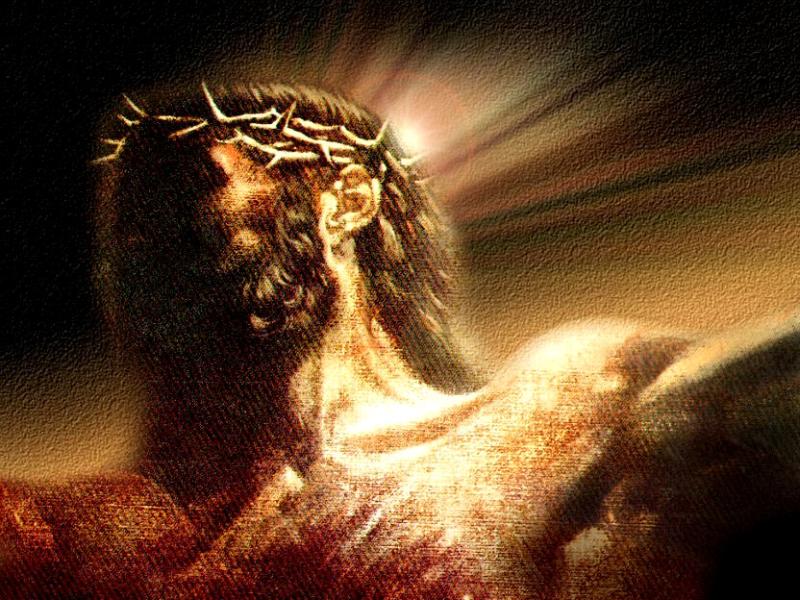
Good Friday

Now from the sixth hour there was darkness over all the land until the ninth hour. And about the ninth hour Jesus cried out with a loud voice, saying, “Eli, Eli, lema sabachthani?” that is, “My God, my God, why have you forsaken me?” And some of the bystanders, hearing it, said, “This man is calling Elijah.” And one of them at once ran and took a sponge, filled it with sour wine, and put it on a reed and gave it to him to drink. But the others said, “Wait, let us see whether Elijah will come to save him.” And Jesus cried out again with a loud voice and yielded up his spirit.

–Matthew 27:45-50

Questions from Christian Students, Part 12

Sarah was recently invited, along with two other scientists, to take part in a panel discussion for a group of mostly Christian students. After the main discussion, students were invited to submit questions via text message; there was very little time to address them, so only a few were answered. The questions were quite good, so over the next few weeks, Surak and Sarah will answer most of them here. All of the questions are listed in the Intro to this series. See also: Part 1Part 2Part 3Part 4Part 5Part 6Part 7Part 8Part 9Part 10; Part 11

What would you say to someone who can’t believe in Christianity because of its exclusive claims, that no one enters the gates of Heaven without first meeting Jesus?

All of the questions up until now have been related to science—a subject in which I have a lot of training and experience as well as some status and ability—or to my own personal experiences. This last question is not one I can answer as a scientist—my expertise in astrophysics does not translate to any degree of authority in matters of theology. I can only attempt to answer this as a Christian layperson who struggles with such questions as much as anyone else. So, as one person to another, I offer the following thoughts.

One thing I am certain of is that Christianity can only be believed in because of its exclusive claims. Irrespective of whether the claims of Christianity are true, it is not possible for Christianity to be true and at the same time for other religions to be true. Christianity makes exclusive claims similar to the way that any theory in science makes exclusive claims; if a particular scientific theory is true, then other theories that seek to explain the same phenomenon in a different way cannot also be true. It is therefore unreasonable to reject Christianity solely because of its exclusive claims.

There is another way in which non-believers often get caught up in Christianity’s exclusiveness—they think it’s unfair that only Christians go to heaven. Unless you take the extreme Calvinist position of predestination, Christianity is certainly not exclusive in the sense that only an elect few are chosen and if you’re not among them, you’re out of luck no matter how good you are. I believe something far different; I think that anyone can choose to accept the gift of salvation that God has offered through Jesus Christ for the following reasons.

  1. In John 14:6, Jesus tells us that He is the way, the truth, and the life, and that no one comes to the Father except through Him.
  2. In the Gospels we are told that Jesus opened a door that had previously been shut because of our sinful nature. (That’s why the Gospels are called the “Good News.”)
  3. We also know that God gave us free will—we are not pets or playthings—and because God loves us as spiritual beings and has truly endowed us with the freedom to choose, he does not force anyone to go through the door who does not want to.

This still sounds terribly unfair to people who have failed, despite their best efforts, to believe in Christianity, to those who have been turned off by negative experiences with organized religion, and even more so to people who have never heard of Christ. I was for some time rather troubled by this, because I don’t like the idea of anyone going to hell. I have no profound understanding in this matter, so all I can do is share with you my personal resolution of this problem.

There are passages in the New Testament that have given comfort to me and at least one person I know who does what I can only describe as the Lord’s work, but is experiencing great difficulty in accepting Jesus. In Mark 9:38-41, we are told the following story:

John said to him, “Teacher, we saw someone casting out demons in your name, and we tried to stop him, because he was not following us.” But Jesus said, “Do not stop him, for no one who does a mighty work in my name will be able soon afterward to speak evil of me. For the one who is not against us is for us. For truly, I say to you, whoever gives you a cup of water to drink because you belong to Christ will by no means lose his reward.”

So, the disciple John tells Jesus that a man is performing miracles in Jesus’ name (i.e. with the authority of Jesus), though he is not part of their group. The disciples tried to stop him, because he was not a follower of Jesus as they were. But Jesus told them to leave the man alone, because he was still doing the work of the Lord. Moreover, Jesus claimed that any person who furthers the cause of believers, though he may not be Christian himself, will not lose his reward. Matthew Henry’s commentary on this passage explains, “If sinners are brought to repent, to believe in the Saviour, and to live sober, righteous, and godly lives, we then see that the Lord works by the preacher.”

Consider also 1 Timothy 4:10: “For to this end we toil and strive, because we have our hope set on the living God, who is the Savior of all people, especially of those who believe.” [emphasis added]

C. S. Lewis explored the meaning and helped develop our understanding of this passage in his Narnia book, The Last Battle. In this story, there is a soldier named Emeth (Hebrew for “faithful” or “truth”) who is a good man that has been deceived since boyhood into worshipping a pagan god (Tash) and hating the name of the true God of Narnia (Aslan). However, upon meeting Aslan, the goodness within Emeth causes him to immediately realize that Tash is false and Aslan is God. Aslan assures Emeth that every good thing he did in the name of Tash was actually done in service to Aslan. As Lewis explained,

I think that every prayer which is sincerely made even to a false god, or to a very imperfectly conceived true God, is accepted by the true God and that Christ saves many who do not think they know him. For He is (dimly) present in the good side of the inferior teachers they follow. In the parable of the Sheep and Goats [Matthew 25:34-40] those who are saved do not seem to know that they have served Christ.

Even though I know this is not the view of all Christians, I agree with Lewis. I believe that it was Jesus—and only Jesus—who opened a door for all mankind; I also believe that a knowledge of and faith in Jesus makes it easier to find and get through the door. But, in my humble opinion, the door is open to all people who yearn for goodness, truth, spiritual love, meaning, purpose, and salvation—in other words, to all people who yearn for God whether or not they recognize it as such.