Backyard Astronomy: May 2014

Most of May, peaking May 6-7: Eta Aquariid meteor shower. A meteor shower occurs when the Earth, in its orbit around the Sun, passes through the debris trail of a comet. The Eta Aquariids are associated with Halley’s Comet. Meteor showers are named after the constellation from which they appear to be coming in the sky—in this case, the constellation Aquarius, near Eta Aquarii, one of its brighter stars.

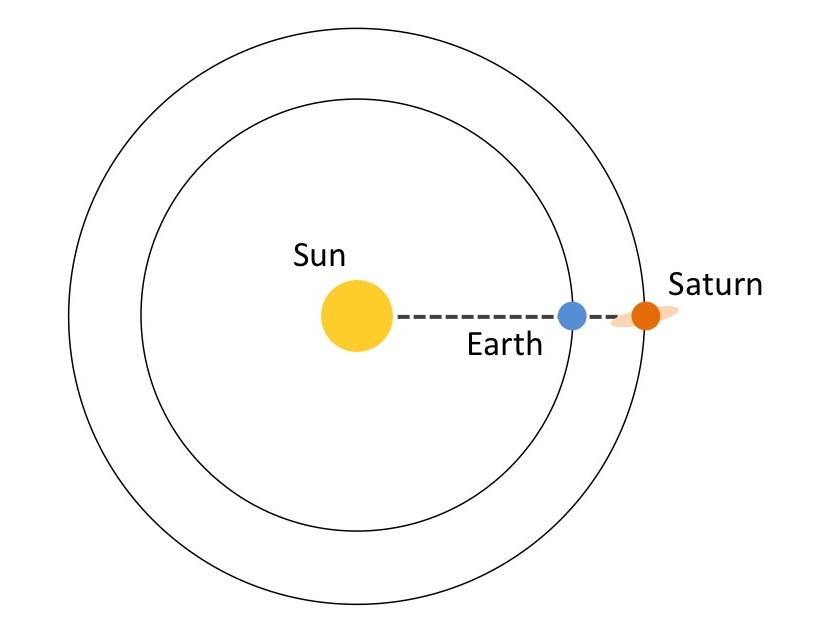
May 10: Saturn at opposition. Opposition is when a planet is on the opposite side of the Earth from the Sun (see below). It’s the best time to view a planet through a telescope.

opposition_saturn


May 24: Meteor shower outburst. When the Earth passes through the debris trail of Comet 209P LINEAR, it promises an exciting meteor “storm.” This burst will appear to originate from the constellation Camelopardalis.

Black hole pair shreds star

Artist's concept of merging black holes [Credit: NASA]

Artist’s concept of merging black holes [Credit: NASA]


Writing about science in a way that not only conveys information accurately, but entertains and captures the imagination, can be pretty tough. The author of this article does a remarkable job of both with a topic that’s near and dear to my heart: supermassive black holes in the process of devouring a star:

In the deep forest of stars that lies at the center of galaxies, a voracious monster lives: a black hole millions or billions of times more massive than the Sun. These cosmic beasts are more ambush predators than hunters, though: they only feed on hapless stars and other objects that get too close. Otherwise, they are content to sit quietly if they can’t get any prey for long times.

This would make a very good opening narration for a documentary about supermassive black holes. The whole thing is worth reading.

As for the actual science, this is pretty neat stuff. I’m a member of a team that’s been hunting black hole pairs for years — I covered the topic here — and can attest to their exceeding rareness. To find one that’s also in the process of ripping apart a star is certainly newsworthy.

Ultra-cold neighbor star discovered — or is it a planet?

WISE_J085510.83–071442.5_movement_(PIA18002)

Time-lapse image of of WISE 0855–0714’s movement in the sky. [Credit: NASA/JPL-Caltech/Penn State University]

Think all stars are hot? Think again. The coldest star ever discovered, a sub-brown dwarf called WISE J085510.83-071442.5, has been found to have a surface temperature somewhere in the range of -54 to 9 degrees F. It’s also one of the closest stars to our solar system at 7.2 light-years. 

That is, IF it is a star.

WISE J085510.83-071442.5 (the WISE stands for Wide-field Infrared Survey Explorer; the numbers stand for its celestial coordinates) is only 3-10 times the mass of Jupiter. We know of exoplanets — planets orbiting stars other than the Sun — with masses greater than this. So, with such a low mass, one might reasonably wonder why this object isn’t classified as a planet — and the distinction is not always clear to scientists, either. At such low masses, the distinction is how the body formed. In the case of our super-cold neighbor, it is believed to have formed by the collapse of a gas cloud rather than as a planet that formed in a star system and was later ejected. But scientists haven’t ruled out the latter scenario.

relative star sizes

Relative star sizes [Credit: NASA]

As the image above shows, there is a gradual progression from “normal” stars, like our Sun, to cooler, redder stars down to gas giant planets. Sometimes distinctions in science are a bit arbitrary — unlike, say, the distinction between a human and a volcano — but scientists make them in an attempt to better understand what they’re studying. 

Saturday morning astronomy news roundup

The Sun is acting up again. Forget the wimpy M-class flare from a couple of weeks ago — this week the surface of the Sun has erupted with an X-class flare, the most intense kind. Click on the link for nifty images.

Mystery solved: scientists had been confused by an exceptionally bright supernova detected in another galaxy until they realized that it was artificially brightened by a gravitational lens. The supernova, which was 30 times brighter than any other of the same class, had scientists wondering if they had discovered a new type of stellar explosion. But new evidence indicates another galaxy lies along the line of sight between us and the supernova and has warped the light coming from the supernova in a way that makes it appear ultra-bright.

NASA’s Mars rover, Curiosity, has captured the first-ever images of asteroids from the surface of Mars. The asteroids, Ceres and Vesta, are the largest and third-largest objects in the asteroid belt that lies between Mars and Jupiter. In fact, these asteroids are so big that if you were standing on the surface of Mars, you would be able to see them without a telescope.

The Astronomy and Astrophysics curriculum is now available!


It hasn’t been formally announced by the publisher yet, but everyone’s so gosh-darn excited about the Astronomy and Astrophysics curriculum that it’s already available at the Castalia House store for purchase.

Meanwhile, we are looking into setting up a forum on the SixDay website for instructors and students to discuss the course material with each other and get support. Hopefully, we’ll have something up and running by the end of August.

If you have any questions about the Astronomy and Astrophysics curriculum — or the forthcoming Physics curriculum — contact us at questions [at] sixdayscience [dot] com (remove the spaces and fill in the appropriate symbols).

Why are Americans skeptical of some scientific ideas?

A recent poll indicates that Americans are skeptical of evolution by natural selection, global warming, and the big bang theory. Surprisingly (for me, anyway), the biggest scientific loser is the big bang, with 51% of the respondents skeptical that the universe was created approximately 14 billion years ago.

Frankly, this astonishes me. There are sound reasons to be skeptical of the theory of evolution by natural selection (TENS) and anthropogenic (man-made) global warming, but the evidence and arguments for the big bang theory are excellent — and also consistent with the Bible, which is no small thing, since the poll indicated that religiosity is correlated with disbelief in the big bang.

So, why are most Americans skeptical of the big bang?

This is not a rhetorical question; it’s something I’m striving to understand. Some Christians make the argument that a literal interpretation of the Bible requires a young Earth and young universe, but it appears to me that this belief is inspired, or supported, by an argument against evolution. Many people who are skeptical of TENS (particularly evangelical Christians) believe that it requires billions of years to work, therefore if the universe and the Earth are only thousands of years old, TENS doesn’t work. Never mind that billions of years can’t even begin to help TENS, that doesn’t explain why more people are skeptical of the big bang than evolution.

In any case, scientists are, understandably, distressed by these results. Randy Schekman, a Nobel laureate in medicine at UC-Irvine, said, “Science ignorance is pervasive in our society, and these attitudes are reinforced when some of our leaders are openly antagonistic to established facts.”

Schekman is both right and wrong. If quizzed on why he or she disbelieves in certain scientific ideas, I’m confident the average individual would not be able to explain the best evidence and arguments for and against the ideas. However, I don’t believe it has anything to do with leaders (presumably, he means religious and political leaders) being antagonistic to facts, but rather a vocal minority of scientists and their advocates being openly antagonistic to religious belief.

The poll highlights “the iron triangle of science, religion and politics,” said Anthony Leiserowitz, director of the Yale Project on Climate Change Communication.

And scientists know they’ve got the shakiest leg in the triangle.

To the public “most often values and beliefs trump science” when they conflict, said Alan Leshner, chief executive of the world’s largest scientific society, the American Association for the Advancement of Science. [emphasis added]

Of course values and beliefs trump science in a conflict. Unlike science, values and beliefs comprise an entire worldview, one that has been around much longer than modern science and has been much more influential.

But there was a time, at the beginning of the era of modern science up until the mid-20th century, when the Christian worldview and science largely went hand-in-hand. In the 17th century, many if not most natural philosophers (what scientists were called at the time) were Christians, and they saw their work as glorifying God. Mitch Stokes, in his brief biography of Newton, writes:

According to metaphor, God has written two books—Scripture and Nature—and He is glorified by the study of either one. This view, this “belief in the sacral nature of science,” was prevalent among natural philosophers of the seventeenth century. As Frank Manuel, one of Newton’s most important twentieth-century biographers, says:

“The traditional use of science as a form of praise to the Father assumed new dimensions under the tutelage of Robert Boyle and his fellow-members of the Royal Society, and among the immediate disciples of Isaac Newton. … In the Christian Virtuoso, demonstrating that experimental philosophy [experimental science] assisted a man to be a good Christian, Boyle assured readers that God required not a slight survey, but a diligent and skilful scrutiny of His works.”

Although Newton’s intensity while pursuing his work ranges from humorous to alarming, it is put into a different light if we see it as a measure of his devotion to God. For Newton, “To be constantly engaged in studying and probing into God’s actions was true worship.” This idea defined the seventeenth-century scientist, and in many cases, the scientists doubled as theologians. [emphasis added]

There was only occasional conflict for scientists like Newton in the form of struggling to understand how certain aspects of nature are consistent with their interpretation of scripture.

The antagonistic sort of conflict we see today goes back at least as far as Thomas Huxley using Darwinian evolution to undermine Christian belief. Huxley knew TENS had insurmountable problems, but he saw it as a useful weapon to attack Christianity, which he despised.

Unfortunately, this sort of practice has become increasingly commonplace into the 20th and 21st centuries. Global warming isn’t by its nature useful as a direct attack on Christian belief, but it does represent an attack on the Christian ideal of limited government. The historical misuse of biology as a weapon against Christian belief began with Huxley and continues with modern biologists and their supporters — so much so that the public has little idea how much the most recent findings of evolutionary biology support the Christian view of creation. The misuse of physics to undermine Christian belief, however, is relatively new. I find it distressing not only because it is my field of study, but because the field of physics has historically led the way for the other sciences and represents the greatest scientific support for the Christian view of creation.

As a scientist — and irrespective of my Christian beliefs — I find the behavior of the attackers perplexing. The majority of Americans are either Christian or hold some general belief in a supreme being, so why do some scientists go out of their way to alienate a majority of people who support science by sending their children to universities and by paying taxes for government-supported science programs? At some point, they’re just not going to see the value of either. And they’re certainly not going to make the effort to become more literate in a topic that they’re told is in opposition to their faith. Modern scientists like Stephen Hawking who use their considerable scientific knowledge to attack religious belief are therefore doing a tremendous disservice to science. I don’t know what Hawking’s motivation is, but if he dislikes Christianity to the extent that he’s trying to undermine it, as Huxley did, then he is only indirectly realizing this goal and at the cost of eroding confidence in good science.

Poll results notwithstanding, big bang theory is good science — in fact, it is arguably the crowning achievement of modern science — and it is not only compatible with Christian belief, but in my opinion mandated by it. (I will expand on this in a future post.)

Meanwhile, there’s no use blaming political and religious “leaders” for the lack of confidence in science, because, if history has taught us anything, it’s that they don’t tend to lead the way, but jump out in front of the direction in which people are already going. If good science is going to flourish in America, two things must happen. Christians must become scientifically literate — which is something I hope to encourage with my ministry — but scientists have got to stop the public antagonism toward Christian belief.
Saturday morning astronomy news roundup

(Technically, it’s afternoon here, but close enough.)

An “Earth cousin” has been found orbiting a star 500 light-years away. The exoplanet is a little bigger than Earth, and its parent star is smaller and not as bright as the Sun, but it’s the closest to an “Earth twin” astronomers have ever found. The planet is in what’s called the habitable zone, meaning it’s the right distance from its star to potentially have water on its surface, a necessary ingredient for life. (But necessary doesn’t always mean sufficient: see RTB’s comments on exoplanets and arguments for design.)

The Lunar Atmosphere and Dust Environment Explorer (LADEE) has crash-landed onto the Moon, likely vaporizing on impact. LADEE had been studying the very thin atmosphere on the Moon since last November, sending data back to Earth via a laser-based system that’s much faster than previous communications systems. Since LADEE’s mission was over, it was allowed to crash, striking the Moon’s surface at 3600 mph.

A new moon for Saturn?

Peggy

Possibly a nascent moon forming in one of Saturn’s rings [Credit: NASA / JPL-Caltech / Space Science Institute]


For the first time ever, astronomers may be observing a new moon in the process of forming in the solar system. It’s hard to tell for certain, but a “protuberance” in one of Saturn’s rings looks like it’s coalescing into a half-mile diameter satellite. If so, it would be joining Saturn’s large family of 50+ satellites — most of which are rather small, themselves.

For now, astronomers have dubbed the nascent moon “Peggy.” Personally, I’m old-school — if the bulge turns into a moon, I want it named after something mythological. Or at least geeky (Praxis, anyone?).

Blood Moon eclipse

Lunar eclipse

Lunar eclipse of October 24, 2007 [Credit: Doug Murray]


Late Monday / early Tuesday has the first in a series of four total lunar eclipses — a lunar tetrad — that will take place in 2014 – 2015. Follow this link to learn how to watch this week’s lunar eclipse.

I recently heard someone refer to the coming eclipse as a “Blood Moon eclipse.” I’d never heard that term before, but it has something to do with biblical prophecy. The folks at EarthSky explain:

From what we’ve been able to gather, two Christian pastors, Mark Blitz and John Hagee, use the term Blood Moon to apply to the full moons of the upcoming tetrad – four successive total lunar eclipses, with no partial lunar eclipses in between, each of which is separated from the other by six lunar months (six full moons) – in 2014 and 2015. John Hagee appears to have popularized the term in his 2013 book Four Blood Moons: Something is About to Change.

Mark Blitz and John Hagee speak of a lunar tetrad as representing a fulfillment of Biblical prophecy. After all, the moon is supposed to turn blood red before the end times, isn’t it? As described in Joel 2:31 (Common English Bible):

“The sun will be turned to darkness, and the moon to blood before the great and dreadful day of the LORD comes.”

That description, by the way, describes both a total solar eclipse and total lunar eclipse. Sun turned to darkness = moon directly between the Earth and sun in a total solar eclipse. Moon turned to blood = Earth directly between the sun and moon, Earth’s shadow falling on the moon in a total lunar eclipse.

See the image above for why someone might describe a lunar eclipse as the Moon being turned to blood.

There are eight tetrads in the 21st century, but what’s apparently significant about this tetrad is that it coincides with the Jewish feasts of Passover and Tabernacles. I guess you’ll have to buy the book to see exactly how this fulfills prophecy.

Saturday morning astronomy news roundup

Astronomers believe they may have the first-ever detection of an exomoon. An exomoon (extra-solar moon) is a moon orbiting an exoplanet (extra-solar planet — a planet orbiting a star other than our Sun). The detection was made using a technique called microlensing, in which a closer star passes in front of a star that’s further away, temporarily brightening the background star and allowing astronomers to study it more closely. These are once-in-a-lifetime events that last about a month. Astronomers detect them by observing lots and lots of stars and hoping to catch one by chance.

Scientists have modeled a scenario in which a giant asteroid — one that’s four times larger than the asteroid that wiped out the dinosaurs — impacted the Earth billions of years ago and found that such an asteroid could have set the continents in motion. There is evidence of such an asteroid in the form of tiny rocks in South Africa that would be the only remnants of the giant impactor.

In other asteroid news, NASA is planning to send a spacecraft to an asteroid to collect samples. The OSIRIS-Rex mission is scheduled to launch in the fall of 2016, and will rendezvous with asteroid 1999 RQ36 (aka “Bennu”) in 2018, but won’t return with samples until the year 2023. Why would anyone want to do this? Well, there is some speculation that water and other materials necessary for life on Earth were deposited here by asteroids billions of years ago. This can be tested by sampling the mineral make-up of a relatively nearby asteroid.