Jewish authority on scripture

I grew up atheist in a secular country, so my experience with Christianity was very limited until I moved to the U.S. As I explained in my testimony, I came to my belief in God and acceptance of Jesus Christ mostly through my work in astrophysics, and particularly through the work of an Israeli physicist named Gerald Schroeder.

Schroeder is an Orthodox Jew who has been living in Israel since the 1970s, and he describes himself as an applied theologian. I have found his commentary on Genesis and modern science to be extremely insightful and inspired. Not everyone agrees with Schroeder’s interpretation of Genesis and its compatibility with modern science, but nevertheless, it is honest work based on deep scholarship, an obvious love for God, and respect for both scripture and science. It was through Schroeder’s work that I came to believe in the God of the Bible, and eventually to accept Jesus Christ.

Most Christians I have encountered through public speaking events and this website are intrigued by Schroeder’s work and willing to explore it, but I recently had a reader try to warn me against trusting Schroeder for the reason that he is an “unbelieving Jew.” According to this person, Schroeder, as a Jew, has failed to recognize his Messiah, so his authority on scripture is called into question. It never occurred to me, as someone who came to Christianity by way of Jewish wisdom, that I should mistrust an Old Testament authority, because he has not accepted Jesus. When I began my ministry several years ago, I had been told by some Christian friends to expect a bit of this, but I was still taken aback by it.

I contacted “Rabbi B,” a friend who is a Messianic Jew and a rabbi, and asked him whether a person’s failure to recognize Jesus as the Messiah is a sufficient reason to reject his authority on scripture. Below is his response.

The idea that Jews who do not embrace embrace Jesus as the Messiah can’t be trusted to elucidate the Scriptures is a specious argument. Paul indicates in Corinthians, I believe, that when the unbelieving Jews read the Scriptures, there is a veil over their eyes which prevents them from recognizing the Messiah.

But this does not preclude their understanding of the Scriptures generally or that they have not been given a certain amount of understanding concerning other matters.

Jesus also stated that though the Jews diligently search the Scriptures, they fail to recognize the Messiah. Again, this does not mean they have no insights to offer, it simply means they do not recognize or have failed to identify who the Messiah is. In fact, we have a very old tradition that the patriarchs all experienced blindness. Abraham was blind to who the son of promise would be — he experienced a spiritual blindness. Isaac experienced a physical blindness when he was fooled by Jacob, as his eyes were dim. Jacob’s blindness was due to the environment, as it was darkness which prevented him from seeing Leah, when he thought he was marrying Rachel.

Here is the interesting part. The rabbis look at the blindness of the three Patriarchs and conclude that it portends the blindness of Israel when the Messiah comes, that they will not recognize Him when He comes. Which, as we know, has been very much the case.

Paul, alludes to this idea in Romans, I believe, when he speaks of a ‘blindness in part’ that has come upon Israel, particularly regarding the identity of the Messiah. Again, it’s a blindness IN PART … not complete and utter blindness. It is important to remember too, the Jews were entrusted with the very oracles of G-d, i.e. the Scriptures, again, according to Romans.

Rabbi B offers more insightful commentary at his blog, and may be contacted at rebbaruch10 -at- gmail -dot- com (replace the ‘at’ and ‘dot’ with the appropriate symbols).

Fire Back: Where the Readers Respond

In which we discuss the confluence of biblical wisdom and evolutionary science.

Ken writes in the comments to “Is God’s word difficult to understand?” the following:

This is a very interesting site. I like reading scientific articles on here and anyone who visits your site can learn a lot about science. However everyone who comes here needs to be careful when comparing the unique scriptural interpretations found here to 2000 years of Biblical understanding. TF is correct. The Bible is not impossible for average people to understand and one does not need to jump thru hoops altering the clear meaning of scripture in order to make it comport with the latest of atheistic evolutionary Beliefs in order to remain true to empirical science. The nature of time at the fringes of the universe is an intriguing discussion, and there is no doubt that science supports scripture, but then you swerve into supporting Evolution, saying, “It does not matter that evolution is scientifically correct in its finding that the mortal human body is biologically related to that of other primates. The basics of evolutionary science are entirely consistent with the biblical account?” None of that is true. There is no evidence of it. I am amazed you would say that. I also believe what you said above is a misrepresentation of both Genesis and Corinthians 15:46-47. You are probably relying on the unique interpretations of Dr. Schroeder who fails to recognize his own Jewish Messiah as described in the Old Testament in which he is such an expert. So although I enjoy your site, and look forward to seeing an article on the “discovery” of “gravitational waves” as has been in the news today, I do not agree with some of your theology as it seems to be twisted in favor of satisfying the claims of “science falsely so-called” —in some cases, unintentionally, invalidating parts of essential Christian doctrine.

The basics of evolutionary science as it stands today in 2016 are completely consistent with the Biblical account of creation. Both biology and scripture agree on the following:

  1. Life began after the formation of oceans on Earth
  2. The first forms of life seem to have been built into the creation of the universe
  3. Vegetation preceded animal life
  4. There was a sudden explosion of animal life
  5. There is no scientific explanation for the sudden appearance of animal life
  6. The first animal life appeared in the oceans
  7. Then come animal forms that crawled from the oceans
  8. Then come great reptiles
  9. Then winged flying creatures
  10. Then mammals
  11. Then hominids
  12. Finally, unique beings appear in hominid form that have consciousness
  13. Science has no explanation for human consciousness
  14. All species of life on Earth are connected to each other
  15. Biology and scripture are in total agreement on the order of the stages in the development of life

This is a remarkable amount of agreement between modern biological science and Christian scriptures. He is wrong when he says this is not true.

I am grateful to Dr. Schroeder for bringing to our attention something so obvious and important that I am embarrassed to admit I didn’t see it myself. But that is what genius so often does for us — helps us see something we are blind to. Unless one thinks that God would be very casual in the use of the words chosen to express his message to humankind, it has to be admitted that the very different words ‘make’ and ‘create’ were used in Genesis 1 for an important reason.

Schroeder’s genius was recognizing that the word ‘make’ means to take whatever is already available and fashion it into something new. That’s what God caused to happen when he took the basic primate body plan and reshaped it into human form through some process we label evolution but do not adequately understand.

The meaning of the word ‘create’ on the other hand is something very different. We can take our cue from the first use of the word ‘create’ in the Bible to understand what God did with humans. God’s first act of creation brought a universe into existence from nothing. So when the Bible then says that humans were created in God’s image, that can only mean that the spiritual, non-material aspect of humankind was brought forth without using anything from this world. 1 Corinthians 15:46-47 confirms in a totally unambiguous way the difference between making people and creating people:

The spiritual did not come first, but the natural, and after that the spiritual. The first man was of the dust of the earth, the second man from heaven.

What else could Genesis 1 and 1 Corinthians be saying about God’s work in relation to humankind? Ken’s criticism of Schroeder is unfounded.

It is worth the effort to clear up the confusion around evolutionary theory as much as possible. Darwinism in its classic form did maintain some things that were not stated in Genesis. The four pillars of Darwinism in its original form were common descent, random mutation, natural selection, and gradualism. The genetic and fossil evidence in favor of common descent is overwhelming. Common descent is the closest thing to a proven theory in all of science. But, the Bible has no problem with common descent because every life form on Earth was brought into existence by God, so of course all life on Earth is connected.

The evidence for the other pillars of classic Darwinism is far less favorable. Random mutations do occur in the DNA of all animal species including human beings. But, there is currently no hard evidence that random mutations work in a way that make species stronger. The evidence for natural selection is almost non-existent, which is why even Thomas Huxley rejected it. The fossil evidence has completely overthrown Darwin’s most important principal, gradualism. That is why Stephen Jay Gould had to propose ‘punctuated equilibrium’ as an alternative to gradualism. Gould’s attempt to save Darwinism from the contradictory fossil evidence created more problems for evolutionary theory than it solved. Punctuated equilibrium makes the combination of random mutation and natural selection completely untenable by removing the vast amounts of time needed to make the Darwinian process mathematically plausible.

But, all efforts to defend Darwinism in its classic, Neo-Darwinist, Modern Synthesis, or punctuated equilibrium forms are now moot because of the findings of Evolutionary Development (Evo-Devo). Evo-Devo has found, contrary to everything Darwinists have ever believed, that all of the animal phyla are connected in ways that make Darwinism impossible. In the words of one of the pioneers of Evo-Devo and a loyal Darwinist, Sean B. Carroll, in his book Endless Forms Most Beautiful:

                  …the prevailing view of the architects and adherents of Modern Synthesis was that the process of random mutation and selection would so alter DNA and protein sequences that only closely related species would bear homologous genes…Virtually everything I have described…has been discovered in the past twenty years…they have forced biologists to rethink completely their picture of how forms evolve. p285 (emphasis added)

The fact that such different forms of animals are shaped by very similar sets of tool kit proteins was entirely unanticipated … the discovery … has forced a complete change in our picture of how complex structures arise. p285 (emphasis added)

In other words, current evolutionary theory is wrong. Most biologists are either ignorant of the findings of Evolutionary Development or are loathe to admit what the most recent genetic evidence so clearly demonstrates; Darwinism in all of its variations is a failed hypothesis. What evolutionary science now shows is that something totally inexplicable in Darwinist terms happened about 540 million years ago in what is now called the Cambrian Explosion or the Biological Big Bang. Animal life appears to have exploded out of nothing – there is no fossil evidence of life forms that preceded it. The Bible has no problem with this latest findings of evolutionary science. Christians understand what happened with the beginning of animal life as one of the three acts of creation that God performed during the Genesis 1 account.

Professor Carroll even confirms in his own way what Christians know to be true. In describing the way interchangeable genes organize all of the various animal life forms, Carroll uses the word ‘logic’ throughout his book (pages 8, 12, 26, 35, 54, 55, 56, 60, 60, 61, 106, 195, and 271 for example) to describe something he believes is the result of a mindless, Darwinian, random process. Logic is the product of a rational mind — its Greek root, logos, is translated as “Word” in the opening passages of the Gospel of John — but Carroll can’t help himself in this seemingly inappropriate use of the word because everything he observes in the operation of animal DNA is so elegantly intricate, efficient, and consistent — something like an unimaginably good computer program. His mind is evidently so closed by Darwinist fundamentalism that it doesn’t occur to him what he is really saying:

His field of evolutionary development is providing significant evidence of a great, creative, rational mind behind the workings of the genes he studies.

This is the current state of evolutionary science and the reason I can say with great confidence that biological science and Christian scriptures are in agreement.
Fools for Christ

God assumed from the beginning that the wise of the world would view Christians as fools, and He has not been disappointed. If I have brought any message today, it is this: Have the courage to have your wisdom regarded as stupidity. Be fools for Christ. And have the courage to suffer the contempt of the sophisticated world.

— Supreme Court Justice Antonin Scalia

Is God’s word difficult to understand? Part I

Editor’s note: Normally I would post something like this under “Fire Back,” since it involves a question from a reader, but it’s such a fundamental and important question that I’m going to devote two posts to it. This first post is written by Surak.

TF writes:

I had a question, but wanted to let you know first that I stumbled upon your website when I read Sarah Salviander’s testimony and watched the well-done slideshow that accompanied it.  I then read the website’s FAQ, several articles, and lots of comments over several weeks.

After reading more than I thought I would, I have a question that keeps nagging at me:  Is truth hard to understand or easy?  I’m not a scientist by any stretch of the imagination (I’m a pastor) but I’ve always loved science, especially when I can connect the dots between my faith and God’s creation.  For most of my life, I’ve held a pretty simplistic view of our world as a result of reading God’s Word, but after substantial reading on your website I feel like my head is going to explode :)  I don’t know if I agree with all of it, but most of it is fascinating and really well-thought out/researched.  My problem is that it is so hard for a person like me to understand (and I think I’m on the average part of the intelligence scale so the majority of the population would be in the same boat as I am).

So would God make the truth about his creation so complicated that only someone well versed in relativity, Hebrew translations, genetics, and 5 or 6 other fields of study could understand it?  Or would God make the truth about his creation simple enough for all to understand?

I’m not saying God is simple or easy to understand or that he wouldn’t want to give us lots of things for even the most intelligent people to discover and ponder over a lifetime, but wouldn’t God make truths as foundational as “where we come from” and “how this world was created” accessible to everyone rather than just a tiny percentage of super intelligent people?

If the truth of creation is as complicated as what it is on your website, I’m afraid I have no chance of ever explaining it to anyone.  If that is the case, then it seems like God made the truth of creation hard to understand and left most people hopelessly in the dark.  Or have we complicated things and there is a truth that is easier for all to access?

When Jesus (who was the embodiment of all God’s truth/love/mercy/etc.) came he was accessible to all, not just the most intelligent, wise, pious, powerful, etc.  He made God’s truth intelligible to even the poor, uneducated of his day, so I tend to think that God would make an important truth like creation accessible to someone as average as me as well.

So what do you think – is the truth (about creation) hard to understand or easy to understand?  And why?

Sarah will get into a deeper discussion of whether God’s word is inherently difficult to understand in Part II. First, I want to demonstrate how easy it will be for the average Christian to acquire the scientific understanding needed to defend scripture.

Here are the four necessary steps:

  1. The basic scriptural and scientific truths are easy to understand. They are stated clearly in Genesis 1 and are fully supported by modern science.

God created this world as a place where beings created in his image could thrive physically and grow spiritually. Science now confirms that the universe had a beginning and was created in the truest sense of the word. The work of Dr. Hugh Ross demonstrates beyond any rational dispute that the universe is finely tuned for the existence of human life.

A more detailed understanding of the truths revealed by scripture and science is required, because there are atheists who have misused science for 150 years to falsely attack Christian beliefs. So, there are three more scientific steps people have to take to be fully able to defend their faith in this scientific age. It is well within the ability of most people to take these next steps.

  1. Genesis 1 makes at least 26 scientifically testable statements. All 26 are entirely compatible with modern science, and most tellingly, all 26 steps in the Genesis account of the creation of the world and life on Earth are in exactly the correct order.

The odds against someone who lived over 2,500 years ago simply guessing the order of natural events are about one in four hundred septillion. In other words, it’s simply not possible for the author of Genesis 1 to have gotten the details of creation right by simply guessing.

This means the scientific evidence clearly demonstrates that the author of Genesis 1 was divinely inspired.

The third step in a scientific understanding of Christian scriptures is a little harder, but I have found that most people are entirely capable of taking it with a little effort and a good slideshow. Christians must be able to defend the belief that God created the universe in six literal days, otherwise atheists are free to ridicule scripture and mislead generations of young people.

  1. Based on the work of Einstein, it can be scientifically demonstrated that the universe is literally both 6 days + 6,000 years old and 14 billion years old. This understanding requires a careful reading of Genesis 1 and a rudimentary understanding of Einstein’s relativity.

In regard to a careful reading of scripture, there was no Earth and no people on the first day of Genesis. That means that time is not being reckoned from an earthly or human perspective in the opening statements of the Bible. Time was being measured through some other means by the Creator of the universe as He created it.

Einstein taught us that time is relative and therefore measured differently in every part of the universe. Gerald Schroeder explains that time during the first six days of creation was by necessity based on a universal measure we can think of as God’s clock. Schroeder points out in The Science of God that earthly time wasn’t used by the Bible until the appearance of Adam and Eve. Therefore, the Bible used universal time through God’s perspective to chronicle time up to the creation of Adam, while the period of time since Adam was measured by earthly time according to human perspective.

Science shows that the period of time before the creation of man can be measured as six days universal time using Einstein’s relativity, and the amount of time since the appearance on earth of conscious humans is most likely in the thousands of years. Therefore the Creationist point of view that the universe is 6 days + 6,000 years old is scientifically defendable and fully compatible with a universe that is 14 billion years old from our current perspective.

The last necessary step in a scientific understanding of Christian scriptures has to do with evolution. From the time of Thomas Huxley, the science of evolution has been misused to falsely attack Christian beliefs. The idea that humans have evolved from apes is dishonestly presented as evidence against God’s existence.

  1. Again, a careful reading of Genesis 1 reveals something extremely important both scripturally and scientifically. Genesis says that humans were first made (Gen. 1:26) and then they were created (Gen. 1:27). This is confirmed in 1 Corinthians 15:46-47: The spiritual did not come first, but the natural, and after that the spiritual. The first man was of the dust of the earth, the second man from heaven.

In other words, according to the Old Testament and New Testament, God made the human body with earthly materials. When that was accomplished, God created the human spirit in his own non-worldly image. It does not matter that evolution is scientifically correct in its finding that the mortal human body is biologically related to that of other primates. The basics of evolutionary science are entirely consistent with the biblical account. What matters is that the body is only the worldly vessel for the immortal human soul.

Evidence is abundant that human beings are fundamentally different from every other life form on Earth. Since the unique human ‘consciousness’ is one of the great unsolved scientific mysteries of the universe, science is in no position to deny the existence of the human soul or spirit.

With these four connections between scripture and science, Christians will be able to adequately understand the intimate agreement between modern science and Christian scripture well enough to defend Christian beliefs. Simply put, Christian faith in the Bible as the literal word of God is supported by scientific evidence.

Everything else is just details. Just as we have pastors to explain the details of hundreds of pages of scripture, we have scientists to explain the book of nature to us. God presents challenges that test our faith, but those challenges are not insurmountable.

Reflections on physics and Christian faith

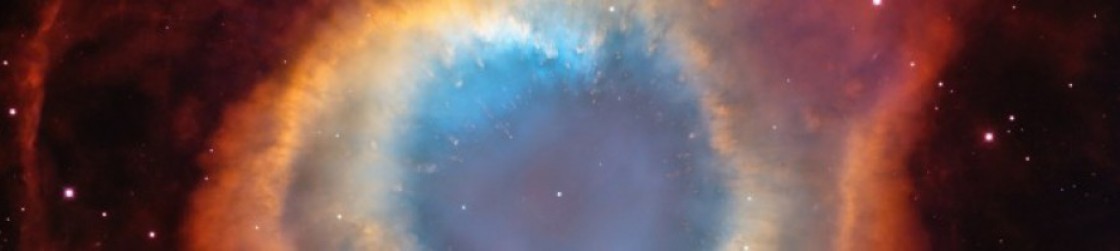
seagull_nebula

The following is a guest post by Dr. Kelly Cline, who is both a friend and colleague of Dr. Salviander. Originally from Homer, Alaska, Dr. Cline studied physics at Eastern Oregon University, before earning his Ph.D. in astrophysics from the University of Colorado at Boulder in 2003.  He is currently an associate professor of mathematics and astronomy at Carroll College in Helena, Montana, where he lives with his wife and four children.

“All things came to be through him, and without him nothing came to be…” John 1:3.

When the actor Gary Oldman was preparing to play Beethoven in the film Immortal Beloved, he asked the director to recommend biographies to read. The director replied: “…there is only one he should consider: the music. This music is an unvarnished, uncensored record of Ludwig van Beethoven’s passions, fears, violent anger, humanity and, finally, victory over unimaginable adversity. It is a direct link to his state of mind.”

In works of art created by the human hand, there is powerful connection between the creator and the created. The symphonies of Beethoven, the paintings of Raphael, and the plays of Shakespeare tell us something very deep about the artists who created them.

In this spirit, there is a very old tradition, going back at least to Galileo of asking the question: What does the scientific study of the basic physical laws of the universe tell us about its Creator? What can physics tell us about God?

Physics is the most fundamental of the natural sciences. The principles of chemistry can be understood as applications of the physical laws of electromagnetism and quantum mechanics. Biology and geology can be understood as applications of chemistry and physics. But in physics we seek to understand the most elemental principles of the physical universe, the deepest laws which govern all physical motion in our universe.

Today we know more about the nature of our physical universe than at any time in history. Of course our knowledge of the laws of physics remains incomplete and imperfect. Yet, we have learned an enormous amount about our universe and its laws since the days of Isaac Newton, and currently our theories at least provide a remarkably powerful and accurate approximation to the laws of physics under a wide range of conditions.

For reasons, such as the incompleteness of our knowledge, it is not simple to see a clear and obvious picture of the Creator painted in the equations of physics. However, as we immerse ourselves in this science, I think that we can see certain striking points of resonance between the Creator that we come to know through science and the Creator that we come to know through scripture. In this essay we will consider (1) the role the unification in the development of physics, (2) the apparently paradoxical discoveries of relativity and quantum mechanics, (3) the discovery of the big bang event, the moment of creation, and (4) the unchanging and universal nature of physical law which has led to the development of the world we know. Perhaps these points of resonance may give us some insight into the Author of all things.

Unity and Unification in Physics

Hear, O Israel! The LORD is our God, the LORD alone! Deuteronomy 6:4

Physics begins with the study of motion and its causes. The first person we know who wrote seriously about why things move was the ancient Greek philosopher Aristotle. In approximately 350 B.C., Aristotle examined the world and saw different types of motion in different places. Here on Earth he saw stones fall to the ground, while smoke and flames flickered upward, but in the heavens he saw the moon and planets move in what looked like perfect circles. So, Aristotle proposed that different things move in different ways according to different rules. Aristotle argued that here on Earth all things are made of four basic elements, earth, air, fire and water, and that these seek their natural level in the universe, with the force of gravity causing heavy objects to sink, while the force of levity caused light objects to rise. But Aristotle said that objects in the heavens must be made of a different substance, which he called aether, and Aristotle said that elements composed of this aether must naturally move in circles. Aristotle’s solution to seeing different objects move in different ways was essentially to divide the universe into different realms, composed of different substances, which followed different rules.

Almost two-thousand years later, Isaac Newton finally brought the universe back together again. Perhaps inspired by his deep faith in one God, one hand which shaped every part of the universe, in 1687 Newton published his law of universal gravitation, a precise mathematical theory which explained both the falling of a stone and the orbit of the moon. Newton unified two very different types of motion, showing that they are both a consequence of one universal force of gravity. To Newton, gravity was a force pulling each pair of masses in the universe directly towards each other. So if the Earth pulls the moon straight toward it, why does the moon move in an orbit around the Earth? Using the newly developed calculus, Newton showed that because the moon is in motion, the force of gravity from the Earth bends the moon’s path creating the elliptical orbit that we observe.

Newton took two apparently disparate types of motion and showed that they could be explained as manifestations of one deep underlying principle, the first of several great unifications that have shaped the development of physics.

For you are great and do wondrous deeds; and you alone are God. Psalm 86:10

In the 1700s, the electric force and the magnetic force appeared to be completely unrelated forces. The magnetic force is what attracts and repels magnets from each other, and causes magnets to stick to refrigerators. The electric force is what pulls around electric charges, causing a balloon to stick to wall after you charge it up by rubbing it on your hair. But there does not appear to be any special force between a charged balloon and a refrigerator magnet.

Then, in 1820, while giving a lecture at the University of Copenhagen, the Danish physicist Hans Christian Orsted discovered that an electric current – moving charges – produced a magnetic field and could move a compass needle. Magnets and charges don’t appear to interact when they are at rest. But when charges are in motion, Orsted showed that they can exert a magnetic force. This quickly inspired other physicists to see if the it could work the other way.

In 1831, the English physicist Michael Faraday showed that a moving magnet can create electric forces which can cause the charges in a metal to move, creating an electric current. This is the basic process that causes our electric generators to operate: Spinning magnets create the currents that light our world!

In 1862, this experimental work was finally brought together mathematically by the Scottish physicist, James Clerk Maxwell. Maxwell proposed that electric and magnetic forces were different aspects of one fundamental phenomenon. With one set of equations he unified all that had been done before, and created a theory that made some startling new predictions. Studying these equations, Maxwell discovered that electric and magnetic fields could move together through empty space. A changing electric field could create a changing magnetic field which would in turn create a changing electric field again, in a complete cycle, so that energy could be carried through space as electromagnetic waves. Maxwell calculated that these electromagnetic waves would travel at an enormous speed of about 186,000 miles per second, a speed which closely matched the measured speed of light: Maxwell became the first human in history to understand that light itself is an electromagnetic wave. Even more powerfully the unification of electric and magnetic forces opened up the possibility of other types of electromagnetic waves, and so in 1887 Heinrich Hertz published the first of a series of experiments demonstrating the existence of radio waves.

This great discovery that electric and magnetic forces are the result of a single more fundamental force has shaped our world where we constantly use electromagnetic waves for radio and television transmissions, cellphones, and wireless computer connections.

…one God and Father of all, who is over all and through all and in all. Ephesians 4:6

The 20th century saw the discovery of two new fundamental forces which both seemed completely disconnected from gravity and electromagnetism. Physicists discovered that atoms contain nuclei where positively charged protons and neutrally charged neutrons are packed into a remarkably tiny volume. Positive charges repel each other with a force that gets stronger when the charges move closer together. So the electric force pushing these protons away from each other must be enormous. Binding these protons so closely must require another force, a fantastically strong force to overwhelm this electrical repulsion and hold the nucleus of an atom together. As a result, physicists dubbed this new force, “the strong nuclear force.”

As physicists probe more deeply into the mysteries of the atom, some unusual types of radiation indicated the existence of yet another force which could cause a neutron to transform into a proton and other particles. This force was dubbed the weak nuclear force. Thus by the mid-20th century, it appeared that our universe was regulated by the action of four distinct forces: gravitation, electromagnetism, the strong nuclear force, and the weak nuclear force.

However, in 1968, Sheldon Glashow, Abdus Salam and Steven Weinberg proposed a startling new theory. Relying on deep mathematical symmetries, they proposed that electromagnetism and the weak nuclear force were both very different manifestations of a single more fundamental electroweak force. Superficially these two forces could not possibly be more different. The weak nuclear force transforms particles and is so short range that it only works inside the nucleus of an atom, while electromagnetic waves can extend so far that they allow us to see the stars. Yet, a profound

mathematical resonance between these two forces led Glashow, Salam, and Weinberg to propose their remarkable theory, and from this theory they predicted the existence of a completely new particle, the Z boson. When the Z boson was discovered at the CERN laboratory in 1983, the physics world celebrated this amazing triumph. Once again, physicists had discovered that two apparently different phenomena could be unified with a single more fundamental theory.

For there is one God. There is also one mediator between God and the human race, Christ Jesus, himself human, I Timothy 2:5

Again and again, physicists have discovered deeper and deeper unifications in the fundamental laws of our universe. The more closely we look, the more we discover an essential unity in all things. Today physicists are working hard to unify the known laws of physics even further, with “grand unification theories” that integrate the strong nuclear force with electroweak theory, and even more ambitious ideas like “string theory” and “loop quantum gravity” that bring gravity too into the same system of equations.

The Apparent Paradoxes of Relativity and Quantum Mechanics

For my thoughts are not your thoughts, nor are your ways my ways… Isaiah 55:8

The dawn of the 20th century saw an enormous crisis, as physicists were forced to grapple with new phenomena were so strange that they appeared to be paradoxical.

Consider this experimental fact: Every beam of light will always be measured to travel at the same speed, 300,000 kilometers per second, no matter how the emitter of the light is moving or how the receiver of the light is moving. Imagine that you are in a spaceship and someone in another spaceship flashes a beam of light toward you. When you measure the speed of that approaching beam of light, you will get the same speed whether your friend’s ship is flying towards you or away from you. If you were to turn on your own rocket engines and fly directly toward that oncoming beam of light, you would expect to measure that the beam of light would be traveling faster, relative to you. If you were to turn on your rocket engines and fly directly away from that oncoming beam of light, you would expect to measure that the beam of light would be traveling slower, relative to you. Yet, careful measurements make this matter clear: All observers always measures every beam of light as traveling at the exact same speed, no matter how they move relative to the beam of light. This strange fact was first indicated in 1887 by the Michelson–Morley experiment performed at what is now Case Western Reserve University in Cleveland, Ohio. Over the past century this reality has been confirmed in numerous experiments, and is used every day by our modern GPS system. In order to accurately pinpoint a location on the surface of the Earth using radio waves from moving satellites, the system must account for the fact that the speed of light is constant, no matter how the satellites are moving.

This bizarre reality seems contradictory. It appears to defy our most fundamental definitions of what speed and motion are all about. Yet, in 1905, Albert Einstein showed that there is a logic to this strange phenomenon. Just because something defies our intuition and contradicts our expectation does not mean it is irrational. Einstein showed that this is only a paradox if we assume that time and length

are universal constants. Speed is what we calculate when we take a distance traveled and divide this by the travel time to get miles per hour, meters per second, or some other measure of speed. If time and distance are the same for all observers, then all speeds must be relative and depend on the motion of the observer. To cause all observers to measure the same speed of light, no matter how they move, different observers must disagree about time and length. The time between two events might be one second for me, two seconds for you, and half a second for someone else, if we are all moving differently.

Einstein’s theory of relativity was a startling revelation to the physics community, but it won the day because although it confounds common sense, it is logically consistent, and it accurately explains the experimental data. But just as this revolution was winning acceptance, an even stranger and more disturbing theory was in its infancy, which would soon shatter our common sense more profoundly.

In order to unlock the secrets of the atom and explain the actions of individual electrons required an entirely new way of thinking. Electrons are bound to the nucleus of an atom by the electric force, because their negative charge is attracted to the positive charge of the protons in the nucleus. So early models of the atom proposed that electrons orbited around the nucleus due to the electric force in the same way that planets orbit around the Sun due to the gravitational force. However, this simple model didn’t explain the strange behavior of electrons, sending physicists back to the drawing board. You see, a planet can orbit around the Sun at any distance, depending on how much energy it has. The more mechanical energy a planet contains, the farther away from the sun it will orbit. However, experiments quickly demonstrated that inside an atom, electrons could only orbit at certain specific distance away from the nucleus. Why would that be? To explain this odd behavior required physicists to completely reimagine the nature of an electron.

Rather than thinking of electrons as being particles orbiting a nucleus, like planets orbiting the sun, in 1924 the French physicist Louis de Broglie proposed that electrons are more like musical notes resonating in an instrument, like a trumpet. Louis de Broglie proposed that electrons act like waves. Consider this: the length of a trumpet tube controls the notes that can be played. For a given tube length, there is a specific set of notes that can be played on the trumpet, which fit different numbers of wavelengths into the tube. There is a lowest possible note that the trumpeter can play, then by putting more energy into the lips the trumpeter can play a note an octave higher, but the trumpeter cannot play any notes between these two, because these would not resonate within that length of tube. The theory of waves explains a certain length of trumpet tube can only play a certain set of notes, and in exactly the same way, Louis de Broglie’s theory explained why electrons can only orbit at certain distances away from the nucleus. He showed that an electron will sometimes behave like a particle, a tiny point with one specific location, and sometimes like a wave which can spread out and fill an enormous volume, in the same way that the sound wave from a trumpet can fill a room. If you fire an electron at a screen, first it spreads out like a wave, but when it hits the screen, it turns back into a particle and we see its flash of energy at one specific point on the screen.

But here’s the crux of the problem: When the electron transforms from a big spread-out wave into a single point particle, exactly where will this point be? How does our universe decide exactly where within the broad electron-wave we will see that single flash of electron energy? The answer

shook the physics community to its foundations: It’s random. It happens by chance. When the electron wave hits the screen, the universe picks the electron’s location in a completely unpredictable way. The quantum theory describes a precise distribution of randomness, which can be tested by using enormous numbers of electrons in our experiments, but the location of each individual electron cannot be predicted. The quantum theory says that randomness is woven into the very fabric of our universe at the deepest level. This contradicted physicists’ common sense about what a theory of physics was supposed to say. Einstein himself was so dismayed by this bizarre discovery that he refused to believe it, saying, “God does not play dice!” He spent the rest of his life trying to find another theory which would explain the strange behavior of electrons without the distasteful random factor.

Almost a century later the quantum theory has survived every experimental test with flying colors. After decades of looking for other alternatives the physics community has been forced to accept that randomness is an essential part of the laws of our universe. Even though it contradicts our common sense about what a law of physics should be, the quantum theory works. Initially it appears strange and irrational, but as we study it, we realize that there is a logic to it. The quantum theory is a rational system, even though it is alien to our common sense.

How often do the scriptures tell us that God’s ways are not our ways? Consider the parable of the vineyard (Matthew 20:1-16). Defying all expectations of common sense, the owner of the vineyard chooses to pay all the workers equally, no matter how many or how few hours they worked. Although it violates the common sense of the workers, the owner has his own system for choosing how he will distribute his rewards.

The Big Bang: Echoes of Genesis

In the beginning, when God created the heavens and the earth, the earth was a formless wasteland, and darkness covered the abyss, while a mighty wind swept over the waters. Then God said, “Let there be light,” and there was light. Genesis 1:1-4

A century ago, most scholars in Europe and America thought that our universe had always been here. They thought our universe was infinitely old, that it had no beginning, and that our universe was static, eternal, and essentially unchanging. When Albert Einstein was developing his general theory of relativity, his new theory of gravity, he was quite disturbed to discover that his equations indicated that the universe as a whole should be changing, expanding, contracting, or evolving in some way. Even if all the galaxies of the universe were at rest for one moment, then gravity should then pull them all together, causing the universe to contract over time. Einstein was certain that the universe was unchanging, and so in 1917 he a term to his equations which he called a “cosmological constant,” a pressure from empty space which could oppose the attraction of gravity, and cause the universe to stand still.

Then, in 1927 a young Roman Catholic priest and scientist, Father Georges Lemaître began using Einstein’s equations of gravity to create a revolutionary new theory that we now call “the big bang theory.” In 1931 he proposed that our universe had a beginning, a point in which time itself began.

Einstein was initially very skeptical of this new theory, saying “Your calculations are correct, but your physics is atrocious.” Einstein was concerned that this priest was being inspired more by the book of Genesis than by hard-nosed science.

While Lemaître was doing his theoretical work, the astronomer Edwin Hubble pointed his telescope out at distant galaxies and discovered that our universe is expanding: Galaxies are spreading out through space, getting farther and farther from each other. This means that tomorrow, galaxies will all be a little farther apart and yesterday they were a little closer together. The farther we look into the past, the closer galaxies must have been, until we reach a time when all the galaxies must have been compressed together. At the current rate of expansion, all the galaxies in the universe must have all squeezed together at a time about 14 billion years ago.

Using Einstein’s equations of space and time, Lemaître and others created a theory, a set of mathematical equations, which explains the expansion of the universe we see today. The theory says that the universe began in an instant, when all of space everywhere was filled with hot, dense energy under high pressure. The fires of the big bang equally filled every point in the entire universe. This energy caused space itself to stretch and expand, and as the universe expanded, the energy was smeared out across an ever expanding volume, and so it cooled, turning into first the atoms of hydrogen and helium gas. The momentum of this initial expansion causes the universe to go on expanding to this day.

How can we be sure that this event actually took place? No one was around 14 billion years ago to observe the big bang. However, we can use the big bang equations to make a series of specific predictions about things we can see today. Then astronomers can go to their telescopes and see if these predictions are right.

The first major prediction of the big bang theory came from Russian-American scientist George Gamow and his student Ralph Alpher. In 1948, they used the big bang equations to calculate what types of atoms would have been produced by the big bang. During the big bang, the entire universe was hotter than the core of a star, but only for the first three minutes. This was only enough time to leave the universe with 75% hydrogen gas, 25% helium gas, a few tiny traces of lithium and beryllium atoms, and nothing else. The big bang was not able to create any heavier atoms, no carbon, no iron, no nitrogen, and no oxygen. These heavier atoms must have been created much later, in the cores of stars which eventually exploded, spreading them through our galaxy.

Astronomers have been able to test this prediction by studying clouds of gas out between galaxies, which have never been anywhere near an exploding star. What we have found is amazing: Every intergalactic cloud has precisely the same chemical composition. Every intergalactic cloud is made of the exact mix of atoms predicted by the big bang theory: 75% hydrogen, 25% helium, traces of lithium and beryllium, and not the slightest bit of anything else.

But, the most dramatic prediction from the big bang equations came from Ralph Alpher and Robert Herman, also in 1948. They calculated that because the big bang filled every point in the entire

universe, even after 14 billion years, the afterglow of the big bang should still be out there, filling our sky. In 1965 Arno Penzias and Robert Wilson discovered that what we now call the “cosmic microwave background” really does fill the universe. Over the past 50 years, astronomers have measured this afterglow of the big bang with greater and greater precision: It is out there. It is powerful evidence of the reality of the big bang.

There was a beginning. There was a moment of creation.

Our Universe Has Laws

Your word, LORD, stands forever; it is firm as the heavens. Psalms 119:89

At the most fundamental level, physics tells is that our universe has laws. There are rational, logical, consistent principles behind the amazing vast diversity of our universe. We look out and see beautiful structures on all scales, from the vast archipelagoes of galaxies, down to the tiny structures inside the nuclei of atoms, and all of them are governed by the same set of physics laws. We point our telescopes out to the most distant galaxies, ten billion light years away from us, and we see that they composed of hydrogen, helium, carbon, iron, the same types of atoms that we have here on Earth. Everywhere we look, we see the same laws of gravity and electromagnetism, the same forces and energy at work throughout every corner of the universe, on all scales, through all epochs from the present day, back to the age of the big bang itself.

The laws of physics as we know them can be summarized with equations that can fit on one sheet of paper. Yet, when put into action in this vast universe, these laws are sufficient to regulate the motions of particles, atoms, molecules from water to DNA, living tissues, organisms, ecosystems, planets, stars, solar systems, galaxies, and the overarching structure of the universe itself.

The intricate and precise balance of these physical laws is truly astonishing. If any of the laws of nature were changed in even small amount, then our universe would not have formed stars, planets, life, and humans in the way that it did.

Gravity is the weakest fundamental force while the strong nuclear force is the strongest. The balance between these forces is amazingly precise. These forces are delicately poised, governing the intricate chain of events which has led to the development of human intelligence. Just after the big bang, the nuclear and electromagnetic forces were strong enough to form atoms of hydrogen and helium, but not of the heavier elements. Then the force of gravity was strong enough to gather these atoms together to form the first generation of stars, all enormous giants, where intense heat and pressure were sufficient to allow the strong nuclear force to create the atoms of carbon, nitrogen, and oxygen, which are so essential to human life. Then the interplay between the nuclear reactions and gravity caused these enormous ancient stars to explode, seeding the universe with these elements. Then electromagnetism allowed the gas to cool enough that gravity was able to gather materials together to form a second and third generation of stars, with each generation enriched with the ashes of their forebears. The electromagnetic cooling properties of these heavier elements allowed stars like our sun to form, with a more moderate mass, so that it and others could provide a steady, predictable

source of energy for many billions of years. From here the interplay of electromagnetic forces and quantum effects allowed amazingly complex chemistry to flourish in the oceans of the young Earth, which led to the development of the first living cells.

If any one of the four forces was just a little bit weaker or stronger, then it is difficult to see how the delicate chain of events which lead from the big bang to the evolution of intelligent life on earth could have happened. The beauty, the structure, and the balance of these fundamental physics laws, is truly awe inspiring.

Resonances in Scripture and Science

In this essay we have explored four points of resonance between the Creator revealed in the scriptures, and the science of physics. (1) The scriptures describe the unity of God, how there is only one Creator, one Author of all things. At the same time, unification is one of the central organizing principles of physics. Many of the more important developments in physics have come from finding a single deep theory which explains two apparently disparate phenomena, whether this is the motion of the apple and the moon, the operation of electric and magnetic forces, or the seemingly different natures of the electromagnetic and weak nuclear forces. (2) The scriptures tell us that God’s ways are very different from ours, at odds with our common sense. The discovery of Einsteinian relativity and the quantum theory revealed aspects of physical law so strange that they seemed paradoxical in the context of our expectations. (3) The scriptures tell us that our universe had a beginning, a moment when it first came into existence. Modern physics clearly establishes that our universe did indeed begin with a single big bang event. (4) The scriptures tell us of a Creator who is steadfast and true, a Creator who is reliable and stalwart through all things. At the most basic level, physics reveals that our universe has laws, and these laws are constant to the most distant views of our telescopes, to the deepest center of atomic nuclei, and throughout the entire history of the universe.

I’ll never forget the amazing moment of discovery when I did the Millikan oil drop experiment for myself as a college. I squirted a faint mist of oil droplets into the air from a little rubber bottle. Then I shined a bright light onto the droplets from the side, and looking through a microscope I could see a few of these tiny drops as they drifted down through the air, pulled by gravity. Next, I switched on an electric field. Some of the droplets had no electric charge, and continued drifting down at the same rate. But a few of the drops had picked up a little static charge, and they responded, dancing in my microscope as I twisted the knob, changing the electric force on them. I adjusted the voltage until one single drop hung motionless in the air, as the force of gravity pulling it down was exactly equal to my electric force pulling it up. This voltage then told me how much electric charge was on the droplet.

Over the course of an hour, I measured the electric charge on a dozen different oil drops and the results were amazingly clear. About half of the droplets carried exactly one electron’s worth of charge. Several of them had exactly two electrons of charge, and a couple had three electrons of charge. The data from my simple little experiment clearly measured exactly how much charge is carried by each electron. With a microscope and a few odds and ends, I personally measured one of the fundamental constants of the universe.

For me, physics is a deeply spiritual experience. Physics is a science based on careful, painstaking measurements of reality stitched together with subtle works of mathematical creativity. I treasure those special rare moments when patterns emerge, when beautiful, striking relationships of amazing power arise out of the fog, and when I see the fingerprints of the Creator.

Image credit for the Seagull Nebula: ESO